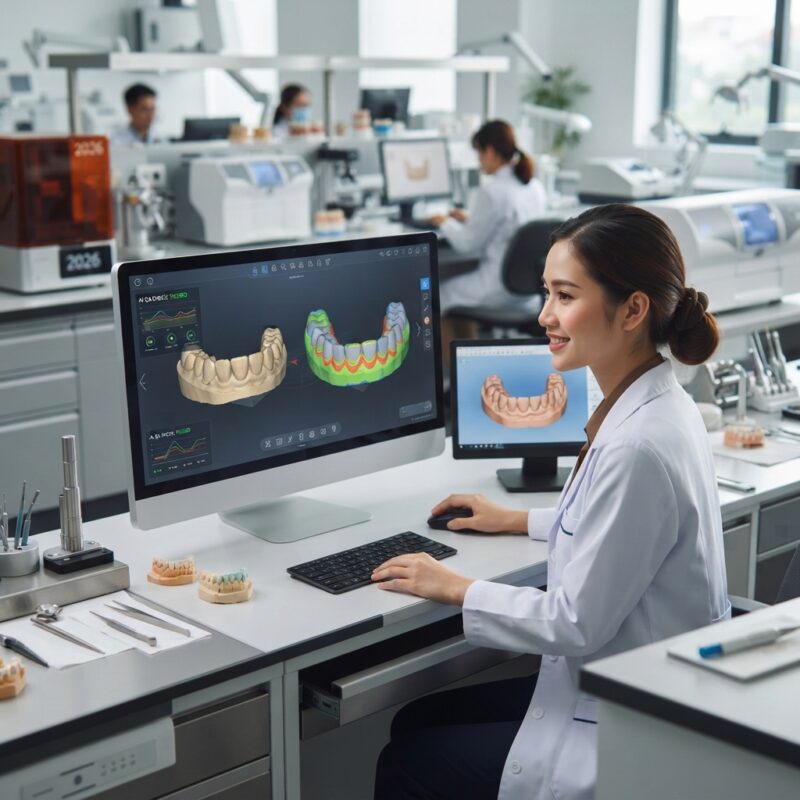
Introduction to How AI Speeds Up Dental CAD Design Review and Quality Checks in 2026
The dental industry is undergoing a profound transformation with the advent of advanced artificial intelligence (AI) technologies. Specifically, how AI speeds up dental CAD design review and quality checks in 2026 is a critical topic for dental labs and DSOs aiming to increase throughput, reduce errors, and maintain high standards in crown & bridge, implants, surgical guides, dentures, orthodontic aligners, and night guards. This article dives deep into the practical applications of AI in dental CAD/CAM workflows, offering insights into the technologies, decision-making criteria, and benefits for various practice sizes.
What Is Dental CAD Design Review and Quality Check?
Dental CAD design review and quality check is the process of verifying that computer-aided designs for dental prosthetics meet clinical and manufacturing standards before production begins. This step ensures accuracy, fit, occlusion, and aesthetics, minimizing costly remakes and patient discomfort.
Traditionally, this review involved manual inspection by skilled technicians and clinicians, which could be time-consuming and subject to human error. In 2026, AI-powered tools can expedite this process by automating the detection of design flaws and inconsistencies, allowing labs and DSOs to scale production efficiently.
How Does AI Speed Up Dental CAD Design Review and Quality Checks in 2026?
AI speeds up dental CAD design review and quality checks in 2026 by leveraging machine learning algorithms and computer vision to automatically analyze digital dental models. It can detect margin discrepancies, undercuts, occlusal interferences, and design inconsistencies rapidly, reducing manual review time from hours to minutes.
Additionally, AI integrates with CAD/CAM software platforms such as those from 3Shape and exocad, enabling seamless feedback loops. These systems learn from historical data and corrections, continuously improving their accuracy and predictive capabilities.
Why Is AI-Driven Quality Control Essential for Modern Dental Labs and DSOs?
AI-driven quality control is essential because it addresses the increasing demand for speed and precision in dental manufacturing. Dental Service Organizations (DSOs) and high-volume labs face pressure to deliver large quantities of restorations without compromising quality. AI supports this by:
- Reducing human error through standardized, objective analysis
- Accelerating turnaround times for design approvals
- Enhancing consistency across multiple production sites
- Enabling remote design review and collaboration
Therefore, adopting AI-powered review tools is a strategic investment for labs and DSOs looking to optimize operational efficiency and patient satisfaction.
What Are the Key AI Technologies Used in Dental CAD Design Review?
The primary AI technologies accelerating dental CAD design review and quality checks in 2026 include:
- Machine Learning (ML): Algorithms trained on large datasets identify and predict design errors based on prior cases.
- Computer Vision: Enables detailed 3D model scanning and comparison to detect surface anomalies and margin gaps.
- Natural Language Processing (NLP): Assists in interpreting clinical notes and design specifications for automated compliance checks.
- Cloud Computing: Powers scalable AI platforms, allowing remote access and collaboration across labs and DSOs.
Integration of these technologies streamlines the entire design validation process, boosting productivity and reducing manual labor.
How Does AI Compare With Traditional Dental CAD Design Review Methods?
Traditional dental CAD design review relies heavily on human expertise and manual inspection, which often results in slower turnaround and potential inconsistencies. In contrast, AI-enhanced workflows offer:
- Higher speed and scalability for high-volume production
- Standardized quality criteria based on data-driven insights
- Reduction in human fatigue-related errors
- Real-time feedback and design modification suggestions
Below is a comparison table summarizing these differences for dental labs and DSOs:
| Criteria | Traditional Review | AI-Driven Review | Best for |
|---|---|---|---|
| Speed | Hours per design | Minutes per design | High-volume labs, DSOs |
| Consistency | Variable, dependent on technician | Standardized and repeatable | All lab sizes |
| Error Detection | Manual, subject to oversight | Automated, data-driven | Implants, surgical guides |
| Cost | Lower initial investment | Higher setup cost, lower long-term costs | Labs with high design volume |
What Are the Practical Benefits of AI in Specific Dental Applications?
AI enhances design review and quality checks across multiple dental applications:
- Crown & Bridge: Ensures perfect margin fit and occlusal harmony, reducing chairside adjustments.
- Implants: Validates implant position and abutment design to prevent surgical complications.
- Surgical Guides: Confirms guide accuracy for precise drilling and implant placement.
- Dentures: Checks occlusal plane and tooth arrangement digitally for optimal comfort.
- Orthodontic Aligners: Verifies incremental tooth movements and aligner fit.
- Night Guards: Assesses thickness and adaptation to prevent patient discomfort.
By automating these checks, AI reduces remakes and improves clinical outcomes.
How Does Outsourcing Dental Lab CAD/CAM Design Integrate With AI Technologies?
Outsourcing dental lab CAD/CAM design works synergistically with AI technologies by providing expert digital design services enhanced with AI-powered review tools. This approach benefits labs and DSOs by:
- Accessing highly skilled designers without expanding in-house staff
- Leveraging AI to ensure design quality and reduce revision cycles
- Scaling capacity quickly during demand surges
- Maintaining consistent standards across multiple locations
Outsourced services often utilize AI platforms from industry leaders such as 3Shape and exocad, ensuring up-to-date technology integration.
What Are the Cost Considerations When Adopting AI-Enabled Dental CAD Design Review?
Costs vary widely depending on the scale and sophistication of AI integration. Initial investments include software licenses, hardware upgrades, and staff training. However, these are offset by:
- Reduced labor costs due to automation
- Lower remake rates and material waste
- Faster case turnaround increasing lab throughput
For smaller labs or single-dentist practices, outsourcing AI-powered design and review may be more cost-effective than purchasing expensive software and hardware. Larger DSOs and high-volume labs tend to benefit from in-house AI systems due to scale efficiencies.
How to Choose the Right AI Dental CAD Design Review Solution for Your Lab or DSO?
Choosing the best AI dental CAD design review solution depends on factors such as volume, budget, workflow complexity, and existing equipment. Consider:
- Volume: High-volume operations benefit from fully integrated AI platforms; smaller labs may prefer outsourced services.
- Compatibility: Ensure AI software integrates with your current CAD/CAM systems and scanner brands.
- Support and Training: Check vendor support availability and ease of onboarding staff.
- Scalability: Choose solutions that grow with your lab or DSO’s needs.
Evaluating these criteria carefully will maximize the return on investment and workflow improvements. digital crown design also works well alongside AI-powered review for comprehensive quality assurance.
What Are the Workflow Changes When Implementing AI for Dental CAD Design Review?
Implementing AI-driven review modifies workflows by introducing automated checkpoints and alerts during design phases. Technicians shift focus from manual error detection to overseeing AI feedback and making precision adjustments.
The typical AI-enhanced workflow includes:
- Uploading the initial digital design to the AI platform
- Automated scanning and analysis of margins, occlusion, and fit
- Receiving real-time reports highlighting design issues
- Making corrections guided by AI suggestions
- Final approval and dispatch to manufacturing
This reduces bottlenecks and enhances collaboration between design and production teams, especially in multi-location DSOs.
What Are the Future Trends in AI for Dental CAD Design and Quality Checks?
Future trends include deeper integration of AI with real-time intraoral scanning, predictive analytics for prosthetic longevity, and augmented reality (AR) for interactive design review. AI will increasingly enable personalized prosthetic design optimized for patient-specific anatomy and biomechanics.
Additionally, blockchain technology may be employed for secure, transparent audit trails of design modifications and approvals, enhancing regulatory compliance.
Keeping abreast of these advancements ensures that dental labs and DSOs maintain competitive advantages and deliver superior patient care.
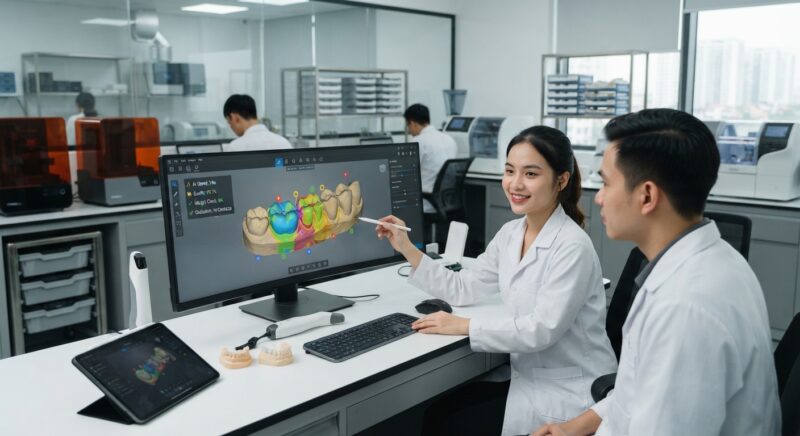
Do You Need Design Capacity for Your New Equipment?
Outsourcing dental lab CAD/CAM design with AI-accelerated review services allows your clinic or lab to maximize the output of milling machines and 3D printers without the overhead of hiring full-time designers. This approach lets you focus on production and patient care while ensuring quality through expert AI-supported design validation.
Step-by-Step Guide to Implementing AI-Driven Dental CAD Design Review in Your Lab
Transitioning to AI-enabled CAD design review and quality checks can seem daunting without a clear roadmap. Here is a practical, step-by-step guide tailored for dental labs and practices to smoothly integrate AI into existing workflows while minimizing disruptions and maximizing ROI.
Step 1: Assess Current Design and Quality Review Processes
- Map Out Existing Workflows: Document every stage of your CAD design creation, review, and quality check. Identify bottlenecks, error rates, and time spent on manual inspections.
- Gather Key Metrics: Collect data on turnaround times, remakes due to design errors, and customer satisfaction scores to establish baseline KPIs.
- Engage Stakeholders: Involve dental technicians, quality managers, and clinicians to understand pain points and areas where AI could add value.
Step 2: Define Use Cases and Objectives for AI Integration
- Prioritize Applications: Decide whether AI will focus initially on crown & bridge design checks, implant planning validation, or surgical guide verification based on greatest impact.
- Set Clear Goals: For example, reduce design errors by 30%, cut review times in half, or improve consistency across multiple lab locations.
- Budgeting and Timeline: Establish a realistic budget and timeline for AI adoption, including hardware upgrades, software licenses, and training.
Step 3: Choose the Right AI Solution and Vendor
- Evaluate Technology Compatibility: Ensure the AI solution supports your existing CAD software formats (e.g., STL, PLY) and integrates with your lab management systems.
- Review Vendor Support and Training: Select vendors offering comprehensive onboarding, continuous updates, and responsive customer service.
- Request Demonstrations and Pilot Projects: Trial the AI tools on a subset of cases to assess accuracy, speed, and user-friendliness.
Step 4: Prepare Your Team and Infrastructure
- Train Staff: Conduct workshops and hands-on sessions for technicians and QC staff to familiarize them with the AI interface and interpretation of results.
- Upgrade Hardware: Ensure computers meet processing requirements, and consider GPU acceleration if recommended by the AI solution.
- Establish Data Management Policies: Implement protocols for data privacy, storage, and version control to safeguard patient and design information.
Step 5: Integrate AI into Daily Workflow and Monitor
- Deploy in Parallel: Run AI-assisted review alongside manual checks initially to build confidence and identify discrepancies.
- Measure Impact: Track improvements in error detection rates, design cycle times, and technician productivity.
- Iterate and Optimize: Collect feedback and refine AI parameters, workflows, and training materials accordingly.
Step 6: Scale and Expand AI Usage
- Broaden Application: Extend AI checks to new product lines such as orthodontic aligners or night guards.
- Standardize Across Locations: For multi-site labs or DSOs, deploy AI solutions uniformly to ensure consistent quality.
- Leverage AI Data Analytics: Use aggregated AI findings to identify systemic design issues and inform continuous improvement.
Common Mistakes to Avoid When Adopting AI for Dental CAD Design Review
Despite the clear advantages of AI, many dental labs and practices stumble during implementation. Understanding typical pitfalls can help you avoid costly delays and suboptimal results.
1. Underestimating the Importance of Data Quality
AI models require high-quality, consistent input data to perform optimally. Labs often neglect to standardize scan protocols or CAD file formats, leading to inaccurate AI assessments. Implement strict scanning and data entry standards before introducing AI to minimize garbage-in-garbage-out issues.
2. Skipping Staff Training and Change Management
Failing to adequately train technicians and reviewers on AI tools results in resistance or misuse. Staff may distrust AI recommendations if they don’t understand how outputs are generated or how to interpret alerts. Invest in comprehensive training and involve teams early to foster adoption.
3. Expecting AI to Replace Human Expertise Completely
AI is a powerful assistant but not a substitute for skilled technicians. Overreliance can lead to missed nuances or contextual design errors. Keep humans in the loop for final approvals and use AI as a complementary quality check rather than a standalone decision-maker.
4. Neglecting Integration with Existing Systems
Deploying AI in isolation without seamless integration into CAD software, lab management systems, and communication channels causes workflow disruptions. Choose AI solutions compatible with your ecosystem and plan for IT collaboration to ensure smooth data flow.
5. Ignoring Cost-Benefit Analysis
Some labs invest heavily in AI hardware and software without aligning expenditures to expected improvements. Calculate realistic ROI based on error reduction, time savings, and capacity increases before committing to expensive platforms.
6. Failing to Maintain and Update AI Models
AI models require regular retraining and updates to handle new materials, design trends, and scanner types. Without ongoing maintenance, AI performance degrades over time. Establish maintenance contracts and internal review schedules to keep AI current.
Cost and Quality Considerations When Integrating AI in Dental CAD Workflows
Budgeting for AI adoption is a critical step that requires balancing upfront investment with long-term quality and efficiency gains. Here are key cost and quality factors to weigh in your decision-making process.
Initial Investment Breakdown
- Software Licensing: AI CAD review platforms typically offer subscription or perpetual licenses. Costs vary based on features, case volume, and support levels.
- Hardware Upgrades: AI processing demands may necessitate upgrading workstations, adding GPUs, or increasing storage capacity.
- Training and Onboarding: Budget for staff training sessions, possibly including vendor-led workshops or external consultants.
- Integration Expenses: IT resources for software integration, workflow redesign, and data security compliance are often overlooked but essential.
Ongoing Operational Costs
- Maintenance and Updates: AI solutions require periodic updates and model retraining; maintenance contracts should be factored into annual budgets.
- Data Management: Secure cloud storage or expanded local servers add to recurring costs.
- Technical Support: Access to technical support and troubleshooting services might be subscription-based.
Quality Impact and Metrics to Monitor
- Defect Rate Reduction: Track the percentage decrease in design errors and remakes attributable to AI intervention.
- Turnaround Time Improvements: Measure how AI accelerates review cycles and overall case throughput.
- Consistency Across Technicians: AI can standardize quality checks, reducing variability between individual reviewers.
- Patient Outcome Improvements: Indirectly, higher design accuracy leads to better prosthetic fit and longevity, enhancing patient satisfaction.
Balancing Cost and Quality
While high-end AI platforms offer the most advanced features, smaller labs may find value in scalable, modular solutions with lower upfront costs. Prioritize AI tools that demonstrably improve quality metrics relevant to your lab’s specialties rather than opting for the most expensive option. Cost-effective AI adoption focuses on measurable quality improvements that reduce waste and increase customer retention.
Market-Specific Considerations for AI in Dental CAD Design Review
The dental industry is diverse, and AI adoption strategies must be tailored to specific market segments and regional factors to be effective.
Dental Labs vs. Dental Practices/DSOs
- Dental Labs: Labs often manage high volumes of CAD designs across multiple product types and clients. AI tools should support batch processing, multi-user collaboration, and integration with lab management software.
- Dental Practices and DSOs: These organizations may prioritize AI that integrates with chairside CAD/CAM systems, enabling faster in-office restorations and real-time quality feedback. Cloud-based AI solutions with secure HIPAA compliance are critical.
Geographic and Regulatory Differences
- Regulatory Compliance: AI tools must comply with regional medical device regulations such as FDA approval in the US or CE marking in the EU. Labs should verify certifications before adoption.
- Data Privacy: GDPR in Europe and HIPAA in the US impose strict patient data handling requirements. AI vendors must demonstrate compliance mechanisms, especially for cloud-based AI platforms.
- Market Maturity: Some regions have more advanced digital dentistry adoption. Labs in emerging markets may require simpler, lower-cost AI solutions and additional training resources.
Specialty-Specific AI Applications
- Orthodontics: AI-driven analysis of tooth movement and aligner fit can streamline treatment planning and reduce manual errors.
- Implantology: AI assists in precise implant positioning and surgical guide verification to reduce surgical risks.
- Prosthodontics: Automated marginal fit checks and occlusion analysis improve the success rate of crowns, bridges, and dentures.
Competitive Differentiation Through AI
Labs and DSOs leveraging AI effectively can position themselves as industry leaders by offering faster turnaround, higher-quality products, and transparent quality verification processes. This is especially critical in competitive urban markets where patients and dentists demand consistent excellence. Understanding your market’s unique demands allows you to customize AI adoption for maximum competitive advantage.
Contact us today to learn how our AI-enhanced dental CAD design outsourcing can streamline your workflow and improve turnaround times.