Introduction to the Hidden Risks of Outsourcing Dental Design to India in 2026 and How Vietnam Compares
Outsourcing dental lab digital design has become a widespread strategy for dental labs and DSOs aiming to optimize costs and access cutting-edge CAD/CAM technology. However, the hidden risks of outsourcing dental design to India in 2026 and how Vietnam compares require careful consideration as the global landscape evolves. This comprehensive article delves into the nuanced challenges labs face with Indian outsourcing partners and contrasts those with the emerging benefits of Vietnam, providing decision-makers a detailed roadmap for 2026 and beyond.
What is dental lab outsourcing and why is it popular?
Dental lab outsourcing involves delegating dental prosthetic design and manufacturing tasks to external service providers, often overseas, to reduce costs and improve turnaround times.
Outsourcing dental CAD/CAM digital design allows dental labs and DSOs to leverage specialized expertise in crowns, bridges, implants, surgical guides, dentures, orthodontic aligners, and night guards without maintaining costly in-house capabilities. Popular destinations such as India have historically offered attractive price points, but the hidden risks of outsourcing dental design to India in 2026 and how Vietnam compares are reshaping industry preferences.
Key hidden risks of outsourcing dental design to India in 2026
The hidden risks of outsourcing dental design to India in 2026 stem from evolving economic, technological, and regulatory factors that can impact quality, timelines, and compliance:
- Quality inconsistency: Despite advances, some Indian providers struggle with consistent adherence to stringent dental standards, leading to remakes and patient dissatisfaction.
- Communication gaps: Language nuances and time zone differences can slow down collaboration, increasing design errors or delays.
- Data security concerns: Sensitive patient data protection can be compromised without robust cybersecurity protocols and compliance with international privacy laws.
- Rising costs: Inflation and wage increases in India are narrowing the cost advantage, making outsourcing less budget-friendly.
- Regulatory challenges: Complex import/export regulations and certification requirements may cause shipment delays or customs issues.
How does Vietnam compare as an outsourcing destination for dental design?
Vietnam offers a compelling alternative by addressing many of the hidden risks of outsourcing dental design to India in 2026 and how Vietnam compares favorably in several key areas.
Vietnam’s growing pool of highly skilled CAD/CAM technicians, combined with competitive labor costs and improved infrastructure, supports high-quality dental design services. Moreover, Vietnam’s favorable trade agreements and streamlined regulatory environment reduce shipping and compliance hurdles. Communication tends to be smoother due to increasing English proficiency and cultural alignment with Western clients. These factors make Vietnam an attractive choice for dental labs and DSOs seeking reliable and cost-effective outsourcing partners.
What are the impacts of quality variability when outsourcing dental design?
Quality variability directly affects the success of dental restorations and patient outcomes; inconsistent design quality can lead to increased remakes, longer chair time, and diminished client trust.
With the hidden risks of outsourcing dental design to India in 2026 and how Vietnam compares, the latter generally shows higher consistency in adherence to international dental CAD/CAM standards due to recent investments in training and quality control systems. Indian providers, while experienced, occasionally face challenges maintaining uniform quality across large volumes, particularly with complex cases like implant-supported restorations and surgical guides.
Communication and collaboration challenges in international dental design outsourcing
Effective communication is critical to ensure precision in digital designs, especially for crowns, bridges, and customized orthodontic devices.
The hidden risks of outsourcing dental design to India in 2026 and how Vietnam compares highlight that communication barriers can lead to misunderstandings of clinical specifications and design intent. Vietnam’s increasing English language capabilities and time zone alignment with many Western countries reduce these risks, facilitating faster iteration cycles and clearer dialogue between dentists, labs, and design teams.
How do data security and patient privacy affect outsourcing decisions?
Data security and patient privacy compliance are non-negotiable in dental design outsourcing due to stringent HIPAA and GDPR regulations.
One of the hidden risks of outsourcing dental design to India in 2026 and how Vietnam compares is the variable maturity of data protection practices. Vietnam has recently made significant strides in cybersecurity frameworks and legal protections, matching or surpassing some Indian providers. Choosing a partner with certified secure digital workflows ensures sensitive dental scans and patient information remain confidential.
Cost considerations: Is India still the cheapest option in 2026?
While India was once the go-to for cost-effective dental design outsourcing, rising wages and operational costs are eroding its price advantage.
The hidden risks of outsourcing dental design to India in 2026 and how Vietnam compares reveal that Vietnam’s lower labor costs and favorable currency exchange rates make it a more economical option without compromising quality. Additionally, Vietnam’s proximity to other Asian manufacturing hubs reduces logistics costs, benefiting labs specializing in comprehensive prosthetic workflows.
Regulatory and compliance hurdles in Indian dental design outsourcing
India’s complex regulatory landscape, including import-export restrictions and certification processes, can delay shipments and complicate customs clearance.
The hidden risks of outsourcing dental design to India in 2026 and how Vietnam compares show that Vietnam’s government has simplified trade regulations and invested in customs modernization, resulting in smoother cross-border operations. This efficiency is particularly critical for time-sensitive surgical guides and implant components.
What technological advantages does Vietnam offer over India?
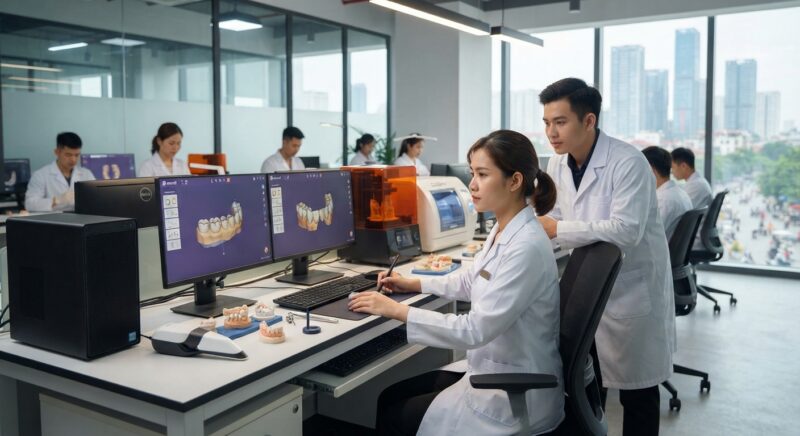
Vietnam’s dental design outsourcing providers increasingly incorporate state-of-the-art CAD/CAM software and 3D printing technologies to enhance accuracy and speed.
The hidden risks of outsourcing dental design to India in 2026 and how Vietnam compares emphasize that Vietnamese firms frequently partner with leading software developers such as 3Shape and exocad, enabling access to cutting-edge design tools. Combined with modern 3D printing hardware, this technological edge yields superior prosthetic fits and faster turnaround times for crowns, dentures, and orthodontic aligners.
How do cultural factors influence outsourcing success?
Cultural compatibility influences teamwork, responsiveness, and mutual understanding between dental labs and their outsourcing partners.
Examining the hidden risks of outsourcing dental design to India in 2026 and how Vietnam compares reveals that Vietnamese providers often demonstrate higher cultural alignment with Western clients, leading to smoother project management and fewer misunderstandings. This cultural fit fosters long-term partnerships and improved service quality.
Logistics and supply chain reliability: Vietnam vs. India
Reliable logistics are vital for timely delivery of physical dental prosthetics and surgical guides following digital design completion.
The hidden risks of outsourcing dental design to India in 2026 and how Vietnam compares include potential delays in Indian shipping routes due to congestion and customs backlogs. Vietnam’s improving port infrastructure and free trade agreements yield more predictable delivery schedules, reducing lab downtime and ensuring patient care continuity.
Environmental and social responsibility considerations
Increasingly, dental labs and DSOs seek outsourcing partners who prioritize sustainability and ethical labor practices.
While the hidden risks of outsourcing dental design to India in 2026 and how Vietnam compares highlight some concerns about labor conditions and environmental impact in India, Vietnam is actively pursuing greener manufacturing and fair labor certifications. Partnering with responsible providers enhances brand reputation and aligns with global corporate social responsibility trends.
How can dental labs integrate Vietnam outsourcing with existing workflows?
Vietnamese dental design services can be seamlessly integrated into existing lab workflows by adopting compatible CAD/CAM file formats and communication protocols.
Many Vietnamese providers support open-standard design files compatible with popular lab software, facilitating smooth collaboration. This integration reduces errors and turnaround time, and also works well alongside surgical guide design services. Labs can leverage cloud-based platforms for real-time feedback and adjustments, ensuring high precision and client satisfaction.
Future outlook: Will Vietnam overtake India in dental design outsourcing?
The hidden risks of outsourcing dental design to India in 2026 and how Vietnam compares suggest a shifting trend, with Vietnam gaining ground as a preferred destination.
With ongoing investments in talent development, technology adoption, and regulatory reforms, Vietnam is poised to become a dominant hub for dental CAD/CAM outsourcing. This trajectory is supported by industry leaders and international dental organizations recognizing Vietnam’s potential. Nonetheless, India remains a significant player, especially for high-volume, cost-sensitive projects. Careful evaluation of project requirements will dictate the best outsourcing strategy moving forward.
Conclusion and recommendations for dental labs and DSOs
Understanding the hidden risks of outsourcing dental design to India in 2026 and how Vietnam compares equips dental labs and DSOs to make informed decisions that balance cost, quality, and reliability.
Vietnam emerges as a strong contender with improved quality consistency, better communication, and reduced regulatory hurdles. However, each lab’s unique needs, including case complexity and turnaround demands, must guide the choice of outsourcing partner. Collaborating with reputable providers that utilize leading technology platforms such as ADA-endorsed standards ensures optimal patient outcomes and operational excellence.
Contact us for trusted dental CAD/CAM design outsourcing solutions
Step-by-Step Guide to Transitioning from Indian to Vietnamese Dental Design Outsourcing
For dental labs and DSOs considering shifting their CAD/CAM dental design outsourcing from India to Vietnam, the transition requires careful planning and execution to minimize disruption and maximize benefits. Below is a detailed step-by-step guide tailored to help teams navigate this complex process efficiently.
Step 1: Internal Assessment and Goal Alignment
- Evaluate existing contracts and commitments: Review any ongoing agreements with Indian providers, including termination clauses, notice periods, and potential penalties.
- Define clear objectives: Identify what you aim to achieve with Vietnamese partners—whether it’s improved quality, faster turnaround, better communication, or cost control.
- Engage stakeholders: Include lab managers, technicians, procurement teams, and clinical staff in discussions to align expectations and gather insights.
Step 2: Vendor Research and Selection
- Compile a shortlist of Vietnamese dental design companies with proven track records, certifications, and positive client references.
- Request detailed proposals covering pricing, technology stack, turnaround times, and quality assurance processes.
- Perform due diligence: Verify compliance with international standards such as HIPAA for patient data security and ISO certifications for quality management.
- Arrange sample projects to evaluate design accuracy and communication responsiveness firsthand.
Step 3: Pilot Project and Workflow Integration
- Start with a limited pilot involving a manageable volume of cases to test the new partner’s capabilities without risking large-scale disruption.
- Map workflows precisely, defining data transfer protocols, revision cycles, and approval processes to ensure smooth handoffs.
- Train internal teams on tools and platforms used by the Vietnamese provider to foster seamless collaboration.
- Establish communication channels with designated contacts on both sides to handle queries and feedback promptly.
Step 4: Full Transition and Continuous Improvement
- Gradually increase case volume as confidence builds and process bottlenecks are resolved.
- Implement quality control checkpoints with internal audits and feedback loops to catch issues early.
- Schedule regular review meetings to discuss performance metrics, challenges, and opportunities for optimization.
- Document lessons learned to refine future outsourcing strategies and negotiations.
Common Pitfalls and Mistakes in Outsourcing Dental Design to India—and How to Avoid Them
Outsourcing dental design to India has been popular, but many labs encounter recurring challenges that impact project success. Recognizing these pitfalls upfront and taking proactive steps can help mitigate risks.
Pitfall 1: Overlooking Quality Variability
Many labs assume consistent quality across Indian providers, but in reality, design accuracy and material compatibility can vary widely.
- How to avoid: Insist on standardized quality checks, request sample approvals before full runs, and establish clear acceptance criteria.
Pitfall 2: Inadequate Communication Protocols
Time zone differences and language nuances can cause misunderstandings leading to design errors or delays.
- How to avoid: Use dedicated project managers, schedule overlapping working hours, and leverage collaboration tools with real-time updates.
Pitfall 3: Ignoring Intellectual Property and Data Security Risks
Insufficient protection of patient data and proprietary design methods can expose labs to legal and reputational damage.
- How to avoid: Demand compliance with global data protection standards, use encrypted data transfer methods, and sign robust NDAs.
Pitfall 4: Underestimating Hidden Costs
While upfront pricing may appear attractive, additional charges for revisions, rush orders, or quality failures often erode savings.
- How to avoid: Negotiate transparent pricing models, include penalties for missed deadlines or errors, and factor in potential rework costs.
Pitfall 5: Failing to Plan for Regulatory Compliance
Differences in certification and approval processes between countries can create compliance gaps.
- How to avoid: Work with providers knowledgeable about your local regulatory environment and integrate compliance checks into workflows.
Cost vs. Quality Trade-offs in Dental Design Outsourcing: A Practical Checklist
Balancing cost savings with acceptable quality is a perennial challenge in outsourcing dental design. Below is a practical checklist to help labs and DSOs evaluate potential partners and projects.
- Price Transparency: Are all fees, including design revisions, shipping, and rush services, clearly outlined?
- Turnaround Time: Does the provider meet your timeline requirements consistently without compromising quality?
- Design Accuracy: Are digital models precise with minimal need for rework or adjustments?
- Technological Compatibility: Does the provider use CAD/CAM software compatible with your lab’s equipment and materials?
- Communication Efficiency: How responsive and clear is the provider’s communication during design iterations?
- Data Security: Are patient data protection protocols robust and compliant with regulations?
- Quality Assurance Processes: Are standardized QA methods in place, including internal audits and third-party certifications?
- Revision Policy: What is the cost and process for design changes, and how many revisions are included?
- Sample Approval: Can you review and approve samples before full production runs?
- Provider Stability: Is the company financially sound and technologically up-to-date to ensure long-term partnership?
- Shipping and Logistics: Are shipping costs and timelines reliable and factored into overall costs?
- Support and Training: Does the provider offer training or technical support to help your team adapt to their systems?
Market-Specific Considerations for Dental Labs Outsourcing in 2026
Understanding the unique market dynamics affecting outsourcing decisions is crucial in 2026. These factors differ significantly across regions and impact vendor selection and collaboration strategies.
Regional Demand Trends and Impact on Outsourcing
Growing dental care awareness in Southeast Asia, the Middle East, and parts of Europe is increasing demand for high-quality dental prosthetics and restorations. Labs outsourcing to India must contend with capacity constraints due to heavy demand, leading to potential delays. In contrast, Vietnam’s emerging market is investing heavily in expanding dental design infrastructure to capture this growing demand, offering more flexible capacity.
Material Availability and Preferences
Indian suppliers often rely heavily on imported materials, which can cause delays and price fluctuations due to customs and tariffs. Vietnamese labs are increasingly sourcing materials locally or from nearby countries within the ASEAN bloc, reducing supply chain risks. Labs should assess material sourcing stability when choosing an outsourcing partner.
Labor Skillsets and Training Programs
India has a deep pool of experienced CAD/CAM technicians but faces challenges with skill standardization. Vietnam is rapidly developing dental design training programs aligned with international standards, supported by government initiatives to upgrade workforce expertise. Labs should evaluate the training credentials and ongoing education efforts of design teams to ensure sustained quality.
Economic and Political Stability
Political shifts, currency fluctuations, and trade policies affect outsourcing viability. India’s large and complex bureaucracy can delay contract approvals and regulatory compliance. Vietnam’s government has streamlined foreign business policies and invested in digital infrastructure to support international partnerships, offering a more predictable operational environment.
Integration with Local Dental Practices
For labs with clients in Asia-Pacific, outsourcing to Vietnam enables closer cultural and logistical alignment, facilitating faster adjustments to design preferences and local regulatory requirements. Indian outsourcing is often more suited for Western markets but may introduce challenges in adapting to regional nuances.
Environmental Sustainability Expectations
Increasingly, dental labs and DSOs must demonstrate environmental responsibility to end clients and regulators. Vietnam’s newer facilities are often built with sustainable practices in mind, incorporating energy-efficient technologies and waste reduction processes. Indian providers vary widely in environmental standards, necessitating careful vetting.
Real-World Examples of Outsourcing Challenges and Successes in Dental Design
Understanding the practical implications of outsourcing dental design requires examining real-world examples from both Indian and Vietnamese outsourcing partnerships. These cases highlight common issues and successful strategies that dental labs and practices can learn from when considering or managing offshore design collaborations.
Case Study 1: Quality Inconsistencies Leading to Remakes and Delays
A mid-sized dental lab in the U.S. partnered with an Indian dental design vendor to reduce costs on crown and bridge cases. Initially, the cost savings were attractive, but over three months, they experienced a 20% remake rate due to design inaccuracies and poor fit. The root causes included inconsistent technician skill levels and rushed turnaround times driven by high volume demands. This resulted in extended patient wait times and increased shipping costs, ultimately eroding the initial savings.
Lessons learned:
- Ensure the vendor has rigorous quality control and technician training programs.
- Establish clear design specifications and acceptance criteria upfront.
- Monitor remake rates closely to identify emerging quality issues early.
Case Study 2: Seamless Integration with Vietnamese Vendor Enhances Efficiency
A large dental support organization (DSO) in Australia transitioned from Indian vendors to a newer Vietnamese outsourcing partner. They invested time in joint training sessions, implemented cloud-based design review platforms, and synchronized work hours to overlap time zones better. Within six months, they reported a 30% reduction in design turnaround times and a significant drop in communication-related errors due to improved language proficiency and cultural alignment.
Key success factors:
- Prioritize vendors with demonstrated commitment to collaboration and process transparency.
- Invest in technology that facilitates real-time feedback and version control.
- Leverage cultural compatibility to foster trust and proactive problem-solving.
Checklist for Selecting a Dental Design Outsourcing Partner in Vietnam or India
Choosing the right outsourcing partner is critical to mitigating risks and maximizing the benefits of offshore dental design. The following checklist helps dental labs and DSOs evaluate potential vendors beyond just cost considerations.
- Technical Expertise: Verify CAD/CAM software proficiency, certification levels of technicians, and experience with specific dental materials and restoration types.
- Quality Assurance: Review the vendor’s quality control processes, remake policies, and track record with other clients.
- Communication: Assess language fluency, responsiveness, and availability during your working hours.
- Data Security: Confirm compliance with HIPAA or other relevant patient privacy regulations and secure data transfer protocols.
- Turnaround Times: Compare promised delivery schedules with actual historical performance.
- Scalability: Ensure the vendor can handle increased volumes without sacrificing quality or speed.
- Cost Transparency: Clarify all pricing components, including potential fees for remakes, rush orders, or design revisions.
- Regulatory Compliance: Verify understanding and adherence to international dental product standards and local regulations.
- Technological Infrastructure: Evaluate cloud platforms, software integrations, and digital workflow compatibility.
- Customer References: Request testimonials or case studies from similar dental labs or DSOs.
- Environmental and Social Responsibility: Consider vendors’ sustainability practices and labor conditions.
Cost Versus Quality: Balancing Factors in Outsourcing Dental Design
While cost savings are often the primary driver for outsourcing dental design to India or Vietnam, a comprehensive evaluation must balance price against quality and reliability. Here’s a breakdown of key cost and quality considerations to guide decision-making.
Direct Costs
- Design Fees: Vietnam’s dental design fees have become increasingly competitive, often within 5-15% of Indian rates, particularly for complex cases.
- Shipping and Logistics: Faster turnaround times with Vietnamese vendors can reduce overnight courier expenses for physical models or prosthetics.
- Remake Costs: High remake rates with some Indian vendors can nullify initial savings due to material, labor, and shipping charges.
Indirect Costs and Risks
- Time Delays: Delays in design approvals or corrections disrupt lab workflows and can impact patient satisfaction.
- Communication Overhead: Misunderstandings require additional time for clarifications and corrections, increasing managerial workload.
- Regulatory Penalties: Non-compliance with data security or material standards may result in costly fines or reputational damage.
- Training and Integration: Initial onboarding and process alignment with new vendors require internal resource allocation.
Quality Considerations
Quality is not just about aesthetics but also precision, fit, and material compatibility. Vietnamese vendors increasingly invest in advanced CAD/CAM training and quality assurance systems, resulting in fewer remakes and higher client satisfaction. Indian vendors vary widely in quality, with some excelling while others struggle due to technician turnover or infrastructure issues.
Ultimately, labs must determine the acceptable trade-offs between cost and quality, factoring in their brand reputation and patient outcomes.
Common Mistakes When Managing Offshore Dental Design Projects and How to Avoid Them
Dental labs and practices often face challenges in their outsourcing relationships that stem from avoidable mistakes. Being aware of these pitfalls can significantly improve project outcomes.
- Neglecting Clear Design Specifications: Failing to provide detailed instructions, including margin types, occlusion preferences, or material choices, leads to design errors and remakes. Best practice: Use standardized design request forms and confirm understanding before starting.
- Underestimating Time Zone Differences: Assuming instant responses despite significant time gaps results in delays. Best practice: Schedule overlapping hours for real-time communication and use project management tools for asynchronous updates.
- Ignoring Vendor Feedback: Dismissing vendor suggestions or concerns can damage relationships and limit innovation. Best practice: Foster two-way communication and periodic review meetings to discuss improvements.
- Failing to Pilot Test New Vendors: Jumping into large-scale projects without a pilot phase increases risk exposure. Best practice: Start with small batches to evaluate quality, communication, and turnaround before scaling.
- Overlooking Data Security Protocols: Sharing patient data without encryption or secure platforms can lead to breaches. Best practice: Implement strict data handling policies and verify vendor compliance regularly.
- Inadequate Internal Training: Not training in-house staff on interacting with offshore vendors leads to miscommunication and workflow bottlenecks. Best practice: Provide comprehensive training on new processes, tools, and quality standards.
- Ignoring Cultural Differences: Misunderstanding business norms or communication styles can cause friction. Best practice: Invest in cultural awareness training and respect local practices while setting clear expectations.
- Failing to Monitor Performance Metrics: Without tracking KPIs such as turnaround times, remake rates, and communication responsiveness, problems go unnoticed. Best practice: Establish regular reporting and review key performance indicators.
If you want to avoid the hidden risks of outsourcing dental design to India in 2026 and how Vietnam compares for your lab, contact us today to explore tailored, reliable digital design services that elevate your prosthetic workflows.