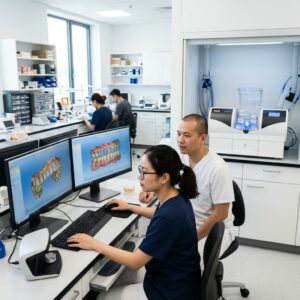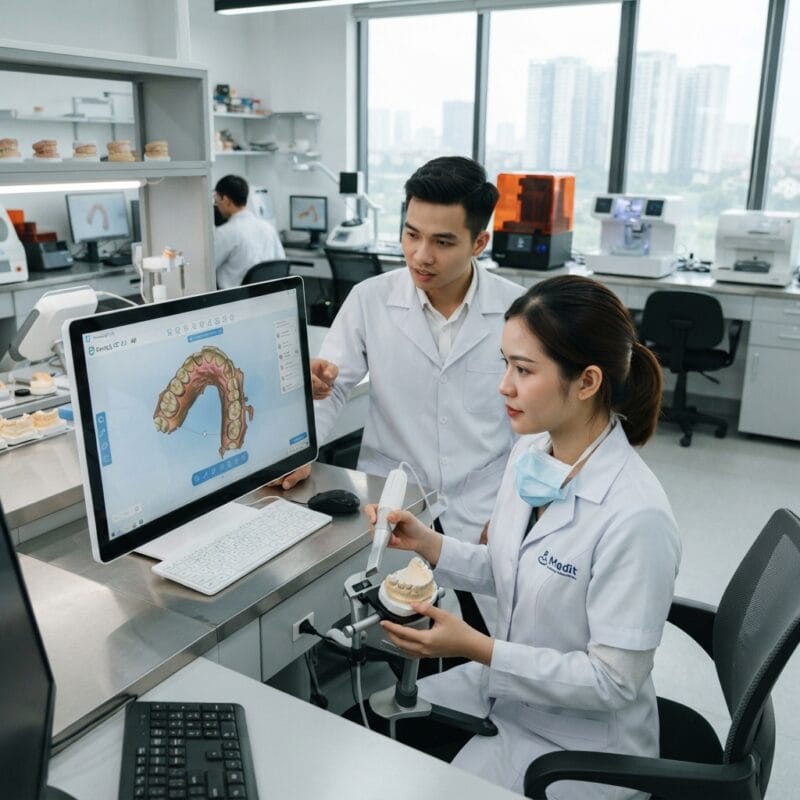
What is 3D dental scanning technology explained for clinics 2026?
3D dental scanning technology explained for clinics 2026 refers to advanced digital imaging methods that capture highly accurate three-dimensional representations of patients’ oral anatomy using intraoral or extraoral scanners.
This technology enables dental clinics and dental service organizations (DSOs) to obtain precise digital impressions of crowns, bridges, implants, dentures, orthodontic aligners, and night guards. These digital scans replace traditional physical impressions, improving patient comfort, reducing turnaround times, and enhancing communication with dental labs. By 2026, these systems integrate seamlessly with CAD/CAM software platforms to streamline the design and manufacturing of prosthetics and surgical guides, supporting more efficient outsourcing partnerships.
How does 3D dental scanning technology improve clinical workflows?
3D dental scanning technology improves clinical workflows by delivering faster, more accurate digital impressions, which reduce chair time and errors associated with traditional molds.
Clinics benefit from real-time visualization of scans, allowing immediate verification and correction. The digital files created can be transmitted instantly to dental labs or outsourced CAD design teams, expediting the production cycle for crowns, bridges, and implant restorations. Additionally, the technology minimizes the need for retakes, enhances patient experience, and integrates with practice management software, creating a cohesive digital workflow.
What types of 3D dental scanners are most relevant for clinics in 2026?
The most relevant 3D dental scanners for clinics in 2026 include intraoral scanners, desktop lab scanners, and CBCT (cone beam computed tomography) devices.
- Intraoral scanners capture detailed surface data of teeth and soft tissues directly in the patient’s mouth, ideal for crowns, bridges, and orthodontic aligners.
- Desktop lab scanners digitize physical models or impressions sent from clinics, useful in hybrid workflows combining analog and digital methods.
- CBCT scanners provide volumetric imaging critical for implant planning and surgical guide design by capturing bone density and anatomical landmarks.
Many dental labs and DSOs prefer intraoral scanners for their speed and accuracy, often employing systems from leading brands like 3Shape or Medit. These scanners output STL or proprietary files compatible with CAD software used in outsourcing partnerships.
Why should clinics consider outsourcing CAD/CAM digital design with 3D dental scanning technology explained for clinics 2026?
Clinics should consider outsourcing CAD/CAM digital design because it allows access to expert design teams with specialized skills, reducing in-house overhead and accelerating case turnaround.
Outsourcing partners can handle complex workflows for crowns, implant abutments, surgical guides, dentures, and orthodontic devices by utilizing high-quality 3D scans provided by clinics. This collaboration ensures restorations meet clinical specifications and aesthetic demands while freeing clinicians to focus on patient care rather than technical design tasks. Moreover, outsourcing helps clinics stay current with rapidly evolving digital technologies without continuous investment in software or training.
How does 3D dental scanning technology fit into implant and surgical guide workflows?
3D dental scanning technology integrates tightly with implant and surgical guide workflows by capturing precise anatomical data essential for guided surgery planning.
Clinics use intraoral or CBCT scans to obtain detailed digital impressions of the implant site, which are then combined with CAD software for virtual implant placement. The resulting designs for surgical guides are highly accurate and facilitate minimally invasive procedures. This digital workflow reduces surgical errors, improves patient outcomes, and enhances communication between the surgical team and dental lab designers. Companies like Nobel Biocare and Straumann provide leading implant systems compatible with these digital workflows.
What are the benefits of 3D dental scanning technology explained for clinics 2026 for orthodontic aligners and night guards?
The benefits of 3D dental scanning technology for orthodontic aligners and night guards include precise fit, customization, and faster production times.
Digital impressions allow for detailed mapping of tooth and jaw structures, enabling manufacturers to create aligners and night guards tailored to individual patient anatomy. This accuracy reduces adjustments and improves patient compliance. Additionally, digital files can be sent directly to outsourcing CAD/CAM labs specializing in orthodontic devices, streamlining the supply chain and reducing lead times. The technology supports efficient iteration and modification as treatment progresses.
What challenges might clinics face when adopting 3D dental scanning technology explained for clinics 2026?
Clinics may face challenges such as initial investment costs, staff training requirements, and integration with existing practice management systems.
The cost of acquiring high-quality intraoral scanners and compatible CAD software can be substantial, especially for smaller practices. Training clinical staff to capture accurate scans and manage digital workflows is essential to maximize benefits. Additionally, ensuring interoperability between scanner software, lab outsourcing platforms, and clinical records can pose technical hurdles. However, many service providers offer training and support to ease implementation. Over time, efficiency gains and improved patient satisfaction often justify these initial challenges.
How can clinics ensure accuracy and reliability in 3D dental scanning technology?
Clinics can ensure accuracy and reliability by selecting scanners with proven precision, following manufacturer scanning protocols, and performing regular calibration.
Routine maintenance and staff competency in scanning techniques help minimize errors such as data artifacts or incomplete captures. Validation of scan quality before sending digital files to labs is critical to avoid remakes. Partnering with reputable CAD/CAM outsourcing services that have experience handling various scan formats also improves final restoration accuracy. Continuous education on emerging scanning technologies and software updates enables clinics to maintain cutting-edge capabilities.
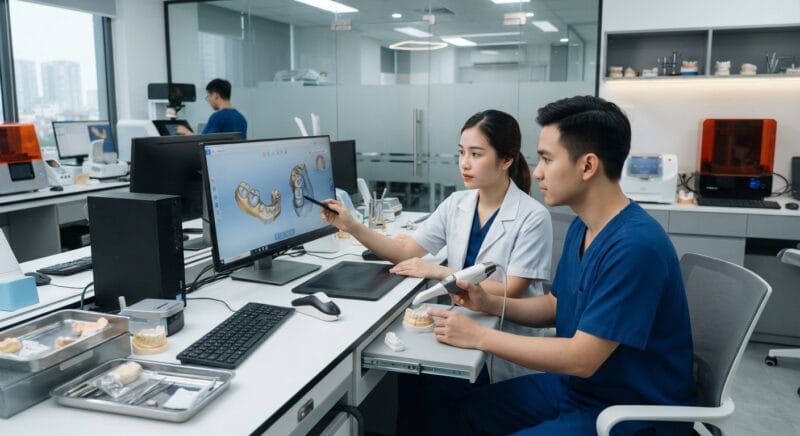
What role does file format and data transfer play in 3D dental scanning technology explained for clinics 2026?
File format and data transfer are crucial as they determine compatibility between clinic scanners, CAD design software, and dental labs.
Commonly used file formats include STL, OBJ, and PLY, with STL being the industry standard for most CAD/CAM applications. Some scanners produce proprietary formats requiring conversion or dedicated software. Efficient and secure transfer methods—such as HIPAA-compliant cloud platforms—facilitate rapid communication between clinics and outsourcing labs, reducing turnaround times. Understanding these technical aspects ensures smooth digital workflows and preserves scan fidelity.
How does 3D dental scanning technology explained for clinics 2026 impact patient experience?
This technology significantly enhances patient experience by eliminating uncomfortable traditional impressions and shortening treatment times.
Patients benefit from less invasive, faster scanning procedures that provide immediate visual feedback. Digital impressions reduce gag reflex triggers and the need for multiple appointments caused by impression errors. Additionally, the precision of digital workflows contributes to better-fitting restorations, enhancing comfort and satisfaction. Clinics adopting these technologies often see improved patient retention and positive reviews.
What is the future outlook for 3D dental scanning technology in clinics by 2026?
The future outlook includes greater integration with AI-driven design, enhanced scanning speed and accuracy, and expanded applications beyond prosthetics into diagnostics and monitoring.
By 2026, clinics will use scanners that incorporate artificial intelligence to automate margin detection, caries identification, and treatment planning. Real-time data analytics could predict restoration longevity and optimize material selection. The convergence of 3D scanning with tele-dentistry and remote CAD design outsourcing services will further streamline clinical operations. These advances reinforce the vital role of 3D dental scanning technology explained for clinics 2026 in modern dental practice.
Which industry-leading platforms support 3D dental scanning technology explained for clinics 2026?
Leading platforms supporting this technology include exocad and 3Shape, which offer comprehensive CAD software suites for dental labs and clinics.
These platforms provide tools for digital design of crowns, bridges, implants, surgical guides, dentures, and orthodontic appliances. Their compatibility with multiple scanner brands and support for advanced workflows make them ideal for outsourcing partnerships. Clinics leveraging these solutions can ensure high-quality digital data exchange and efficient case management throughout the supply chain.
How can clinics leverage 3D dental scanning technology with dental lab outsourcing?
Clinics can leverage 3D dental scanning technology with dental lab outsourcing by providing precise digital impressions that enable labs to produce restorations faster and more accurately.
By sending high-resolution digital scans to trusted outsourcing partners, clinics reduce turnaround times and minimize remakes. Outsourced CAD/CAM teams then use these scans to create digital designs for crowns, bridges, implants, and more, tailored to clinical requirements. This collaboration allows clinics to expand service offerings without investing heavily in in-house design infrastructure. It also supports scalability for DSOs managing multiple locations. Integration with proven outsourcing providers ensures quality control and consistency.
What are some best practices for implementing 3D dental scanning technology explained for clinics 2026?
Best practices include investing in staff training, selecting scanners that fit clinical needs, validating scan quality, and developing standardized digital workflows.
Clinics should establish protocols for scanning procedures, data management, and communication with outsourcing labs. Regular updates and calibration of equipment maintain accuracy. Additionally, working closely with CAD/CAM partners to understand design requirements and turnaround expectations fosters efficient collaboration. Embracing continuous education and staying informed on emerging trends also help clinics maximize ROI from 3D dental scanning technology explained for clinics 2026.
Incorporating 3D dental scanning technology explained for clinics 2026 also works well alongside surgical guide design services, enhancing treatment precision and patient outcomes.
Ultimately, adopting this technology positions clinics and DSOs at the forefront of digital dentistry, improving clinical efficiency and patient satisfaction.
Conclusion: Why 3D dental scanning technology explained for clinics 2026 is essential
3D dental scanning technology explained for clinics 2026 represents a transformative advancement for dental practices seeking to streamline workflows, improve restoration quality, and enhance patient care.
Its integration with CAD/CAM outsourcing services enables clinics to deliver complex prosthetics and appliances with speed and precision while reducing costs. Staying informed and embracing this technology will be critical for clinics and DSOs aiming to remain competitive and meet evolving patient expectations. For more information on digital dental workflows, see digital crown design.
Contact us today to learn how our dental lab CAD/CAM digital design outsourcing can help your clinic leverage 3D dental scanning technology explained for clinics 2026. Let’s transform your digital dentistry capabilities together.