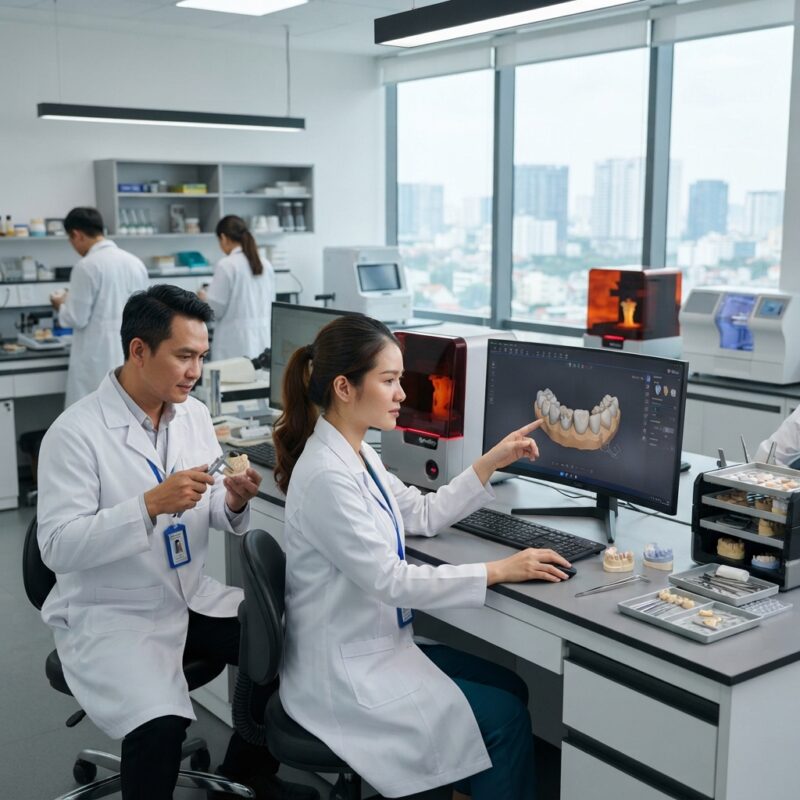
Introduction to SprintRay Midas and Its Role in Dental Practices
The SprintRay Midas is an advanced 3D printer designed specifically for dental applications such as crowns and bridges, implants, surgical guides, dentures, orthodontic aligners, and night guards. Its use has grown within dental labs and dental service organizations (DSOs) looking to modernize their CAD/CAM workflows. Understanding the SprintRay Midas pros and cons for dental practices 2026 is essential for labs and practices considering investment in digital manufacturing technologies or outsourcing digital design.
As dental technology advances rapidly, SprintRay Midas offers promising features that can help improve turnaround times and prosthetic accuracy, yet it also presents limitations that may affect overall cost and workflow integration. This article will delve into these aspects, providing a thorough analysis to aid decision-makers in dental labs and practices.
What is the SprintRay Midas 3D Printer, and How Does It Work?
The SprintRay Midas is a resin-based stereolithography (SLA) 3D printer optimized for dental applications.
It uses a high-resolution light source to cure dental resins layer-by-layer, producing precise and detailed dental restorations and appliances. Compatible with various biocompatible resins, the Midas is engineered to deliver fast print speeds and consistent outputs suitable for clinical and lab environments. Print accuracy and material versatility make it a key tool in digital crown and bridge fabrication, surgical guide production, and the manufacture of orthodontic and protective devices.
Its integration with dental CAD software streamlines the design-to-print workflow, enabling dental practices and labs to reduce manual labor and improve efficiency.
Key Features Driving the SprintRay Midas Adoption in 2026
The SprintRay Midas boasts several important features that align with the needs of modern dental practices and labs:
- High Resolution: Offers layer thicknesses as low as 50 microns, which is critical for fine detail in crowns, bridges, and surgical guides.
- Fast Print Speeds: Capable of printing multiple units simultaneously within an hour, thereby increasing throughput.
- Material Compatibility: Supports a range of proprietary dental resins including those for permanent crowns, dentures, and biocompatible surgical guides.
- Open Ecosystem: Compatible with third-party CAD/CAM software such as 3Shape and exocad, allowing seamless integration with existing digital workflows.
- Compact Footprint: Designed to fit within small labs or practice settings without requiring extensive space or infrastructure changes.
Who Should Consider the SprintRay Midas? Prospective Users and Ideal Settings
The SprintRay Midas is well-suited for a variety of dental environments, each with distinct needs:
- Best for:
- Small to mid-sized dental labs focusing on crown & bridge and surgical guides.
- Dental Service Organizations (DSOs) requiring centralized but flexible production.
- Single-dentist and multi-dentist practices looking to incorporate in-house manufacturing.
- Strengths:
- High precision for detailed prosthetics.
- Good balance of speed and accuracy for moderate volumes.
- Relatively affordable initial investment compared to industrial printers.
- Limitations:
- Not designed for extremely high-volume production typical of large labs.
- Ongoing resin costs and maintenance can accumulate.
- Requires trained personnel for optimal operation and post-processing.
What Are the SprintRay Midas Pros and Cons for Dental Practices 2026?
The SprintRay Midas pros and cons for dental practices 2026 reflect the printer’s balance of technology, cost, and workflow impact:
Pros
- Precision and Accuracy: SLA technology delivers smooth surface finishes, critical for crown margins and surgical guide fit.
- Speed: Faster printing times reduce case turnaround, helping practices meet patient expectations.
- Material Versatility: Supports multiple resin types suitable for various dental restorations and appliances.
- Ease of Use: User-friendly interface with software integration simplifies adoption.
- Scalability: Suitable for clinics expanding digital capabilities without huge infrastructure changes.
Cons
- Cost of Consumables: Resins and maintenance parts can be expensive and vary by region.
- Post-Processing Requirements: Necessitates additional equipment such as curing stations and cleaning units, increasing total cost and labor.
- Limited Build Volume: May not accommodate large batch production efficiently.
- Training Required: Staff must be trained for optimal printer operation and resin handling.
Total Cost of Ownership and Workflow Impact
When evaluating the SprintRay Midas pros and cons for dental practices 2026, total cost of ownership (TCO) is a critical factor. Beyond the upfront purchase price, dental labs and practices must consider:
- Consumables: Dental resins typically range from $150 to $400 per liter, depending on the material and region, affecting per-unit cost.
- Maintenance: Regular cleaning, calibration, and replacement of wear parts are necessary to maintain print quality.
- Post-Processing Equipment: Additional investments in wash and cure stations are essential for final product quality.
- Labor: Skilled technicians or dental assistants must allocate time for printer operation and finishing steps.
The workflow integration can be transformative, reducing manual model fabrication and outsourcing delays but requires commitment to learning digital CAD/CAM processes. Many labs find success by combining SprintRay Midas printing with outsourced digital design services to balance workload and expertise needs digital crown design.
How Does the SprintRay Midas Compare to Other Dental 3D Printers?
Dental labs and DSOs often compare the SprintRay Midas with other leading printers like Formlabs Form 3B+ and Asiga MAX UV. Each offers distinct advantages suited to different operational models.
| Feature | SprintRay Midas | Formlabs Form 3B+ | Asiga MAX UV |
|---|---|---|---|
| Technology | LCD-based SLA | Low Force Stereolithography (LFS) | LED UV SLA |
| Build Volume | Approx. 125 x 70 x 140 mm | 145 x 145 x 185 mm | 119 x 67 x 75 mm |
| Layer Resolution | 50-100 microns | 25-300 microns | 10-100 microns |
| Materials | Dental resins for crowns, guides, dentures | Wide range including dental and surgical | Dental resins, orthodontic |
| Price Range (USD) | Mid-range (~$10,000-$15,000) | Higher (~$12,000-$18,000) | Mid to high (~$15,000+) |
| Best for | Mid-volume labs, DSOs, practices | Versatile labs, extensive material use | Small labs, precise orthodontics |
What Are the Workflow Benefits of Outsourcing CAD Design with SprintRay Midas?
Outsourcing CAD design allows dental practices and labs to fully leverage the SprintRay Midas hardware without the burden of in-house design expertise.
This approach offers immediate access to expert digital technicians who produce high-quality designs for crowns, bridges, surgical guides, dentures, and orthodontic appliances. It reduces the need to hire and train costly CAD designers, allowing clinics to focus resources on printing and finishing. Outsourcing also facilitates faster turnaround times and consistent results, especially for practices scaling their digital capabilities or DSOs managing multiple locations. Combining SprintRay Midas printing with outsourced design enhances flexibility and production capacity surgical guide design.
Material Selection and Compatibility Considerations
The SprintRay Midas supports a variety of biocompatible resins designed for specific dental applications:
- Crowns & Bridges: Durable composite resins that mimic tooth shade and translucency.
- Surgical Guides: Transparent, high-accuracy resins certified for surgical use.
- Dentures & Orthodontic Appliances: Flexible and rigid resins tailored for fit and comfort.
- Night Guards: Soft, impact-resistant resins providing patient comfort.
Compatibility with multiple resin manufacturers, including SprintRay’s own line and select third-party suppliers, ensures flexibility. However, practices should verify resin certification and regulatory compliance in their region before adoption. Material costs and availability can vary significantly, influencing overall cost-effectiveness.
How Does SprintRay Midas Integration Affect DSO and Multi-Location Workflows?
The SprintRay Midas is increasingly used by DSOs to support distributed manufacturing models.
Its compact size and ease of use allow installation in multiple clinic sites or centralized labs, enabling consistent quality production close to the point of care. Integration with cloud-based CAD software and case management platforms streamlines order processing and communication between design, printing, and clinical teams. This contributes to reduced turnaround times, improved patient satisfaction, and lower logistics costs. However, managing multiple devices requires standardized protocols and trained operators to maintain quality across locations.
Maintenance and Support: What to Expect with SprintRay Midas
Maintenance is a critical aspect when considering the SprintRay Midas pros and cons for dental practices 2026.
Routine tasks include cleaning the resin vat, replacing build plates, and ensuring the light source remains calibrated. SprintRay provides comprehensive support and training materials, but some users report a learning curve in troubleshooting print failures and resin handling. Access to local technical support varies by region, which may impact downtime. Investing in proper maintenance and staff training ensures the printer delivers consistent performance and maximizes lifespan.

Environmental and Safety Considerations
Resin-based 3D printing requires careful handling of materials and waste management.
Dental practices using the SprintRay Midas must implement protocols for safe resin storage, handling, and disposal to comply with health and safety regulations. Proper ventilation, use of personal protective equipment (PPE), and post-processing workflows minimize exposure risks. Additionally, biocompatible resins should be certified for intraoral use to ensure patient safety. Environmental impact considerations include managing resin waste and consumables responsibly.
Do You Need Design Capacity for Your New Equipment?
Outsourced CAD design services can significantly enhance the value of SprintRay Midas 3D printing by providing expert digital designs without the need to hire in-house specialists. This allows dental practices and labs to maximize printer utilization and expand production capacity while maintaining high-quality standards. Working with an experienced design partner helps streamline workflows and reduce turnaround times, especially for complex cases like surgical guides and implant restorations.
Implementing SprintRay Midas in Your Dental Lab: Step-by-Step Workflow Integration
Integrating the SprintRay Midas into an existing dental lab workflow requires a structured approach to ensure maximum efficiency and quality output. Below is a detailed step-by-step guide to help labs and practices adapt their processes for seamless adoption.
Step 1: Evaluate Current Workflow and Identify Gaps
- Map Existing Processes: Document each stage from impression acquisition to final prosthetic delivery.
- Pinpoint Bottlenecks: Identify stages where delays occur, such as model creation or design turnaround.
- Assess Digital Readiness: Determine whether your lab has the necessary CAD software, scanning equipment, and trained personnel.
Step 2: Training and Skill Development
- Technical Training: Ensure technicians understand 3D printing principles, machine operation, and post-processing.
- Software Proficiency: Train staff on design software compatible with SprintRay, such as ExoCAD or 3Shape, focusing on export formats and print preparation.
- Quality Control Protocols: Develop standardized guidelines for layer inspection, dimensional accuracy checks, and surface finish verification.
Step 3: Hardware Setup and Calibration
- Printer Installation: Choose a dust-free, temperature-stable environment with proper ventilation.
- Calibration Routines: Perform initial calibration using manufacturer guidelines; schedule routine calibrations to maintain precision.
- Material Loading: Properly load resins compatible with the Midas, considering shelf life and batch tracking.
Step 4: Pilot Production and Validation
- Test Prints: Run pilot prints of common cases such as crowns and surgical guides to validate settings.
- Fit and Finish Assessment: Evaluate models for accuracy using fit-check tools and patient feedback if applicable.
- Iterate and Adjust: Tweak print parameters and post-processing based on pilot results to optimize quality and speed.
Step 5: Full Integration and Continuous Improvement
- Workflow Documentation: Create detailed SOPs incorporating SprintRay Midas steps.
- Monitor KPIs: Track turnaround time, print success rates, and material usage to identify improvement areas.
- Feedback Loop: Encourage communication between design, printing, and clinical teams to resolve issues promptly.
Common Mistakes to Avoid When Using SprintRay Midas in Dental Practices
While the SprintRay Midas offers advanced capabilities, improper use or oversight can hinder results. Below are common pitfalls and practical tips to avoid them.
1. Skipping Proper Calibration and Maintenance
Failing to regularly calibrate the printer leads to inaccuracies in printed parts. Routine cleaning of the resin vat, optical components, and mechanical parts is essential. Neglecting maintenance can result in print failures or poor surface quality.
2. Overlooking Material Compatibility and Expiry
Using incompatible resins or expired materials can compromise mechanical strength and biocompatibility. Always verify resin compatibility with the printer and keep track of batch expiration dates.
3. Inadequate Post-Processing Procedures
Insufficient washing or curing of printed parts can cause dimensional instability or incomplete polymerization, affecting fit and patient safety. Follow manufacturer-recommended washing times and curing intensities.
4. Ignoring Environmental Factors
Temperature fluctuations, humidity, and dust can adversely impact print quality. Maintain a controlled environment and avoid placing the printer near sources of vibration or direct sunlight.
5. Undertraining Staff
Assuming that all team members can quickly adapt without training often leads to errors in print preparation and handling. Invest in comprehensive training sessions and refresher courses.
6. Inadequate Quality Control Checks
Not performing consistent quality checks, such as dimensional verification and surface inspections, can result in delivering subpar restorations to clients or patients.
Cost and Quality Considerations: Balancing Investment and Output
Understanding the financial implications and quality trade-offs of investing in the SprintRay Midas is critical for dental labs and practices aiming for sustained profitability and clinical excellence.
Initial Investment and Setup Costs
- Printer Purchase Price: The SprintRay Midas typically falls in the mid to high price range among dental 3D printers, reflecting its advanced capabilities.
- Software Licensing: CAD/CAM and slicer software licenses can add to upfront costs; consider bundled offers or subscription models.
- Training and Onboarding: Budget for staff training, either in-house or through external providers.
- Environmental Controls: Investing in proper ventilation, air filtration, and temperature regulation systems may be necessary.
Ongoing Operational Costs
- Material Expenses: Resin costs vary widely based on type (e.g., biocompatible, flexible) and usage volume. Efficient print planning reduces waste.
- Maintenance and Consumables: Replacement vats, build platforms, and UV lamps contribute to recurring costs.
- Labor: Time spent on print preparation, post-processing, and quality checks impacts overall cost per unit.
Quality Considerations
- Accuracy and Precision: The Midas delivers high-resolution prints essential for tight-fitting restorations, reducing remakes and adjustments.
- Material Versatility: Ability to print a wide range of dental materials allows the lab to offer diverse services.
- Production Speed: Faster print times can improve throughput but must be balanced against layer thickness and resolution settings.
Real-World Cost-Benefit Example
A mid-sized dental lab implementing the SprintRay Midas reported a 30% reduction in turnaround time for crown production. Although material costs increased by 15% due to premium resins, overall labor costs decreased by 20% as fewer manual adjustments were needed. The initial investment was recouped within 18 months via increased case volume and client satisfaction.
Market-Specific Challenges and Opportunities for Dental Labs in Different Regions
The adoption and impact of SprintRay Midas technology vary across geographic markets due to regulatory, economic, and logistical factors.
Regulatory Variations
- North America: Stricter FDA and Health Canada approvals require labs to use certified biocompatible materials and validated workflows, potentially increasing costs but assuring quality.
- Europe: CE marking and MDR compliance demand rigorous documentation and traceability, influencing software and hardware choices.
- Asia-Pacific: Emerging markets may face challenges with import tariffs and supply chain delays but benefit from lower labor costs and growing demand for digital dentistry.
Economic Factors
- Pricing Sensitivity: Labs in price-competitive markets might prioritize cost-effective materials and faster throughput over premium features.
- Investment Capacity: Smaller labs may opt for leasing or financing options to manage upfront costs.
Logistical and Supply Chain Considerations
- Material Availability: Some regions face difficulties obtaining specific resins or replacement parts, impacting printer uptime.
- Technical Support: Proximity to authorized service centers affects maintenance response times.
Case Study: Adoption in a Multi-Clinic DSO
A large dental service organization operating across multiple states implemented SprintRay Midas units in centralized production hubs. This strategy leveraged economies of scale, standardized training, and ensured consistent quality. However, regional regulatory differences required tailored workflows and documentation for each location.
Contact us today to learn how our dental lab CAD/CAM digital design outsourcing can complement your SprintRay Midas investment and improve your practice’s efficiency.