Introduction: The New Frontier for Small Dental Labs in 2026
In 2026, the dental lab industry is undergoing transformative changes driven by technological advancements and shifting market demands. For small dental labs aiming to grow, understanding how small dental labs can scale without hiring in 2026 through design outsourcing is critical. Outsourcing digital design tasks such as crown and bridge modeling, implant planning, surgical guide creation, dentures, orthodontic aligners, and night guards enables labs to expand capacity and improve turnaround times without the overhead of additional staff.
This article delves into the strategic benefits and practical steps for small dental labs and dental service organizations (DSOs) to scale effectively by partnering with specialized CAD/CAM digital design outsourcing providers.
What is Dental Lab CAD/CAM Design Outsourcing?
Dental lab CAD/CAM design outsourcing is the process of subcontracting digital design work—such as 3D modeling of crowns, bridges, implants, and orthodontic appliances—to external specialists who use advanced software and equipment.
This allows labs to offload complex design tasks while maintaining control over quality and delivery. Outsourcing partners use state-of-the-art tools from companies like 3Shape and exocad to produce precise, efficient designs that integrate seamlessly with existing lab workflows.
Why Should Small Dental Labs Consider Outsourcing Design in 2026?
Small labs face tight budgets and limited personnel, making it difficult to hire and train skilled CAD designers or invest in expensive software and hardware. Outsourcing offers a cost-effective solution to scale capacity without the risks and expenses associated with hiring.
- Cost Efficiency: Pay only for design services needed, avoiding salaries and benefits.
- Access to Expertise: Gain access to highly trained CAD designers specialized in various prosthetics.
- Faster Turnaround Times: Multiple outsourcing teams enable quicker project completion.
- Scalability: Easily ramp design capacity up or down with workload fluctuations.
- Free Up Internal Staff: Existing technicians can focus on manufacturing and finishing.
These benefits directly address the common challenges small labs face, making outsourcing a strategic move in 2026.
How Small Dental Labs Can Scale Without Hiring in 2026 Through Design Outsourcing: Key Strategies
Understanding how small dental labs can scale without hiring in 2026 through design outsourcing requires a multi-faceted approach:
- Identify Core Design Needs: Pinpoint which case types—crowns, bridges, implants, dentures—consume the most design time.
- Partner with Reliable Providers: Select outsourcing vendors with proven expertise and accreditation.
- Integrate Digital Workflows: Ensure seamless transfer of digital impressions and design files.
- Implement Quality Control Protocols: Regularly review outsourced designs for accuracy and fit.
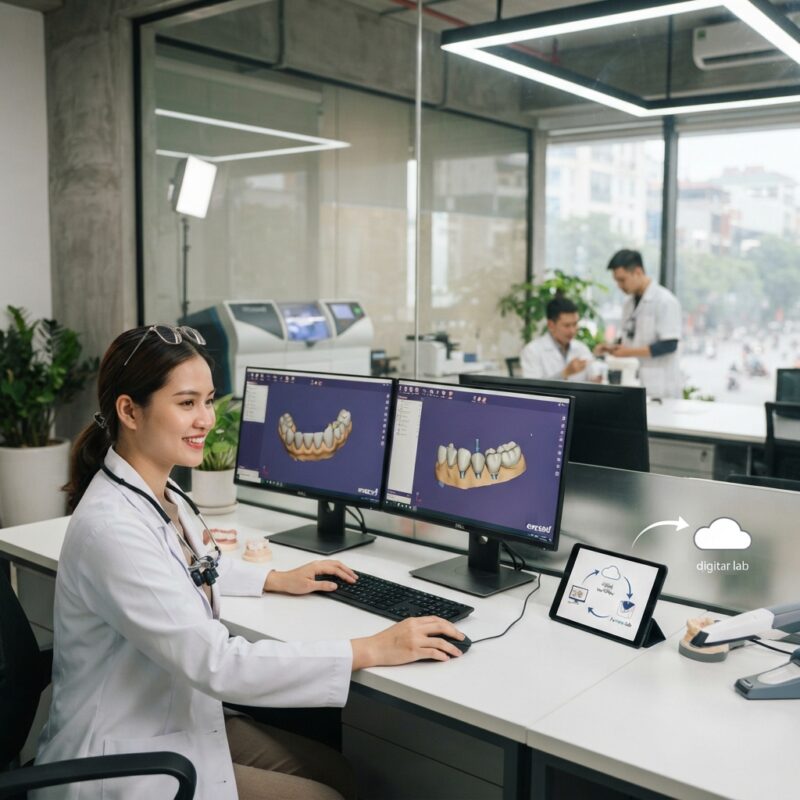
- Leverage Cloud-Based Platforms: Use platforms that allow real-time collaboration and feedback.
By executing these strategies, small labs can multiply their output without increasing headcount or capital expenditures.
What Types of Dental Prosthetics Can Be Outsourced Effectively?
The scope of CAD/CAM outsourcing covers a wide range of dental prosthetics. Key categories include:
- Crown & Bridge: Digital modeling of single-unit crowns and multi-unit bridges.
- Implants: Planning and designing implant abutments and superstructures.
- Surgical Guides: Accurate guides for implant placement based on 3D imaging.
- Dentures: Complete and partial denture digital design for better fit and aesthetics.
- Orthodontic Aligners: Sequential digital models for clear aligner therapy.
- Night Guards: Custom digital designs for protective occlusal appliances.
Outsourcing these services enables labs to specialize in manufacturing while leveraging expert designers for complex digital tasks.
How Does Digital Crown Design Work in an Outsourcing Model?
Digital crown design outsourcing involves sending intraoral scans or model scans to a CAD designer who creates a virtual crown model using software like 3Shape or exocad.
The designer ensures anatomical accuracy, proper occlusion, and margin fit. The finished CAD file is returned for CAM milling or 3D printing. This process reduces the lab’s need for in-house design expertise and speeds up production cycles.
What Are the Technological Requirements for Labs to Outsource Design Successfully?
Small dental labs must have a reliable digital workflow to outsource effectively. Essential requirements include:
- High-Quality Scanners: Intraoral or desktop scanners that produce accurate STL files.
- Secure Data Transfer: Encrypted cloud platforms for sending and receiving design files.
- Standardized File Formats: Using universal formats compatible with CAD software.
- Communication Tools: Systems for feedback, revisions, and approvals.
Meeting these technical prerequisites ensures smooth collaboration and minimizes errors during the outsourcing process.
The Financial Impact of Scaling Without Hiring Through Design Outsourcing
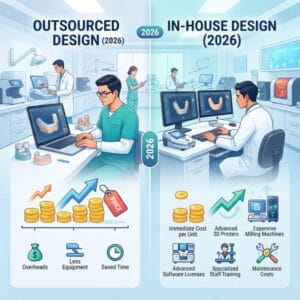
Small dental labs often struggle with the fixed costs of hiring additional employees and investing in costly CAD/CAM infrastructure. Outsourcing design mitigates these expenses by converting fixed costs into variable costs.
Labs pay only for designs needed, improving cash flow and profitability. Additionally, faster turnaround times and higher case volumes contribute to increased revenue without increasing labor overhead.
For example, a small lab outsourcing crown and bridge design can reduce design labor costs by up to 40%, while maintaining or improving quality standards.
How Can Small Dental Labs Maintain Quality Control When Outsourcing?
Maintaining quality is critical when adopting outsourcing. Labs should establish clear protocols:
- Define Design Specifications: Provide detailed case instructions and margin definitions.
- Sample Audits: Regularly review outsourced designs against clinical standards.
- Feedback Loops: Communicate promptly with designers to address discrepancies.
- Certification Requirements: Partner only with vendors accredited by recognized dental authorities.
These steps ensure the lab’s reputation remains strong and clients receive consistent high-quality prosthetics.
What Are the Emerging Trends in Dental Lab Design Outsourcing for 2026?
Several trends are shaping how small dental labs can scale without hiring in 2026 through design outsourcing:
- AI-Driven Design: Artificial intelligence is speeding up design processes and improving accuracy.
- Cloud-Based Collaboration: Enhanced platforms enable real-time case tracking and communication.
- Expanded Scope of Services: Outsourcing now includes complex implant planning and surgical guides.
- Customization and Aesthetics: Digital smile design and shading integration improve patient outcomes.
Staying abreast of these trends helps labs leverage outsourcing more effectively and remain competitive.
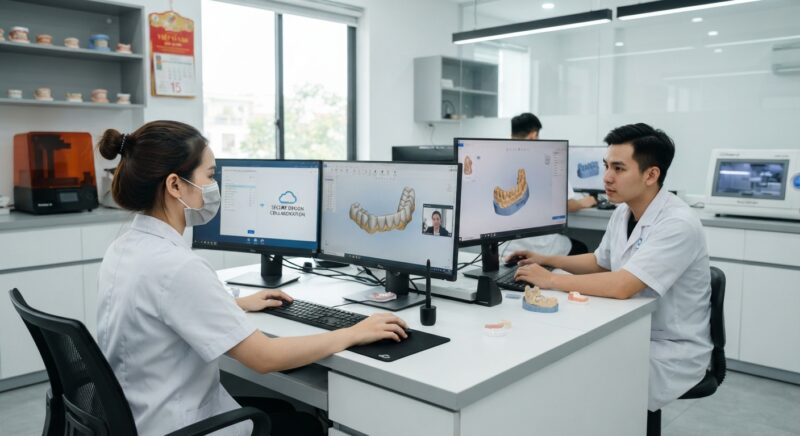
How Small Dental Labs Can Scale Without Hiring in 2026 Through Design Outsourcing: Real-World Examples
Many small labs have successfully scaled operations by outsourcing their design work. For instance, a boutique lab specializing in crowns and bridges partnered with a CAD/CAM design provider to handle all design tasks. This allowed the lab to double its case volume without hiring additional designers or investing in new software licenses.
Another example is a DSO that outsourced orthodontic aligner design, enabling rapid expansion into new markets while maintaining quality. These case studies highlight the practical benefits of outsourcing for labs seeking growth.
Choosing the Right Design Outsourcing Partner: What to Look For
Selecting a trustworthy outsourcing partner is key to successful scaling. Labs should consider:
- Experience and Specialization: Providers with expertise in crown & bridge, implants, dentures, and other prosthetics.
- Technology Stack: Use of leading CAD/CAM software and adherence to digital standards.
- Turnaround Times: Ability to meet or exceed lab deadlines consistently.
- Data Security: Compliance with HIPAA and patient privacy regulations.
- Customer Support: Responsive communication and revision policies.
Labs should also request references and review sample designs to ensure quality aligns with expectations.
How Small Dental Labs Can Scale Without Hiring in 2026 Through Design Outsourcing: Integrating with Existing Lab Workflows
Successful outsourcing requires integration with a lab’s existing processes. Labs should map out digital workflows from scanning to design submission and final manufacturing. Using cloud-based portals helps synchronize case data and allows technicians to track progress.
Additionally, outsourcing works well alongside other services such as dental practice management and restorative material sourcing, creating a seamless end-to-end solution for clients. Labs can also combine outsourcing with in-house finishing to maximize efficiency and customization.
How Small Dental Labs Can Scale Without Hiring in 2026 Through Design Outsourcing: Addressing Common Concerns
Some labs hesitate to outsource due to fears about losing control or compromising quality. However, with proper protocols and transparent communication, these concerns can be addressed effectively.
Implementing trial periods, detailed case instructions, and regular quality audits ensures the lab retains oversight. Furthermore, outsourcing providers often have certifications and quality standards that match or exceed internal benchmarks, making them reliable partners.
Future Outlook: The Role of Digital Design Outsourcing in Dental Lab Growth
Looking ahead, how small dental labs can scale without hiring in 2026 through design outsourcing will become even more relevant as digital workflows mature and demand for customized prosthetics rises. Outsourcing enables labs to remain agile, reduce risk, and focus on core competencies while expanding service offerings.
Investing in partnerships with advanced CAD/CAM design services positions small labs for sustainable growth in a competitive marketplace.
Conclusion and Next Steps
Understanding how small dental labs can scale without hiring in 2026 through design outsourcing is vital for labs aiming to grow efficiently. Outsourcing design tasks unlocks new capacity, enhances quality, and reduces operational costs, enabling labs to meet increasing demand without the burden of hiring.
By choosing the right partners, integrating digital workflows, and maintaining stringent quality controls, small dental labs and DSOs can thrive in today’s evolving dental landscape.
Step-by-Step Guide to Implementing Design Outsourcing in Your Dental Lab
Transitioning to a design outsourcing model can seem complex, especially for small dental labs new to digital workflows. To ensure a smooth integration and maximize benefits, follow this practical step-by-step approach:
Step 1: Assess Your Current Workload and Capacity
Begin by analyzing your lab’s current production volume, turnaround times, and bottlenecks. Identify which design tasks consume the most time or require specialized skills your team lacks. This assessment will help you pinpoint the areas where outsourcing can have the greatest impact.
Step 2: Define Clear Objectives and Scope
Determine what you want to achieve by outsourcing design. Are you looking to reduce turnaround times, increase production volume without hiring, or improve design quality? Also decide if you want to outsource all designs or just specific prosthetics like crowns or surgical guides.
Step 3: Research and Select Potential Outsourcing Partners
Look for partners with proven expertise in dental CAD/CAM design, compliance with industry standards, and positive client testimonials. Evaluate their technology stack, turnaround times, pricing models, and customer support capabilities.
Step 4: Pilot Project and Workflow Integration
Start with a pilot project involving a limited number of cases. This allows you to test communication channels, file transfer procedures, and the quality of outsourced designs. Use this phase to refine protocols and ensure seamless integration into your existing workflow.
Step 5: Establish Communication and Quality Control Protocols
Set up regular check-ins with your outsourcing partner and define clear criteria for design approvals. Implement a feedback loop to address any design issues quickly and maintain high-quality standards.
Step 6: Scale Up and Monitor Performance
Once confident, gradually increase the volume of outsourced designs. Continuously monitor key performance indicators such as turnaround time, error rates, and cost savings. Adjust your approach as needed to optimize results.
Step 7: Train Your Team
Ensure your in-house staff is trained on new software, communication tools, and quality review processes to work effectively with the outsourced design team. This reduces errors and strengthens collaboration.
Common Mistakes to Avoid When Outsourcing Dental Lab Design
While design outsourcing offers many benefits, pitfalls can undermine success if labs are unprepared. Here are some frequent mistakes and how to avoid them:
- Choosing Partners Based on Price Alone: Opting for the cheapest service often leads to compromised quality and slower turnaround times. Prioritize reliability and expertise to protect your lab’s reputation.
- Neglecting Clear Communication: Vague instructions or inconsistent feedback can cause design errors and delays. Establish detailed briefs and maintain ongoing dialogue with your outsourcing provider.
- Failing to Align Software and File Formats: Incompatibility between your lab’s CAD software and the design partner’s tools can create workflow disruptions. Confirm software compatibility and standardized file formats in advance.
- Overlooking Quality Control Procedures: Assuming the design partner’s work is flawless can result in costly remakes. Implement your own verification process and verify designs before production.
- Ignoring Data Security and Compliance: Dental design files contain sensitive patient information. Ensure your outsourcing partner complies with HIPAA and other relevant privacy regulations.
- Rushing the Onboarding Process: Skipping pilot testing or proper team training leads to misunderstandings and errors. Take time to onboard thoroughly and build trust.
Cost and Quality Considerations When Outsourcing Design for Small Dental Labs
Understanding the financial and quality implications is crucial for small labs deciding whether to outsource design work. Below are key factors to consider:
Cost Factors
- Upfront vs. Ongoing Expenses: Outsourcing eliminates the need for upfront investment in expensive CAD software licenses, hardware, and staff training. Instead, you pay per design or monthly service fees, converting fixed costs into variable expenses.
- Volume Discounts: Many providers offer tiered pricing where higher volumes reduce per-unit costs, allowing labs to benefit financially as they scale.
- Hidden Costs: Account for potential costs such as expedited fees, file revision charges, or costs due to remakes from design errors.
- Cost of Internal Errors: Mistakes in design due to inexperienced staff can lead to costly remakes. Outsourcing to experts can reduce these error-related expenses.
Quality Considerations
- Expertise and Experience: Reputable outsourcing partners employ certified dental technicians with specialized training in digital design, ensuring higher-quality outputs compared to in-house novice designers.
- Technology and Software: Advanced CAD/CAM software and regular updates allow outsourcing teams to deliver precise, anatomically accurate designs that improve prosthetic fit and patient satisfaction.
- Quality Assurance Practices: Partners with robust QA protocols utilize design verification tools, peer reviews, and digital simulations to reduce errors before sending files back to your lab.
- Customization and Flexibility: Evaluate whether the partner can accommodate specific design preferences or complex cases, which is vital for maintaining your lab’s unique service offerings.
Balancing cost savings with uncompromised quality is essential. Labs should perform a thorough cost-benefit analysis to determine if outsourcing design aligns with their strategic goals.
Market-Specific Insights: How Regional Factors Influence Dental Design Outsourcing
Understanding market dynamics and regional specifics can help small dental labs tailor their outsourcing strategies effectively. Here are key factors to consider based on location and market type:
Regulatory Environment
Different countries and regions have varying regulations around patient data privacy, medical device manufacturing, and digital records. For example, labs operating in the United States must ensure HIPAA compliance from their outsourcing partners, while European labs must consider GDPR requirements. Selecting a partner familiar with these regulations reduces legal risks.
Labor Costs and Availability
Regions with higher labor costs may find outsourcing more advantageous economically, especially if partners operate in countries with lower cost structures but high expertise levels. Conversely, areas with readily available skilled CAD designers may benefit from a hybrid model combining in-house and outsourced design.
Technological Infrastructure
Reliable, high-speed internet is essential for seamless file transfers and real-time communication with outsourcing teams. Labs in regions with limited broadband access may face challenges integrating digital outsourcing smoothly and should evaluate connectivity solutions.
Market Demand and Patient Preferences
In markets with high demand for premium aesthetic restorations, outsourcing partners with expertise in advanced cosmetic design may add value. Alternatively, labs serving markets prioritizing cost-effectiveness may focus on partners who optimize design efficiency without compromising reliability.
Local Competition and Collaboration Opportunities
In highly competitive areas, outsourcing design can provide a strategic edge by enabling faster turnaround and higher-quality products. In some regions, labs may collaborate with local universities or digital design hubs to create hybrid outsourcing models that blend local expertise with remote support.
Language and Cultural Compatibility
Effective communication is vital. Partnering with design teams that understand your language and market nuances can minimize misunderstandings and improve design outcomes. Multilingual support and cultural alignment are important selection criteria.
By factoring in these regional and market-specific elements, small dental labs can tailor their design outsourcing strategies to maximize operational efficiency, cost-effectiveness, and patient satisfaction in their particular environment.
If you want to learn more about how digital design outsourcing can transform your lab’s operations, contact us today to discuss tailored solutions that fit your needs.