Introduction: Addressing the Zahntechniker Shortage in Germany
The ongoing shortage of skilled dental technicians, known as Zahntechniker, poses significant challenges for German dental labs and dental service organizations (DSOs). In 2026, the industry is witnessing a pivotal shift as many labs turn to innovative solutions to maintain high-quality output without compromising turnaround times. Central to this evolution is the adoption of dental lab CAD design outsourcing, a strategic approach that enables labs to meet demand while circumventing staffing constraints.
In this article, we explore how German dental labs solve the Zahntechniker shortage with CAD design outsourcing in 2026, examining the benefits, workflows, practical examples, and future outlook of this transformative trend.
What is dental lab CAD design outsourcing?
Dental lab CAD design outsourcing is the practice of delegating the digital design phase of dental prosthetics to specialized external teams or service providers who utilize computer-aided design (CAD) technologies.
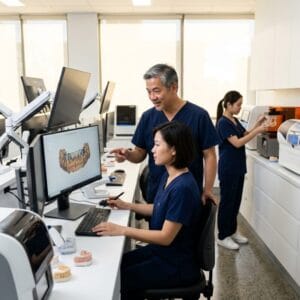
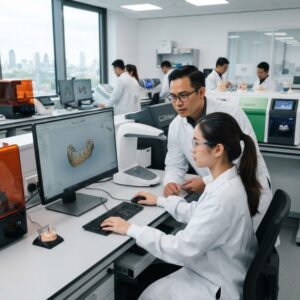
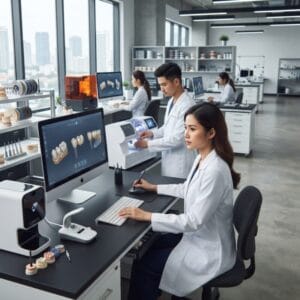
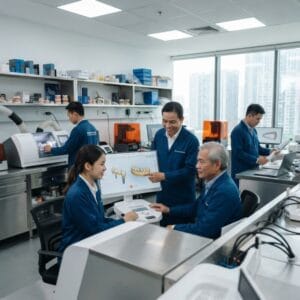
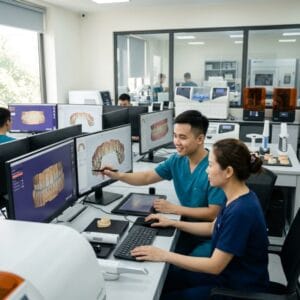
By outsourcing the design of crowns & bridges, implants, surgical guides, dentures, orthodontic aligners, and night guards, German dental labs can leverage expert digital designers who are proficient in the latest CAD/CAM software. This approach frees up in-house technicians to focus on manufacturing and finishing, while ensuring consistent quality and faster project turnaround.
Why is there a Zahntechniker shortage in Germany?
The Zahntechniker shortage stems from several factors:
- Demographic shifts: An aging workforce with many technicians retiring and fewer young professionals entering the field.
- High training demands: The profession requires extensive education and hands-on experience, limiting rapid scaling.
- Competitive labor market: Other industries with digital or technical skills attract potential candidates.
Consequently, labs face bottlenecks in producing high volumes of dental restorations, leading to increased costs and delivery delays. Outsourcing CAD design emerges as a practical solution to alleviate this pressure.
How does digital crown design work?
Digital crown design involves creating a precise 3D model of the crown restoration using CAD software based on scanned patient data.
The design process includes margin delineation, occlusion adjustment, and aesthetic customization, all performed digitally before the design file is sent for manufacturing via CAM milling or 3D printing. Outsourced CAD designers use advanced platforms—such as those from exocad or 3Shape—to ensure accuracy and compatibility with labs’ production equipment.
How German dental labs solve the Zahntechniker shortage with CAD design outsourcing in 2026
German dental labs have adopted a multi-faceted strategy combining digital transformation and outsourcing partnerships to tackle the shortage. Key methods include:
- Collaborating with specialized CAD design service providers: Labs outsource complex or volume-heavy digital design tasks to external experts, reducing the workload on in-house technicians.
- Implementing cloud-based CAD platforms: These platforms facilitate seamless file sharing, version control, and real-time collaboration between labs and outsourced designers, eliminating geographical barriers.
- Standardizing workflows: By defining clear design protocols and material specifications, labs ensure consistency and reduce revision cycles.
- Integrating digital communication tools: Video calls and virtual case reviews help clarify design requirements and expedite approvals.
This approach not only mitigates workforce shortages but also improves efficiency and scalability, allowing labs to accept larger case volumes without compromising quality.
What types of dental prosthetics benefit most from CAD design outsourcing?
Crowns & bridges, implant restorations, surgical guides, dentures, orthodontic aligners, and night guards all benefit significantly from CAD design outsourcing.
For example, surgical guide design requires high precision and extensive digital planning, which outsourced experts can efficiently manage. Similarly, orthodontic aligners demand complex sequential digital setups that can strain in-house resources. Outsourcing these tasks allows labs to focus on manufacturing and clinical coordination, enhancing overall workflow.
Advantages of CAD design outsourcing for German dental labs
- Workforce flexibility: Outsourcing alleviates staffing shortages by supplementing internal design capacity.
- Cost efficiency: Labs reduce overhead costs associated with hiring, training, and maintaining full-time digital design staff.
- Access to expertise: External providers often have specialized knowledge of the latest CAD/CAM technologies and materials.
- Faster turnaround times: Parallel processing of design tasks speeds up case completion.
- Quality consistency: Professionalized CAD teams adhere to high standards and updated protocols.
- Scalability: Labs can quickly scale production up or down based on demand without long-term staffing commitments.
How does CAD/CAM technology integrate with dental lab outsourcing?
CAD/CAM technology serves as the backbone of digital dental lab outsourcing by enabling precise and reproducible dental restorations.
Outsourced design teams use CAD software to create digital models, which are then sent electronically to labs equipped with CAM milling machines or 3D printers for fabrication. This digital workflow reduces errors, enhances communication, and allows for rapid iteration and customization. Integration with popular CAD/CAM platforms, such as those from Dentsply Sirona, ensures compatibility and streamlines case management.
Case Study: A German DSO’s success with CAD design outsourcing
One leading German dental service organization (DSO) implemented CAD design outsourcing in 2025 to combat technician shortages affecting three of its regional labs.
- Challenge: Delays in crown production and surgical guide design due to limited in-house digital design staff.
- Solution: Partnered with a dedicated CAD design outsourcing firm specializing in implant and prosthetic workflows.
- Outcome: Case turnaround times improved by 30%, and technician workload normalized, allowing in-house staff to focus on quality control and finishing.
- Additional benefits: Cost savings on recruitment and training, increased customer satisfaction, and the ability to expand service offerings to include orthodontic aligners.
This example illustrates how German dental labs solve the Zahntechniker shortage with CAD design outsourcing in 2026 by leveraging external expertise to maintain operational excellence and growth.
What are the challenges of CAD design outsourcing and how are they addressed?
While outsourcing provides many benefits, labs face challenges such as:
- Data security and patient confidentiality: Labs must ensure compliance with GDPR and HIPAA standards when sharing digital files.
- Communication barriers: Misunderstandings between labs and external designers can lead to revisions and delays.
- Integration of workflows: Aligning external design protocols with internal manufacturing processes requires coordination.
To address these issues, labs adopt secure cloud platforms, establish clear communication channels, and conduct joint training sessions. Regular quality audits and feedback loops improve collaboration over time, making outsourcing a reliable component of the lab’s digital ecosystem.
The future of dental lab workflows in Germany
Looking beyond 2026, the trend of outsourcing CAD design is expected to grow as German dental labs continue to embrace digital innovation.
- Artificial intelligence integration: AI-powered design tools may automate routine tasks, further reducing the burden on human designers.
- Expanded outsourcing scope: Labs may outsource not only design but also digital quality control and case planning.
- Global collaboration: Cross-border partnerships with CAD design firms offering multilingual and multi-time-zone support.
These developments will reinforce how German dental labs solve the Zahntechniker shortage with CAD design outsourcing in 2026 and beyond, fostering a more resilient and agile industry.

How to select the right CAD design outsourcing partner?
Choosing the right outsourcing partner is critical to success and involves evaluating:
- Technical expertise: Proficiency in relevant CAD software and dental materials.
- Industry experience: Familiarity with German dental standards and clinical requirements.
- Communication capabilities: Responsive support and clear case documentation.
- Data security measures: Compliance with privacy regulations and secure file handling.
Labs should also request sample designs and client references to gauge quality and turnaround times. A transparent pricing model and willingness to adapt workflows are additional indicators of a dependable partner. This careful selection process ensures that outsourcing complements the lab’s operations effectively.
What role do digital platforms play in facilitating outsourcing?
Digital platforms serve as the connective tissue between labs and outsourced CAD designers by providing cloud-based environments for case management, file exchange, and communication.
Platforms like those offered by Medit enable seamless integration with intraoral scanners and CAD software, reducing manual steps and errors. These platforms also support version control and audit trails, which are essential for regulatory compliance. Ultimately, digital platforms empower labs to manage outsourced projects with transparency and efficiency.
Conclusion
In summary, how German dental labs solve the Zahntechniker shortage with CAD design outsourcing in 2026 exemplifies a pragmatic and forward-looking response to a critical industry challenge. By embracing digital design outsourcing, labs gain flexibility, access to expert skills, and improved operational efficiency. This strategy not only addresses current workforce limitations but also positions German dental labs for sustained innovation and growth.
For labs and DSOs looking to optimize their workflows, adopting CAD design outsourcing is no longer optional but essential. This trend will continue shaping the future of dental prosthetics production in Germany and set a benchmark for global best practices.
Explore how outsourcing your CAD design needs can elevate your lab’s productivity and quality, and learn more about related services such as surgical guide design and implant restoration workflows.
Contact Us
Ready to overcome the Zahntechniker shortage with expert CAD design outsourcing? Contact our team today to discuss tailored solutions for your dental lab.