Understanding the Current Landscape: Is China Still a Safe Choice for Dental Design Outsourcing in 2026? Risks and Alternatives
Is China still a safe choice for dental design outsourcing in 2026? risks and alternatives are critical considerations as global dental labs and Dental Service Organizations (DSOs) navigate evolving geopolitical, technological, and quality assurance challenges. Over the past decade, China has been a dominant player in the dental CAD/CAM outsourcing market, offering cost-effective and scalable digital design services for crown and bridge, implants, surgical guides, dentures, orthodontic aligners, and night guards. However, recent shifts in trade policies, data security concerns, and quality control variations necessitate a fresh evaluation.
Many dental labs initially outsourced to Chinese providers due to competitive pricing and advanced manufacturing capabilities. Yet, by 2026, questions about supply chain reliability, IP protection, and communication efficiency have grown. This article delves deeply into these risks and explores credible alternatives to help dental industry stakeholders make informed decisions.
What Is Dental Lab CAD/CAM Outsourcing and Why Is China a Major Player?
Dental lab CAD/CAM outsourcing involves delegating the digital design and manufacturing of dental prosthetics to specialized external providers using computer-aided design and manufacturing technologies.
China’s rise as a major destination for dental design outsourcing stems from several factors:
- Cost Efficiency: Significantly lower labor and operational expenses compared to Western countries.
- Technological Infrastructure: Rapid adoption of CAD/CAM software and advanced 3D printing and milling machines.
- Production Scale: High-volume capacity to serve large DSOs and dental labs globally.
- Experience: Growing expertise in designing crowns, bridges, implants, and surgical guides with reliable turnaround times.
However, despite these advantages, the question remains: is China still a safe choice for dental design outsourcing in 2026? risks and alternatives must be evaluated in light of emerging challenges.
What Are the Primary Risks Associated with Outsourcing Dental Design to China?
The primary risks tied to outsourcing dental CAD/CAM design services to China fall into several key categories:
- Quality Control Variability: While many Chinese labs maintain strict standards, inconsistency in quality can result from rapid scaling and regional disparities.
- Intellectual Property (IP) Security: Concerns over data and design theft have intensified, especially with increasingly sophisticated digital workflows.
- Geopolitical and Trade Instability: Tariffs, export restrictions, and diplomatic tensions can disrupt supply chains and increase costs unexpectedly.
- Communication Barriers: Time zone differences, language difficulties, and cultural nuances may hinder effective collaboration and lead to design errors.
- Regulatory Compliance: Meeting Western medical device regulations (such as FDA or CE standards) requires stringent oversight, which may be inconsistently enforced.
- Lead Time and Logistics Risks: Global shipping delays or customs issues can impact delivery schedules for time-sensitive restorative cases.
For dental labs and DSOs, understanding these risks is essential when considering if is China still a safe choice for dental design outsourcing in 2026? risks and alternatives fits their operational needs and risk tolerance.
How Do Quality and Technology Trends Affect the Safety of Outsourcing to China?
The safety of outsourcing dental design to China in 2026 is heavily influenced by ongoing trends in quality assurance and technology adoption. Many Chinese labs now use cutting-edge platforms such as 3Shape and Exocad for digital design, ensuring high precision and compatibility with global scanning standards.
However, disparities persist. Some smaller or mid-tier Chinese providers may lack rigorous in-house quality control processes, leading to inconsistent prosthetic fit or material issues, especially with complex cases like implant-supported dentures or surgical guides.
Additionally, the integration of AI-driven design optimization tools and predictive analytics is unevenly spread. Leading Chinese firms invest heavily in innovation, but less established labs may still rely on manual or semi-automated workflows.
Ultimately, dental labs and DSOs must weigh whether China’s technological capabilities are sufficiently advanced and reliable to mitigate risks, or if alternative partners with more transparent quality systems offer better security.
What Are the Data Security and Intellectual Property Concerns When Outsourcing to China?
Data security and intellectual property protection are paramount when outsourcing dental CAD/CAM design, as patient scans and proprietary prosthetic designs constitute sensitive information.
China’s cybersecurity regulations and enforcement frameworks differ significantly from Western norms, prompting concerns about unauthorized access, reverse engineering, or data leaks. Recent geopolitical developments have heightened scrutiny over cross-border data transfers and cloud storage practices.
For dental labs and DSOs, this raises the question: is China still a safe choice for dental design outsourcing in 2026? risks and alternatives include prioritizing providers with robust data encryption, secure file transfer protocols, and strict confidentiality agreements.
Many top-tier Chinese labs have invested in ISO-certified data security systems, but verifying compliance and ongoing audits is essential. Partnering with labs that operate localized servers or offer onshore design review options can also reduce IP exposure.
Consulting resources like the American Dental Association for best practices on data handling can guide labs in implementing secure workflows.
What Are the Viable Alternatives to China for Dental Design Outsourcing?
As concerns about China grow, dental labs and DSOs increasingly explore alternatives that balance cost, quality, and risk management. Some prominent options include:
- Eastern Europe: Countries like Poland, Hungary, and the Czech Republic offer high technical skill levels, EU regulatory compliance, and competitive pricing.
- Mexico and Latin America: Proximity to the US market reduces shipping time and customs delays, with rising investments in dental CAD/CAM technology.
- South Korea and Japan: Known for technological innovation and stringent quality standards, albeit at higher price points.
- Domestic US-Based CAD/CAM Labs: Though more expensive, these provide superior communication, IP security, and faster turnaround times.
Each alternative presents trade-offs in cost, lead times, and capability. Choosing the right partner requires detailed vetting of technology platforms, certifications, and client testimonials.
For instance, many labs now use software from Medit or hardware from Roland DG to ensure compatibility and quality across outsourcing destinations.
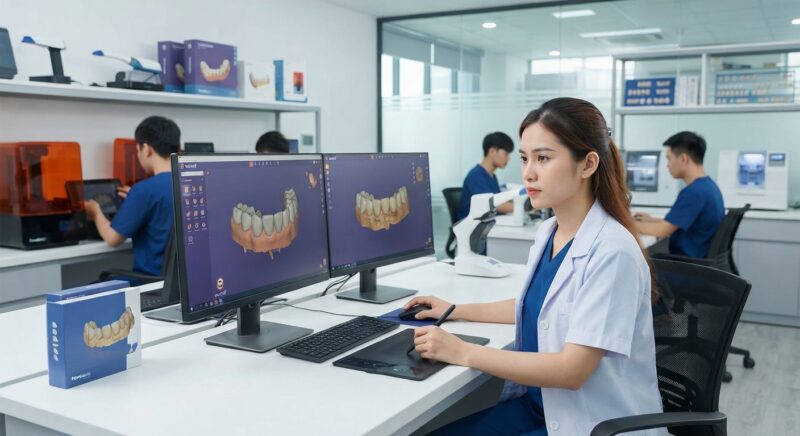
How Can Dental Labs and DSOs Mitigate Risks When Outsourcing to China?
Mitigating risks associated with outsourcing dental design to China involves strategic steps:
- Due Diligence: Conduct thorough background checks on lab certifications, client references, and compliance with international dental standards.
- Trial Projects: Start with small-scale cases to evaluate quality, communication, and turnaround before scaling.
- Clear Contracts: Specify quality benchmarks, IP protection clauses, data security protocols, and penalty terms.
- Regular Audits: Schedule virtual or onsite inspections to monitor manufacturing and design processes.
- Use of Secure Technology: Employ encrypted data sharing platforms and limit access to sensitive files.
- Backup Plans: Maintain relationships with secondary providers, including local labs, to manage disruptions.
By applying such measures, dental labs and DSOs can better manage the question: is China still a safe choice for dental design outsourcing in 2026? risks and alternatives and make decisions aligned with their operational resilience goals.
How Do Industry Trends Influence the Future of Dental Design Outsourcing?
Industry trends in digital dentistry, regulatory frameworks, and supply chain globalization shape the future of outsourcing decisions. The increasing adoption of intraoral scanners and AI-powered design software is raising client expectations for precision and speed.
Regulatory bodies worldwide are tightening medical device guidelines, impacting how dental prosthetics are designed, tested, and approved. Providers with established compliance processes will have a competitive edge.
Additionally, the COVID-19 pandemic and ongoing geopolitical tensions have highlighted vulnerabilities in global supply chains, encouraging diversification of outsourcing partners.
Dental labs and DSOs are thus revisiting their outsourcing strategies, balancing cost savings with risk mitigation and quality assurance. Integrating digital crown design expertise and working with innovative technology vendors can enhance outcomes regardless of location.
Summary: Is China Still a Safe Choice for Dental Design Outsourcing in 2026? Risks and Alternatives
In conclusion, the question is China still a safe choice for dental design outsourcing in 2026? risks and alternatives involves a nuanced evaluation. China remains a formidable player with advanced technology, competitive pricing, and volume capacity. However, challenges in quality consistency, IP security, regulatory compliance, and geopolitical risks require careful consideration.
Alternatives such as Eastern Europe, Latin America, and domestic US labs offer viable options with different risk profiles. The right choice depends on a dental lab’s or DSO’s priorities regarding cost, quality, turnaround time, and data security.
By conducting rigorous due diligence, leveraging modern technology platforms from leaders like Dentsply Sirona, and maintaining flexible outsourcing strategies, dental professionals can navigate this complex landscape effectively.
Contact Us for Expert Dental Design Outsourcing Solutions
Step-by-Step Guide to Evaluating and Selecting a Dental Design Outsourcing Partner
Choosing the right outsourcing partner for dental design requires a thorough and systematic approach. A structured evaluation process helps labs and DSOs avoid costly mistakes and ensure high-quality outcomes. Below is a practical step-by-step framework to guide your decision-making.
Step 1: Define Your Project Requirements Clearly
- Scope and Volume: Determine the types of restorations (crowns, bridges, implants, etc.) and the expected volume of cases monthly or annually.
- Technology Compatibility: Identify CAD/CAM software and scanner file formats your practice uses to avoid compatibility issues.
- Turnaround Time Expectations: Specify acceptable delivery timelines, including rush orders and revisions.
- Quality Standards: Establish benchmarks for fit accuracy, material compatibility, and design precision.
Step 2: Research Potential Vendors
- Market Reputation: Look for vendors with verified client testimonials, case studies, and certifications.
- Technical Capabilities: Assess their software platforms, hardware investments, and design expertise.
- Data Security Measures: Inquire about encryption protocols, secure file transfer solutions, and IP protection policies.
- Location and Language: Consider geographic proximity and language fluency for smoother communication.
Step 3: Request Samples and Pilot Projects
- Sample Designs: Ask for sample files or physical models to evaluate design quality and accuracy.
- Pilot Run: Conduct a small batch project to test workflow integration, communication responsiveness, and turnaround reliability.
- Feedback Loop: Provide detailed feedback and assess vendor’s willingness to iterate and improve.
Step 4: Negotiate and Formalize Contracts
- Pricing Structure: Discuss cost per case, volume discounts, and penalties for missed deadlines.
- Confidentiality Agreements: Ensure signed NDAs and clear IP ownership clauses.
- Service Level Agreements (SLAs): Define expectations for quality, communication, and dispute resolution.
- Exit Clauses: Include terms for contract termination and transition support.
Step 5: Implement and Monitor Partnership
- Integration: Align digital workflows and software systems for seamless data exchange.
- Quality Audits: Regularly review delivered designs and physical outcomes against quality standards.
- Communication: Maintain consistent check-ins and establish escalation paths for urgent issues.
- Continuous Improvement: Use performance metrics to guide process enhancements.
Common Pitfalls and How to Avoid Them When Outsourcing Dental Design
Despite the many benefits of outsourcing, dental labs and DSOs can fall into common traps that undermine project success. Being aware of these pitfalls and proactively addressing them improves outcomes and preserves relationships.
Inadequate Due Diligence
Many organizations rush into partnerships without fully vetting the vendor’s capabilities, certifications, or financial stability. This can lead to subpar designs, missed deadlines, or even vendor insolvency. Always conduct comprehensive background checks and verify references.
Poor Communication and Cultural Misunderstandings
Differences in language and business culture can create confusion around specifications, revisions, and timelines. Establishing clear communication protocols, using bilingual coordinators, and scheduling regular video calls can bridge these gaps.
Ignoring Compliance and Regulatory Requirements
Failing to ensure that outsourced designs meet local dental regulations and material standards can result in rejected cases or legal liabilities. Confirm that vendors understand and comply with country-specific dental codes, material approvals, and patient safety standards.
Overlooking Data Security Risks
Dental designs contain sensitive patient information and proprietary techniques. Vendors without robust cybersecurity measures expose your practice to data breaches. Insist on encrypted data transfers, secure cloud storage, and regular security audits.
Unrealistic Cost Expectations
Choosing the cheapest provider without considering quality or hidden fees often leads to higher long-term costs due to remakes and delays. Balance price with quality assurances and transparent pricing models to avoid surprises.
Cost and Quality Considerations: Balancing Value in Dental Design Outsourcing
Cost efficiency is a key driver for outsourcing dental design, but it must be balanced against quality to ensure clinical success and patient satisfaction. Understanding how cost drivers and quality factors interplay helps in making informed decisions.
Cost Components in Dental Design Outsourcing
- Design Fees: Base charges per unit or case, often varying by complexity.
- Software and Technology Charges: Some vendors charge for advanced design features or software licenses.
- Revisions and Remakes: Costs incurred when designs fail initial quality checks and require adjustments.
- Shipping and Logistics: Physical models or outputs shipped internationally add to expenses and timelines.
- Project Management: Fees for dedicated account managers or coordination services.
Quality Factors Impacting Cost and Outcomes
- Accuracy and Fit: Precision reduces chairside adjustments and remakes, saving time and money.
- Material Compatibility: Proper design parameters ensure restorations fit specific materials, preventing failures.
- Experience and Expertise: Skilled designers reduce errors and improve esthetic outcomes.
- Technology Infrastructure: Vendors with state-of-the-art CAD/CAM systems deliver higher consistency.
Strategies for Balancing Cost and Quality
- Establish Clear Quality Benchmarks: Define acceptance criteria upfront to avoid costly revisions.
- Negotiate Volume Discounts: Leverage consistent order volumes to obtain better pricing without sacrificing quality.
- Use Pilot Projects: Validate quality before scaling up to larger orders.
- Bundle Services: Combining design and production may reduce costs and improve quality control.
- Invest in Training: Equip in-house staff to optimize design inputs and communicate effectively with vendors.
Market-Specific Considerations: Tailoring Outsourcing Strategies to Regional Dental Markets
Different global dental markets have unique characteristics that influence outsourcing strategies. Understanding these market specifics ensures your outsourcing approach aligns with local demands, regulations, and patient expectations.
North America
- High Regulatory Standards: Stringent FDA and ADA requirements necessitate vendors with proven compliance.
- Preference for Fast Turnaround: Practices expect rapid delivery to maintain patient flow.
- Focus on Esthetics: High demand for cosmetic dentistry drives need for advanced design capabilities.
Europe
- Data Privacy Regulations: GDPR requires strict data handling and vendor transparency.
- Diverse Languages and Standards: Outsourcing partners must accommodate multiple languages and CE certifications.
- Emphasis on Sustainability: Eco-friendly materials and processes are increasingly valued.
Asia-Pacific
- Rapid Market Growth: Emerging markets present opportunities but also variable quality standards.
- Cost Sensitivity: Competitive pricing is critical but not at the expense of clinical efficacy.
- Technological Adoption: High uptake of digital workflows facilitates integration with local labs.
Latin America
- Infrastructure Challenges: Supply chain and logistics can impact delivery timelines.
- Growing Demand for Digital Solutions: Increasing adoption of CAD/CAM technology opens avenues for outsourcing partnerships.
- Regulatory Variability: Diverse national standards require flexible vendor compliance.
Contact us today to discuss how our secure, high-quality CAD/CAM dental design outsourcing services can help your lab or DSO thrive in 2026 and beyond.