
Elevating Precision: The Indispensable Dental Lab Quality Control Workflow in the Digital Age
In the rapidly evolving landscape of digital dentistry, the demand for precision, consistency, and efficiency has never been higher. For dental labs and DSOs, a meticulously managed dental lab quality control workflow is not merely a best practice; it is the cornerstone of patient satisfaction, practitioner trust, and business success. As technology advances, traditional quality checks are being augmented and transformed by digital processes, opening new avenues for unparalleled accuracy. However, this shift also introduces complexities, requiring specialized expertise and robust systems to ensure every restoration meets the highest standards.
This article delves into the critical role of the dental lab quality control workflow in modern dentistry, exploring how expert CAD/CAM digital design outsourcing can serve as a powerful catalyst for improvement. We’ll examine how leveraging external specialists for intricate design tasks—from crowns and bridges to complex implant cases, surgical guides, dentures, orthodontic aligners, and night guards—can not only streamline operations but also elevate the inherent quality of your output, ensuring a superior dental lab quality control workflow.
What is a dental lab quality control workflow?
A dental lab quality control workflow is a systematic series of procedures and checks implemented at various stages of the manufacturing process to ensure that all dental prosthetics and devices meet predetermined standards of accuracy, fit, function, aesthetics, and safety. This comprehensive framework encompasses everything from initial impression analysis and material selection to design validation, fabrication scrutiny, and final inspection, all aimed at minimizing errors and maximizing the reliability of the final product within a robust dental lab quality control workflow.
In the context of digital dentistry, this workflow has evolved significantly. It now heavily relies on digital scanning, CAD software, and CAM manufacturing processes. The dental lab quality control workflow ensures that the digital design accurately reflects the prescription, that the manufacturing process flawlessly executes that design, and that the final product adheres to all clinical and aesthetic requirements. Without a stringent dental lab quality control workflow, even the most advanced technology cannot guarantee optimal outcomes, leading to potential remakes, chairside adjustments, and compromised patient care.
The Evolution of Quality Control in Digital Dentistry
Historically, a dental lab quality control workflow was predominantly manual, relying on skilled technicians’ keen eyes and tactile experience. While invaluable, this approach could be subject to variability. The advent of digital dentistry—intraoral scanners, CBCT imaging, CAD/CAM software, and 3D printers—has revolutionized this process. Digital data offers unprecedented levels of precision and reproducibility, fundamentally altering the dental lab quality control workflow.
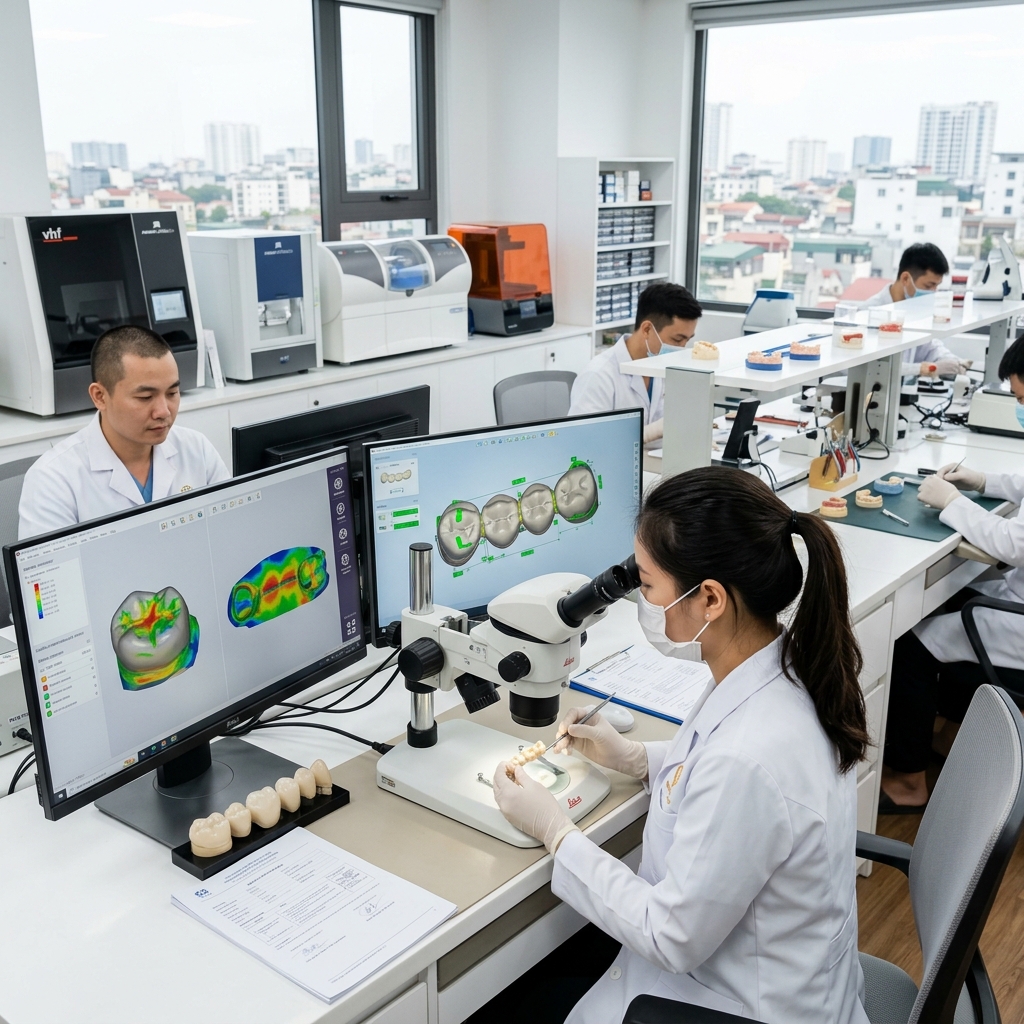
Today, the digital dental lab quality control workflow begins with precise digital impressions or scans, which are then imported into sophisticated CAD software. Here, the design process is meticulously controlled, allowing for detailed analysis of occlusion, contacts, emergence profiles, and anatomical contours. Software tools enable designers to simulate fit and function before any physical fabrication begins, significantly enhancing the early stages of the dental lab quality control workflow. This digital blueprint then guides CAM manufacturing, where machines execute the design with micro-level accuracy. Post-fabrication, digital scanning can even be used to verify the physical product against its digital design, adding another layer of verification to the dental lab quality control workflow. This evolution ensures that quality is not just inspected at the end but is built into every step of the process.
Challenges in Maintaining a High-Standard Dental Lab Quality Control Workflow
Despite the advantages of digital technology, maintaining an exemplary dental lab quality control workflow presents several challenges for dental labs and DSOs:
- Expertise Gap: The rapid pace of technological change means a constant need for highly skilled CAD designers who are proficient in various software platforms (e.g., Exocad, 3Shape) and specialized design modules for different indications. Training and retaining such talent can be resource-intensive, impacting the consistency of the dental lab quality control workflow.
- Software & Hardware Investment: Acquiring and maintaining cutting-edge CAD/CAM software and hardware requires significant capital investment. Keeping these systems updated and integrating them seamlessly into a dental lab quality control workflow can be a logistical and financial burden.
- Time Constraints: Complex cases, especially full-arch restorations or intricate implant designs, demand considerable design time. Labs often face tight deadlines, which can put pressure on the design stage, potentially compromising the thoroughness of the dental lab quality control workflow.
- Consistency Across Cases: Ensuring uniform quality across a high volume of diverse cases is challenging. Variations in designer skill levels or hurried processes can lead to inconsistencies in the dental lab quality control workflow and final product.
- Rework and Remakes: Errors in the design or manufacturing process inevitably lead to costly remakes, wasting materials, time, and labor. A robust dental lab quality control workflow aims to minimize these occurrences, but achieving this can be difficult without specialized focus.
- Integration Complexity: Combining different digital tools—scanners, design software, CAM software, printers—into a cohesive and efficient dental lab quality control workflow requires deep technical understanding and careful management.
These challenges highlight the need for strategic solutions that can bolster a lab’s capacity to deliver consistent, high-quality restorations, thereby strengthening their overall dental lab quality control workflow.
How Does Digital Design Outsourcing Enhance Your Dental Lab Quality Control Workflow?
Dental lab CAD/CAM digital design outsourcing is a service where an external team of CAD specialists designs a case’s crowns, implants, dentures, or surgical guides while the lab or DSO keeps milling and finishing in-house. The outsourced team returns a ready-to-mill file, typically within 8 to 24 hours.
1. Access to Specialized Expertise and Advanced Technology
Outsourcing firms specialize in digital design and often employ designers with extensive experience across a multitude of indications and software platforms. This means your lab gains immediate access to a higher level of expertise for complex cases like full-arch implant restorations or intricate surgical guides, which might otherwise strain your in-house capabilities. These specialists are often trained in the latest software updates and design techniques, ensuring that your projects benefit from cutting-edge approaches. This immediate access to deep expertise directly translates into a more precise and reliable dental lab quality control workflow.
2. Enhanced Consistency and Standardization
Professional outsourcing partners adhere to strict internal protocols and standardization methods. They implement their own rigorous dental lab quality control workflow to ensure every design meets specific anatomical, functional, and aesthetic criteria. This external layer of quality assurance means that irrespective of the complexity or volume of cases, you receive designs that are consistently accurate and compliant with industry standards. This level of standardization is crucial for maintaining a predictable and high-quality dental lab quality control workflow for your end products.
3. Scalability and Efficiency
Outsourcing provides unparalleled flexibility to scale your design capacity up or down based on demand. During peak periods, you can handle a higher volume of cases without compromising the dental lab quality control workflow or overworking your in-house team. This efficiency allows your lab to focus its internal resources on fabrication and other core competencies, knowing that the design phase is expertly managed. It frees up your technicians to concentrate on the physical aspects of the dental lab quality control workflow, where their manual skills are most critical.
4. Reduced Rework and Remakes
Precision at the design stage is paramount in preventing costly remakes. Expert outsourced designers, with their specialized knowledge and advanced tools, are less prone to common design errors. Their stringent internal dental lab quality control workflow catches potential issues before they ever reach the manufacturing phase. This proactive approach significantly reduces the incidence of ill-fitting restorations, saving your lab valuable time, materials, and labor, and improving the overall efficiency of your dental lab quality control workflow.
5. Cost-Effectiveness and Resource Optimization
Instead of investing in continuous training, expensive software licenses for every workstation, and additional salaries, outsourcing allows you to pay for design services as needed. This converts a significant fixed cost into a variable one, optimizing your operational budget. The financial savings can be reinvested into other areas of your lab, such as advanced manufacturing equipment or further enhancing your in-house dental lab quality control workflow for fabrication.
By strategically integrating digital design outsourcing into your operations, you are not just delegating a task; you are embedding an additional layer of expertise and scrutiny into your dental lab quality control workflow, leading to superior outcomes and greater operational resilience.
Specific Applications of Outsourced Digital Design in QC
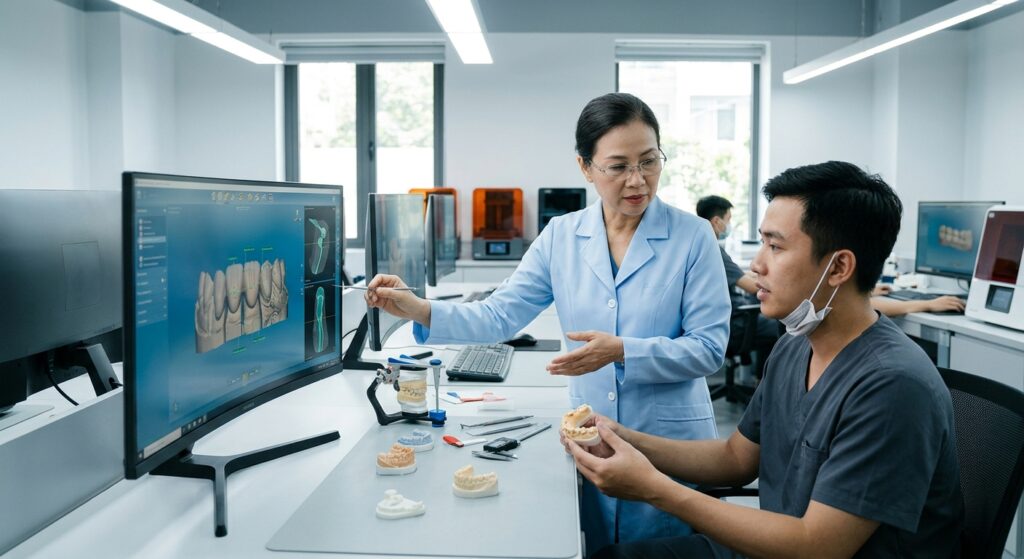
The impact of outsourcing on the dental lab quality control workflow is evident across various prosthetic applications:
Crown & Bridge Design
For single crowns and multi-unit bridges, outsourced designers focus on meticulous margin adaptation, optimal occlusal contacts, precise interproximal spaces, and natural anatomical contours. Their expertise ensures that the digital design accounts for material shrinkage and milling parameters, leading to restorations with an accurate fit and minimal chairside adjustments. This attention to detail at the design stage is a crucial part of the dental lab quality control workflow for fixed prosthetics.
Implant Prosthetics
Implant cases demand extreme precision. Outsourced design services ensure accurate implant abutment and crown design, considering emergence profiles, screw access channels, and soft tissue contours. They can integrate CBCT data with intraoral scans to plan restorations that are biologically sound and aesthetically pleasing. This specialized approach elevates the dental lab quality control workflow for complex implant cases, reducing complications.
Surgical Guides
The design of surgical guides is perhaps where precision is most critical, directly impacting patient safety and treatment predictability. Outsourcing ensures that guides are designed with utmost accuracy, integrating CBCT and intraoral scan data to determine optimal implant placement depth, angulation, and position. This minimizes surgical risks and enhances the predictability of the entire implant procedure, forming a vital part of the dental lab quality control workflow for guided surgery.
Dentures (Full and Partial)
Digital denture design offers significant advantages in fit and aesthetics. Outsourced designers meticulously plan the denture base, tooth setup, and occlusal scheme, ensuring proper support, stability, retention, and esthetics. This digital precision reduces the need for multiple try-ins and adjustments, improving patient comfort and satisfaction, and streamlining the dental lab quality control workflow for removable prosthetics.
Orthodontic Aligners
The success of orthodontic aligners hinges on precise tooth movement planning. Outsourcing allows for the creation of highly accurate sequential aligner designs, predicting tooth movements and ensuring each stage progresses as intended. This expertise contributes significantly to predictable treatment outcomes and is a specialized aspect of the dental lab quality control workflow for orthodontics. Your lab can focus on aligner manufacturing while design experts handle the intricate planning.
Night Guards and Splints
For occlusal guards and splints, a precise fit is essential for patient comfort and therapeutic effectiveness. Outsourced designers create custom designs that accurately conform to the patient’s dentition, ensuring optimal occlusion and even distribution of forces. This minimizes chairside grinding and adjustments, enhancing the overall patient experience and efficiency of the dental lab quality control workflow.
Integrating Outsourcing into Your Existing Dental Lab Quality Control Workflow
Successfully integrating outsourced digital design into your lab requires a thoughtful approach:
- Clear Communication Protocols: Establish robust communication channels for case submission, design reviews, and feedback. Utilize platforms that allow for easy sharing of files, annotations, and real-time discussions to ensure the outsourced team fully understands your requirements and the nuances of your dental lab quality control workflow.
- Standardized Submission Forms: Develop comprehensive submission forms that capture all necessary patient data, prescription details, material preferences, and specific instructions. This minimizes ambiguity and ensures the outsourced designers have all information required to maintain your dental lab quality control workflow.
- Data Security and Privacy: Ensure your outsourcing partner adheres to strict data security and HIPAA/GDPR compliance protocols. Secure file transfer methods and confidentiality agreements are paramount for protecting sensitive patient information.
- Feedback Loops and Iterative Review: Implement a system for reviewing initial designs and providing constructive feedback. A good outsourcing partner will be responsive to revisions and work collaboratively to refine the design until it perfectly aligns with your dental lab quality control workflow standards.
- Pilot Projects: Start with a few non-critical cases to evaluate the outsourcing partner’s capabilities, communication style, and adherence to your quality expectations. This allows for a smooth integration before committing to a larger volume, ensuring the outsourced component enhances your dental lab quality control workflow rather than disrupting it.
- Integration with Fabrication: Ensure the outsourced designs are compatible with your in-house CAM software and milling/printing equipment. A seamless handover from design to fabrication is crucial for maintaining the efficiency of your dental lab quality control workflow.
By carefully managing these integration points, dental labs can leverage the benefits of outsourcing to significantly strengthen their dental lab quality control workflow without compromising operational control.
Key Elements of a Robust Outsourced Dental Lab Quality Control Workflow
When choosing an outsourcing partner, consider these elements that define their commitment to a superior dental lab quality control workflow:
- Experienced and Certified Designers: Look for partners who employ highly trained and experienced CAD designers with certifications in leading software platforms. Their expertise is the foundation of a reliable dental lab quality control workflow.
- Advanced Software & Technology Stack: A reputable outsourcing provider will utilize the latest versions of industry-standard design software and possess the infrastructure to handle diverse case types and file formats. This ensures compatibility and cutting-edge design capabilities that support your dental lab quality control workflow.
- Rigorous Internal Protocols: Inquire about their internal dental lab quality control workflow. Do they have multiple checkpoints, peer reviews, or automated validation tools? A transparent and documented QC process is a strong indicator of reliability.
- Client Collaboration and Customization: The best partners work *with* you, adapting to your specific preferences, material choices, and clinical philosophies. They understand that a truly effective dental lab quality control workflow is a collaborative effort.
- Continuous Improvement and Training: The digital dentistry landscape is always evolving. A strong outsourcing partner will demonstrate a commitment to continuous learning, regularly updating their skills and technologies to keep pace with industry advancements and improve their dental lab quality control workflow.
- Responsiveness and Turnaround Times: While quality is paramount, timely delivery is also crucial. Assess their ability to meet your turnaround requirements without sacrificing the integrity of their dental lab quality control workflow.
- Comprehensive Portfolio: A partner capable of handling a wide range of indications—from simple crowns to complex full arch implant solutions—demonstrates versatility and a deep understanding of varied clinical requirements, which underpins their robust dental lab quality control workflow across all services.
Future Trends and the Role of Outsourcing in Dental Lab Quality Control
The future of the dental lab quality control workflow is poised for further innovation, driven by advancements in artificial intelligence (AI), machine learning, and automation. AI-powered algorithms are already assisting in design validation, identifying potential errors or inconsistencies that might be missed by the human eye. Machine learning can analyze vast datasets of successful cases to inform optimal design parameters, further standardizing and enhancing the dental lab quality control workflow.
Outsourcing partners are at the forefront of adopting these technologies. Their specialized focus allows them to invest in and integrate these cutting-edge tools more rapidly than individual labs, offering their clients access to a dental lab quality control workflow that is continuously optimized by the latest innovations. As the industry moves towards even greater personalization and digital integration, the collaborative model of outsourcing will become even more critical for labs seeking to maintain a competitive edge and deliver unparalleled quality.
The American Dental Association (ADA) continuously emphasizes the importance of quality and safety in dental prosthetics, which aligns perfectly with the objectives of a meticulously managed dental lab quality control workflow. Embracing advanced digital design and strategic outsourcing is not just about efficiency; it’s about upholding these high standards for patient care.
Conclusion
A robust dental lab quality control workflow is the bedrock of success for any modern dental lab or DSO. The integration of expert CAD/CAM digital design outsourcing provides a powerful pathway to overcome common challenges, enhance precision, ensure consistency, and optimize operational efficiency. By leveraging specialized expertise and advanced technology, labs can elevate their output, reduce costly remakes, and ultimately deliver superior restorations that meet the highest clinical and aesthetic expectations. This strategic partnership transforms the dental lab quality control workflow from a mere necessity into a significant competitive advantage.
Ready to elevate your dental lab quality control workflow? Contact us today to learn how our expert CAD/CAM digital design outsourcing services can transform your lab’s efficiency and precision.


