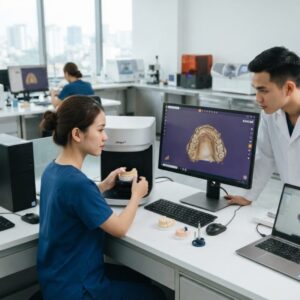
Introduction to Dental Case Tracking Software and Outsourced CAD Design
Dental case tracking software: benefits for outsourced CAD design in 2026 have become indispensable for dental labs and Dental Service Organizations (DSOs) striving to maintain a competitive edge. With the increasing adoption of digital workflows, outsourcing CAD/CAM design for crowns, bridges, implants, surgical guides, dentures, orthodontic aligners, and night guards is now more efficient and reliable than ever before.
This article delves deep into how dental case tracking software specifically enhances outsourced CAD design workflows, improving communication, reducing errors, and accelerating turnaround times in 2026 and beyond.
What is dental case tracking software and how does it work?
Dental case tracking software is a specialized digital platform designed to monitor and manage the status of dental cases throughout the entire production workflow, from impression scanning to final delivery.
It integrates with CAD/CAM systems and laboratory management software to provide real-time updates on case progress, assign tasks, and facilitate communication between dental labs, designers, and clinical partners. By tracking each stage — including design requests, revisions, approvals, and manufacturing — it ensures transparency and accountability.
For example, labs using 3Shape or Exocad CAD software often pair these with case tracking solutions to streamline design outsourcing and monitor external CAD designers’ workload and output quality.
Why are dental labs and DSOs increasingly outsourcing CAD design?
Outsourcing CAD design allows dental labs and DSOs to access expert digital designers, reduce in-house staffing costs, and scale their production capacity without investing heavily in expensive software or training.
Dental case tracking software: benefits for outsourced CAD design in 2026 include ensuring seamless case handoff and status visibility, which address common outsourcing challenges like communication gaps and turnaround delays. This technology is critical for managing multiple external design partners and maintaining quality standards.
Outsourcing also enables labs to focus on manufacturing and finishing, while leveraging the specialized skills of CAD designers who stay updated with the latest digital design trends and software capabilities.
How does dental case tracking software improve communication between labs and outsourced CAD designers?
Dental case tracking software: benefits for outsourced CAD design in 2026 prominently include enhanced communication channels that replace inefficient emails, phone calls, or manual status updates.
The software centralizes all case information — design files, instructions, patient data, and feedback — in one platform accessible to both labs and outsourced designers. This transparency decreases errors resulting from miscommunication, enables quick clarifications, and allows real-time collaboration on complex cases such as implant-supported prostheses or surgical guides.
Notifications and alerts keep all parties informed about pending approvals, deadlines, and revisions, which greatly improves workflow predictability and client satisfaction.
What are the key workflow efficiencies gained by using dental case tracking software?
Dental case tracking software: benefits for outsourced CAD design in 2026 include significant workflow efficiencies by automating case assignment, tracking deadlines, and generating performance reports.
Automation reduces manual data entry and administrative overhead, freeing staff to focus on higher-value tasks. The software provides a clear overview of current workloads, enabling labs to balance case distribution among multiple outsourced CAD designers effectively.
Tracking turnaround times and revision rates helps identify bottlenecks and optimize processes. Furthermore, integration with production systems ensures that finalized designs proceed smoothly to milling or 3D printing.
How does case tracking software enhance quality control in outsourced CAD design?
Dental case tracking software: benefits for outsourced CAD design in 2026 extend to rigorous quality control by maintaining detailed audit trails and version control for digital designs.
The software records every change made to CAD files, ensuring traceability and accountability for each outsourced designer’s work. Quality managers can review design iterations and confirm compliance with clinical requirements before approving production.
Additionally, the platform enables standardized checklists and validation steps to be embedded into workflows, reducing the risk of errors in complex restorations such as multi-unit implant bridges or full-arch dentures.
What role does real-time data analytics play in dental case tracking software?
Real-time data analytics is a vital component of dental case tracking software: benefits for outsourced CAD design in 2026, providing actionable insights that drive continuous improvement.
Dashboards display key performance indicators (KPIs) such as average design turnaround time, revision frequency, case volume trends, and designer productivity. This data helps lab managers make informed decisions about resource allocation, outsourcing partnerships, and process optimization.
Predictive analytics can also forecast workload spikes, enabling preemptive scheduling and ensuring that outsourced CAD design capacity matches demand without compromising quality.
How does the software support compliance with industry standards and regulations?
Dental case tracking software: benefits for outsourced CAD design in 2026 include robust support for compliance with regulatory standards such as HIPAA in the US and data protection laws worldwide.
The software secures patient information through encryption and controlled access, ensuring confidentiality when transferring data between labs and external design providers.
Moreover, detailed case histories and digital signatures facilitate audit readiness and traceability, which are critical for maintaining accreditation and meeting the stringent documentation requirements of dental laboratories and DSOs.
What specific features make dental case tracking software ideal for managing diverse dental prosthetic cases?
Dental case tracking software: benefits for outsourced CAD design in 2026 are amplified by features tailored for handling a wide range of prosthetic types including crowns, bridges, implants, surgical guides, dentures, orthodontic aligners, and night guards.
Customizable workflows accommodate the unique steps and approval processes for each prosthetic category. For example, surgical guides require precise implant planning and collaboration with surgeons, while orthodontic aligners demand iterative design adjustments based on patient progress.
Integration with intraoral scanners and 3D printers from vendors like Medit and Dentsply Sirona further streamlines the end-to-end digital production chain.
How does integration with CAD/CAM platforms enhance the value of dental case tracking software?
Dental case tracking software: benefits for outsourced CAD design in 2026 are maximized when seamlessly integrated with popular CAD/CAM platforms, enabling smooth data transfer and reducing manual file handling.
This integration allows automatic synchronization of design files, case notes, and status updates, enabling labs to monitor outsourced design progress directly within their existing CAD software environment.
For instance, combining case tracking software with systems from 3Shape or Exocad allows dental technicians to open the latest design iterations instantly and provide feedback or approve cases without leaving the platform.
What are the scalability advantages for DSOs using dental case tracking software for outsourced CAD design?
Dental case tracking software: benefits for outsourced CAD design in 2026 include scalable management capabilities that support the complex operations of large DSOs with multiple labs and clinical locations.
The software centralizes case management across all branches, standardizing procedures and ensuring consistent quality regardless of location or outsourcing partner.
Scalability features such as multi-user access, customizable permissions, and role-based dashboards empower DSO administrators to monitor overall performance and compliance while delegating day-to-day oversight to lab managers.
This level of control is critical for rapid expansion and maintaining profitability in a competitive market.

How can dental labs measure the ROI of implementing dental case tracking software?
The ROI of dental case tracking software: benefits for outsourced CAD design in 2026 can be measured through key metrics such as reduced turnaround times, decreased case errors, and improved customer satisfaction.
Labs often track reductions in manual administrative tasks and associated labor costs after software adoption. Faster case processing translates into increased throughput and revenue potential.
Moreover, higher accuracy and better communication reduce remakes and delays, further enhancing profitability. Many labs report improved relationships with clinicians due to transparent case visibility and reliable delivery schedules.
Benchmarks from industry leaders and case studies can help labs set realistic ROI expectations and justify investments in these systems.
Which emerging technologies complement dental case tracking software in 2026?
Dental case tracking software: benefits for outsourced CAD design in 2026 are amplified when combined with emerging digital technologies such as AI-driven design tools, cloud computing, and advanced 3D printing.
AI integration can automate routine design tasks, flag potential errors, and recommend optimal prosthetic parameters, accelerating the outsourcing process.
Cloud-based platforms enable secure, remote access to case data, facilitating collaboration across geographic boundaries. Advanced 3D printers from companies like Formlabs and Asiga enable rapid prototyping and production, tightly linked to tracked digital workflows.
These complementary technologies create a robust ecosystem for dental labs aiming for digital transformation and operational excellence.
Conclusion: Why invest in dental case tracking software for outsourced CAD design in 2026?
Dental case tracking software: benefits for outsourced CAD design in 2026 are undeniable for dental labs and DSOs seeking to enhance efficiency, quality, and scalability in their digital workflows.
This technology empowers teams to manage complex case types with transparency, streamline communication with outsourced designers, and maintain rigorous quality control while scaling operations.
As the dental industry continues to embrace digital innovation, investing in sophisticated case tracking solutions will be a critical differentiator that drives growth and client satisfaction.
For labs and DSOs ready to optimize their outsourced CAD design processes, adopting dental case tracking software represents a strategic step toward future-proofing their business.
Contact Us
Step-by-Step Implementation Guide for Dental Case Tracking Software in Outsourced CAD Design
Successfully integrating dental case tracking software into your outsourced CAD design workflow requires a thoughtful and structured approach. Below is a detailed step-by-step guide to ensure smooth adoption and maximize the benefits for both dental labs and dental practices.
Step 1: Assess Current Workflow and Define Objectives
- Analyze Existing Processes: Map out your current case management and CAD design outsourcing workflows, identifying pain points such as communication gaps, turnaround delays, or quality inconsistencies.
- Set Clear Goals: Determine what you want to achieve with the software — faster case turnaround, improved transparency, enhanced quality control, or cost reductions.
- Involve Stakeholders: Engage key personnel including lab technicians, CAD designers, and practice managers to gather input and align expectations.
Step 2: Choose the Right Software Solution
- Evaluate Features: Look for functionalities tailored to dental labs and outsourced CAD design such as case status tracking, automated notifications, integration with CAD/CAM systems, and compliance management.
- Consider Scalability: Ensure the software can grow with your operation, accommodating increased case volumes or additional outsourcing partners.
- Request Demos and Trials: Hands-on experience will reveal usability and compatibility with your existing IT infrastructure.
Step 3: Plan Integration and Training
- Develop Integration Plan: Coordinate with your IT team and software vendor to connect the tracking system with CAD platforms, practice management software, and communication tools.
- Prepare Training Materials: Create guides and conduct training sessions tailored to different user roles, focusing on daily operations and troubleshooting.
- Schedule Pilot Phase: Start with a small group or subset of cases to test workflows and gather feedback before full deployment.
Step 4: Launch and Monitor Performance
- Go Live: Roll out the software across your lab and practice teams, ensuring ongoing support is available.
- Track Key Metrics: Monitor turnaround times, error rates, communication logs, and user satisfaction.
- Iterate and Improve: Use performance data and user feedback to refine processes, update training, and optimize system settings.
Common Mistakes to Avoid When Using Dental Case Tracking Software for Outsourced CAD Design
While dental case tracking software offers significant advantages, improper implementation or usage can lead to suboptimal results. Understanding common pitfalls can help your team avoid costly errors and fully leverage the software’s capabilities.
Neglecting Data Accuracy and Consistency
Failing to maintain precise and standardized case information is a frequent mistake. Inaccurate data entry leads to miscommunication between labs and CAD designers, causing delays and remakes. Establish mandatory fields for case details and implement validation rules to minimize errors.
Overlooking User Training and Adoption
Many organizations underestimate the importance of thorough training. Without proper onboarding, staff may misuse features or avoid the system altogether, resulting in fragmented workflows. Continuous education sessions and accessible support resources are essential to foster adoption.
Ignoring Integration Capabilities
Using case tracking software as a standalone tool without integrating it into CAD/CAM and practice management platforms reduces its effectiveness. Integration automates data flow and improves real-time visibility. Prioritize solutions that offer robust API connections and seamless interoperability.
Failing to Customize Workflows
Dental labs and practices vary widely in their procedures. Rigid, out-of-the-box workflows may not align with your operation, causing friction. Customize status categories, notification triggers, and user permissions to fit your unique process.
Skipping Regular System Audits
Software and workflows must evolve with changing business needs and technology updates. Neglecting periodic audits can leave outdated practices in place, affecting efficiency and compliance. Schedule quarterly reviews to evaluate system performance and user feedback.
Cost and Quality Considerations in Outsourcing CAD Design with Dental Case Tracking Software
The decision to outsource CAD design while employing dental case tracking software involves balancing cost efficiency with quality outcomes. Understanding the financial and quality implications is critical to making informed choices.
Cost Factors to Evaluate
- Software Licensing and Maintenance: Subscription fees can vary based on user numbers and feature sets. Budget for initial setup as well as ongoing updates and technical support.
- Outsourced CAD Design Fees: Prices for CAD design services depend on case complexity, volume, and provider expertise. Transparent communication via tracking software can help avoid unexpected charges.
- Training and Change Management: Allocate resources for staff training to ensure smooth adoption and minimize productivity dips during transition periods.
- Hardware Investments: Integration with CAD/CAM platforms may require compatible scanners, milling machines, or servers.
- Cost of Errors and Remakes: Tracking software reduces miscommunication and errors, indirectly lowering costs associated with remakes, shipping, and patient dissatisfaction.
Quality Assurance Strategies Enabled by Case Tracking Software
- Standardized Case Documentation: Ensures all design requirements and patient data are consistently recorded, reducing design flaws.
- Automated Quality Checks: Software can prompt designers to verify critical parameters before case approval, catching issues early.
- Real-Time Collaboration: Immediate feedback loops between labs and CAD designers improve design accuracy.
- Audit Trails and Compliance: Detailed logs facilitate traceability and accountability, supporting regulatory inspections and quality certifications.
- Performance Metrics: Tracking turnaround times, revision rates, and client satisfaction helps identify quality trends and areas for improvement.
Balancing Cost and Quality in Vendor Selection
While lower-cost CAD design providers may be attractive, they often carry risks such as inconsistent quality or longer turnaround times. Using case tracking software can help mitigate these risks by providing transparency and control. Prioritize vendors with proven track records, clear communication protocols, and willingness to integrate with your tracking system. Establish service-level agreements (SLAs) that specify quality standards and delivery expectations, monitored through the software platform.
Market-Specific Challenges and Opportunities in Dental Case Tracking Software Adoption
Different geographic regions and market segments present unique factors influencing the adoption and effectiveness of dental case tracking software for outsourced CAD design.
Regional Regulatory Environments
Compliance requirements vary across countries and states, impacting software features needed for data security, patient privacy (such as HIPAA in the U.S. or GDPR in Europe), and device traceability. Labs and DSOs must select software that supports these regulations and facilitates audits.
Variations in Digital Infrastructure
In markets with limited internet bandwidth or outdated IT systems, cloud-based tracking software may face connectivity challenges. Hybrid solutions offering offline capabilities or local data storage can improve reliability.
Language and Cultural Considerations
Multilingual support and customizable user interfaces enhance adoption in diverse markets. Communication features must accommodate different languages and cultural norms for collaboration between labs and outsourced CAD designers.
Size and Complexity of Dental Practices
Smaller dental practices may require simpler, cost-effective tracking solutions with basic features, whereas large DSOs and labs benefit from advanced analytics, automation, and scalability. Tailored software packages or modular offerings can address these varied needs.
Opportunities in Emerging Markets
Rapid digital transformation in emerging economies creates demand for efficient case tracking and outsourcing workflows to manage growing patient volumes. Early adopters of dental case tracking software can gain competitive advantages by improving operational efficiency and quality.
Case Study Example: Integration Success in a Multi-Location DSO
A large DSO with 15 dental practices across different states implemented a dental case tracking software integrated with their outsourced CAD design partners. Despite differing local regulations and IT setups, the software’s customizable compliance modules and offline syncing capabilities enabled seamless case management. The DSO reported a 25% reduction in case turnaround times and a 30% decrease in design-related remakes within the first six months, highlighting the strategic value of tailored solutions for complex markets.
Ready to transform your outsourced CAD design workflow with advanced dental case tracking software? Contact us today to learn how our solutions can benefit your lab or DSO.