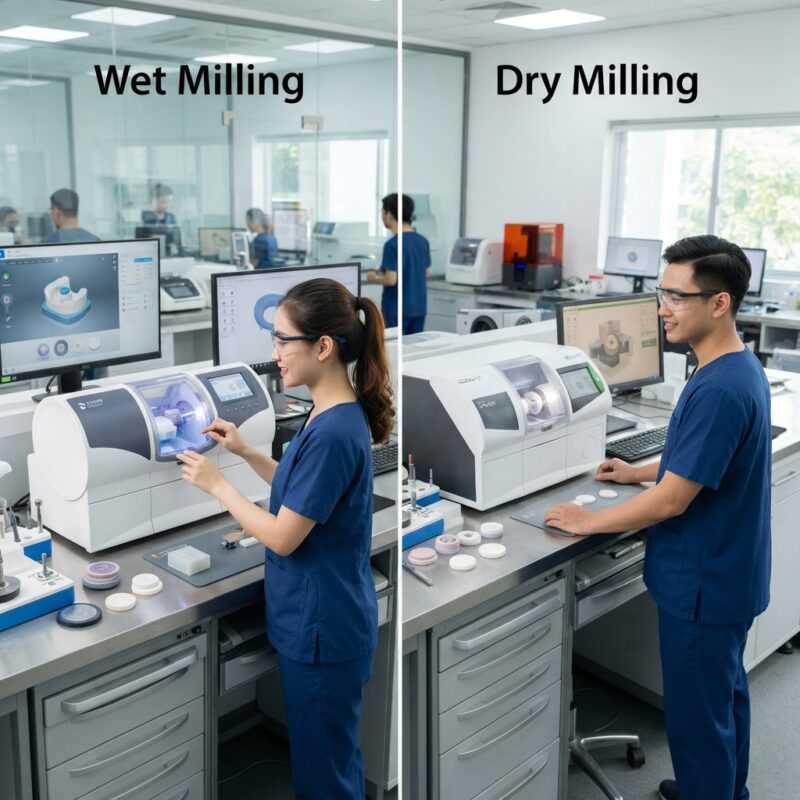
Understanding Wet vs Dry Dental Milling 2026: An Overview
Wet vs dry dental milling 2026 represents the two primary approaches to fabricating dental prosthetics such as crowns, bridges, implants, surgical guides, dentures, orthodontic aligners, and night guards using CAD/CAM technology.
Wet milling involves using a water coolant during the milling process to reduce heat and friction, typically suited for materials like zirconia and certain ceramics. Dry milling, in contrast, relies on air or no coolant, favored for resin, PMMA, or wax patterns and some hybrid materials. Each method impacts the final product’s precision, surface finish, and equipment maintenance.
Dental labs and DSOs must carefully evaluate which milling technique aligns with their production volume, material preferences, and workflow integration for 2026 and beyond. Advances in machine design, tool technology, and software have refined both methods, making the choice more nuanced than ever.
What Are the Key Differences Between Wet and Dry Dental Milling in 2026?
The key difference in wet vs dry dental milling 2026 lies in the presence or absence of coolant during the milling process, which affects material compatibility, machine wear, and finishing requirements.
Wet milling uses a continuous stream of water or coolant, which cools the milling burs and workpiece, reducing heat generation and preventing micro-cracks in brittle ceramics like zirconia. This method typically yields smoother surfaces and requires less post-processing polishing.
Dry milling, meanwhile, operates without coolant, making it faster in some cases and simpler to maintain since no fluid management is needed. It is ideal for softer materials such as PMMA, resin, or wax, which do not generate as much heat or require cooling.
In 2026, manufacturers have introduced hybrid milling machines capable of both wet and dry modes, allowing labs to switch depending on the case requirements. Understanding these differences helps labs optimize throughput and quality while managing costs.
What Materials Are Best Suited for Wet vs Dry Dental Milling?
Material selection is a critical factor when deciding between wet vs dry dental milling 2026, as each milling type is optimized for specific restorative materials.
- Wet Milling Best Materials: Zirconia, lithium disilicate, glass ceramics, hybrid ceramics — materials prone to heat damage and requiring water coolant to maintain integrity.
- Dry Milling Best Materials: PMMA, resin composites, wax, and some polymers that do not generate excessive heat and benefit from a dry environment to avoid contamination.
For example, zirconia crowns and implant abutments produced via wet milling achieve superior density and fewer microfractures, enhancing long-term durability. Meanwhile, temporary crowns, surgical guides, and orthodontic aligners made from PMMA or resin can be efficiently milled dry, speeding up production.
Labs that handle a diverse case mix often benefit from machines capable of both wet and dry milling or maintain separate equipment tailored to their most frequent materials.
How Do Workflow and Maintenance Differ Between Wet and Dry Milling?
Wet vs dry dental milling 2026 impacts workflow efficiency and maintenance demands significantly.
Wet milling requires managing coolant reservoirs, filtration systems, and regular cleaning to prevent microbial growth and mineral deposits. This adds complexity to daily maintenance but results in longer bur life due to reduced heat and friction. Wet milling machines tend to be larger and require dedicated space with water drainage.
Dry milling offers a simpler setup with quicker cleanup since no fluids are involved. However, burs may wear out faster due to higher heat stress, increasing tool replacement costs. Dry milling machines are often more compact and flexible for labs with limited space or smaller case volumes.
Integrating wet or dry milling into a digital workflow also affects turnaround times. Wet milling typically requires less post-processing polishing, while dry-milled restorations may need additional finishing steps to achieve optimal surface quality.
Comparison Table: Wet vs Dry Dental Milling 2026
| Criteria | Wet Milling | Dry Milling | Hybrid Machines |
|---|---|---|---|
| Material Compatibility | Hard ceramics (zirconia, lithium disilicate) | Resin, PMMA, wax | Both wet and dry materials |
| Surface Finish | Smoother, less polishing required | May require additional polishing | Variable, depends on mode selected |
| Maintenance | Complex (coolant management) | Simple (no fluid cleanup) | Moderate (depends on usage) |
| Machine Size | Larger footprint | Compact design | Medium footprint |
| Tool Wear | Reduced due to cooling | Faster due to heat | Depends on milling mode |
| Cost Implications | Higher initial and maintenance costs | Lower initial cost, higher tool replacement | Mid-range investment |
Who Should Choose Wet vs Dry Dental Milling in 2026?
Choosing wet vs dry dental milling 2026 depends on the specific needs and scale of the dental lab or DSO.
- Wet Milling Best For:
- High-volume labs focused on zirconia and ceramic restorations
- Labs prioritizing quality and long-term durability
- DSOs with dedicated milling facilities and maintenance teams
- Dry Milling Best For:
- Small labs or single-dentist practices producing temporary crowns, surgical guides, or aligners
- Clinics with limited space and simpler maintenance requirements
- Facilities prioritizing speed and flexibility over high-end ceramics
- Hybrid Machines Ideal For:
- Labs with diverse material needs wanting flexibility
- Facilities that want to optimize investment by consolidating equipment
What Are the Total Cost of Ownership Considerations?
Total cost of ownership (TCO) for wet vs dry dental milling 2026 extends beyond machine purchase price to include maintenance, tooling, consumables, space, and labor.
Wet milling machines often have a higher upfront cost due to integrated coolant systems and require ongoing expenses for water, filters, and cleaning chemicals. However, longer bur life and reduced remakes due to superior milling quality can offset these costs over time.
Dry milling machines generally have lower initial costs and simpler maintenance but experience higher tool wear, increasing consumable costs. They also may require more labor for post-processing polishing and quality control.
Hybrid machines combine aspects of both, with moderate investment and maintenance costs, offering a balance for labs with varied case types.
When budgeting, labs should also consider the impact on workflow efficiency, turnaround times, and staff training to calculate true TCO accurately.
How Does Wet vs Dry Dental Milling 2026 Integrate with CAD/CAM Digital Design Outsourcing?
Dental labs and DSOs increasingly leverage CAD/CAM digital design outsourcing to complement their milling technology, whether wet or dry.
Outsourced CAD design services provide expert, scalable modeling of crowns, bridges, implants, and other prosthetics, which then feed directly into milling machines. This approach ensures consistent quality, reduces in-house labor, and accelerates case turnaround.
Wet vs dry dental milling 2026 workflows benefit from outsourcing because design precision directly influences milling success, especially in complex ceramic restorations requiring wet milling. Even dry milling for temporary materials gains accuracy and efficiency from professional digital design.
Our company’s CAD/CAM design outsourcing seamlessly integrates with your preferred milling method, enabling labs and DSOs to optimize their production without investing heavily in in-house design talent or software licenses. This also works well alongside surgical guide design services.

What Are the Latest Manufacturer Innovations in Wet vs Dry Dental Milling 2026?
Leading manufacturers like 3Shape, Exocad, and Dentsply Sirona have advanced milling technologies that blur the lines between wet and dry milling.
Hybrid machines now offer quick switching between wet and dry modes, automated coolant recycling, and enhanced tool life monitoring. Improved spindle speeds and precision sensors allow for finer milling details, critical for complex implant abutments and aesthetic crowns.
Additionally, software improvements enable better nesting of parts, reducing material waste and increasing throughput. Integration with intraoral scanners from brands like iTero streamlines the entire digital workflow from impression to milling.
These innovations make wet vs dry dental milling 2026 a dynamic choice tailored to each lab’s unique requirements and production goals.
Do You Need Design Capacity for Your New Equipment?
If you’re acquiring new milling equipment, whether wet or dry, integrating outsourced CAD/CAM design can be a game-changer. It allows your lab or clinic to operate the mill or printer at full capacity without hiring additional in-house designers.
Our outsourced design services ensure high-quality, precise digital models delivered on time, letting you focus on milling and finishing. This scalable approach reduces overhead while maintaining exceptional prosthetic outcomes.
Step-by-Step Guide to Implementing Wet or Dry Milling in Your Dental Lab
Choosing between wet and dry dental milling is only the first step. Proper integration into your existing workflow is critical to maximize efficiency, reduce errors, and ensure consistent quality. Below is a practical, step-by-step guide to help dental labs and practices implement either milling process effectively.
1. Assess Your Case Types and Material Needs
Begin by categorizing the types of dental restorations you most frequently handle—zirconia crowns, PMMA temporaries, wax patterns, or hybrid materials. This assessment will guide whether wet or dry milling suits your everyday production.
2. Select Milling Machines and Tools
Choose milling equipment compatible with your preferred materials and process. For wet milling, ensure machines have adequate coolant delivery systems and sealed electronics to withstand moisture. For dry milling, select machines with efficient dust extraction and air filtration to manage particulates.
3. Train Your Staff
Invest in comprehensive training focused on:
- Machine operation and safety protocols.
- Material handling specific to wet or dry processes.
- Maintenance routines to prevent downtime.
- Quality control checkpoints.
4. Integrate CAD/CAM Software
Ensure your CAD/CAM system is configured to export files optimized for your milling method. Some software packages offer settings for wet or dry milling, adjusting tool paths and speeds accordingly.
5. Establish Quality Control Procedures
Set up multi-stage inspection points, including:
- Post-milling dimensional accuracy checks using scanners or calipers.
- Surface finish inspection under magnification.
- Material integrity verification (e.g., no micro-cracks in zirconia).
6. Schedule Routine Maintenance
Create maintenance calendars tailored to your milling method:
- Wet milling requires regular coolant replacement, filter cleaning, and moisture checks.
- Dry milling demands frequent dust removal, air filter changes, and lubrication of mechanical parts.
Cost and Quality Balancing: Real-World Considerations for Labs and Practices
Costs in dental milling go beyond initial equipment purchase. Understanding the interplay between cost and quality is essential for sustainable operations.
Initial Investment vs Long-Term Expenses
Wet milling machines generally carry higher upfront costs due to complex coolant systems and durable build quality. However, they often extend tool life when working with hard ceramics, potentially lowering consumable expenses.
Dry milling systems tend to be less expensive initially but may require more frequent tool replacements and increased maintenance, especially in dust-heavy environments. Consider the volume of work and material types to evaluate which option yields better total cost of ownership over time.
Material Waste and Error Costs
Wet milling usually produces smoother surfaces and greater precision, reducing the need for remakes and adjustments, which translates into material savings and faster turnaround times.
Dry milling can sometimes result in higher surface roughness or minor inaccuracies, especially if dust buildup affects machine performance, leading to increased scrap rates. Regular monitoring and cleaning are vital to minimize these risks.
Case Study: Mid-Sized Dental Lab
A mid-sized dental lab specializing in zirconia restorations switched from dry to wet milling. Although their initial investment increased by 40%, tool longevity improved by 60%, and remake rates dropped by 25%. The lab reported increased client satisfaction due to superior fit and finish, justifying the higher operational costs.
Common Mistakes to Avoid When Transitioning to Wet or Dry Dental Milling
Transitioning milling methods can be challenging. Avoiding common pitfalls will ensure a smoother implementation.
- Ignoring Material Compatibility: Attempting to mill zirconia using dry milling without machine specifications can cause excessive tool wear and poor quality outputs.
- Underestimating Maintenance Needs: Skipping regular cleaning of coolant systems or dust filters can lead to machine breakdowns and costly downtime.
- Overlooking Staff Training: Inadequate training leads to improper machine use, increasing error rates and safety hazards.
- Neglecting Environmental Controls: For dry milling, failing to invest in proper air filtration can expose staff to harmful dust, violating health regulations and risking fines.
- Failing to Adjust CAD/CAM Settings: Using generic toolpaths without tailoring for wet or dry milling can compromise product quality and extend production times.
- Poor Tool Management: Not monitoring tool wear or neglecting timely replacements results in subpar milling precision and finish.
Checklist for Selecting Between Wet and Dry Dental Milling
Here is a practical checklist to help labs and dental practices make an informed decision aligned with their operational needs and goals:
- Material Types: Are you primarily working with zirconia, ceramics, resins, or wax?
- Production Volume: What is your average daily or weekly case load?
- Budget Constraints: What is your capital expenditure and ongoing maintenance budget?
- Facility Setup: Do you have adequate space, ventilation, and water supply for wet milling?
- Staff Expertise: Is your team trained or willing to be trained in the preferred milling method?
- Regulatory Compliance: Are there workplace safety or environmental regulations impacting dust or water use?
- Desired Turnaround Time: How quickly do you need finished restorations?
- Quality Expectations: What level of surface finish and precision is required to meet your clients’ standards?
- Maintenance Capability: Can you support regular machine upkeep and troubleshooting?
- Integration Needs: Will the milling method integrate smoothly with your existing CAD/CAM and digital workflow?
Contact us today to discuss how our CAD/CAM digital design outsourcing can support your wet or dry dental milling workflows in 2026 and beyond.