Understanding Outsourcing Clear Aligner and Orthodontic Model Design in 2026: What Labs Should Know
Outsourcing clear aligner and orthodontic model design in 2026: what labs should know is critical for dental labs and DSOs aiming to stay competitive in an increasingly digital marketplace. As CAD/CAM technology evolves, the process of creating digital orthodontic models is transforming from in-house manual tasks to specialized outsourced services. This shift offers labs enhanced scalability, cost-effectiveness, and access to expert design talent.
In this comprehensive guide, we’ll explore how outsourcing these services can streamline your workflows for crown & bridge, implants, surgical guides, dentures, orthodontic aligners, and night guards, while maintaining quality control and regulatory compliance.
What Is Dental Lab Outsourcing and Why Is It Important?
Dental lab outsourcing is the practice of contracting external service providers to handle specific digital design or manufacturing tasks traditionally done in-house. This is especially important as dental labs face rising labor costs, technology complexities, and demand for faster turnaround times.
By outsourcing clear aligner and orthodontic model design, labs can leverage specialized CAD/CAM expertise, reduce overhead, and improve the consistency and accuracy of their digital orthodontic workflows. Outsourcing also allows labs to focus on core competencies such as case management, customer service, and final fabrication.
How Does Outsourcing Clear Aligner and Orthodontic Model Design Work in Practice?
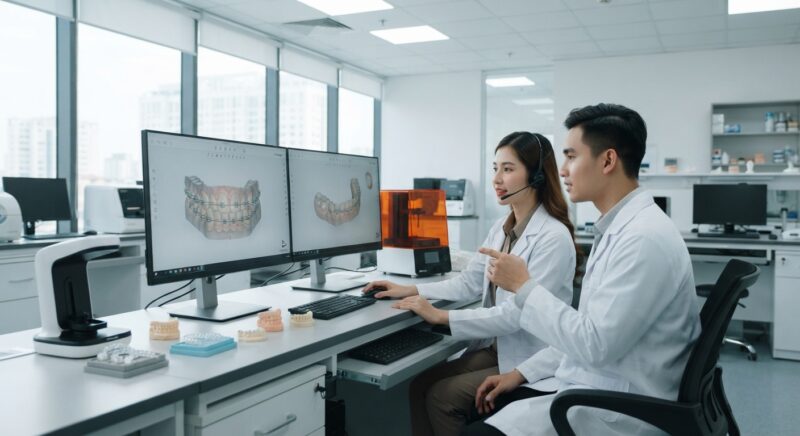
The process typically begins with the dental practice or lab scanning the patient’s dentition using intraoral scanners like iTero or Medit. These digital impressions are then securely transmitted to the outsourcing provider.
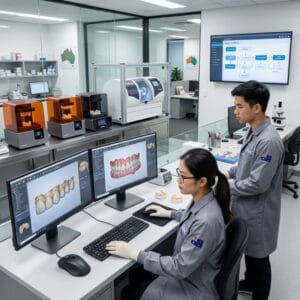
The external design team, often equipped with advanced software platforms such as 3Shape or exocad, creates the orthodontic models and aligner staging. They can also design surgical guides and night guards tailored to the patient’s anatomy. The finalized digital files are then sent back for in-house or outsourced 3D printing and finishing.
This workflow reduces the need to maintain expensive software licenses and highly skilled design staff internally, while ensuring the latest design protocols and quality assurance standards are met.
What Are the Key Benefits of Outsourcing Orthodontic Model Design?
- Cost Efficiency: Outsourcing reduces capital expenditures on software and hardware updates, as well as labor costs associated with training and retaining skilled technicians.
- Scalability: Labs can quickly adapt to fluctuations in case volume without hiring or downsizing staff, making it ideal for fast-growing DSOs.
- Access to Expertise: Specialized design teams stay up to date on the latest digital orthodontic trends, enabling improved treatment planning and patient outcomes.
- Faster Turnaround Times: Streamlined digital workflows enable quicker case processing, essential for patient satisfaction and lab competitiveness.
- Quality and Consistency: Standardized processes and dedicated quality control reduce errors and remakes.
How Is Technology Shaping Outsourcing Clear Aligner and Orthodontic Model Design in 2026?
Advancements in AI-powered design software, cloud computing, and high-resolution 3D printing are revolutionizing the outsourcing landscape. AI algorithms assist in automating tooth movement simulation and aligner staging, reducing manual design hours and improving precision.
Cloud-based platforms enable seamless collaboration between labs, DSOs, and outsourcing partners, ensuring secure, real-time data exchange. Integration with popular intraoral scanners and manufacturing machinery further streamlines production.
Emerging materials and printing technologies from companies like Formlabs and Asiga allow for faster, more accurate model fabrication, directly impacting the quality of orthodontic appliances produced.
What Challenges Should Labs Anticipate When Outsourcing Orthodontic Model Design?
While outsourcing offers numerous advantages, labs must navigate several challenges to optimize results. Data security and HIPAA compliance are paramount when transmitting patient scans and treatment data.
Ensuring consistent communication and case tracking between the lab and outsourcing provider is critical to avoid delays or misunderstandings. Differences in design protocols or software versions across providers can complicate workflow integration.
Additionally, labs need to maintain some degree of in-house expertise to validate outsourced designs and handle complex cases that require customization beyond standard protocols.
How Does Outsourcing Impact Quality Control and Regulatory Compliance?
Outsourcing clear aligner and orthodontic model design in 2026: what labs should know includes understanding how quality assurance is maintained outside the traditional lab environment. Reputable outsourcing partners implement rigorous validation processes, including digital model verification, fit simulations, and adherence to international standards such as ISO 13485.
Labs should request documentation of quality control procedures and certifications to ensure compliance with FDA regulations and other regional requirements. Collaborative audits and performance reviews can help maintain high standards and continuous improvement.
What Types of Orthodontic Cases Benefit Most from Outsourcing?
Outsourcing is particularly advantageous for labs handling high volumes of clear aligner cases due to the repetitive nature of digital model design and staging. Complex cases involving multi-arch treatment planning or 3D surgical guide integration also benefit from specialized design expertise.
Night guards and retainers, which require precise customization, can be efficiently designed and produced through outsourced services, ensuring consistent patient fit and comfort. Similarly, denture digital designs can be streamlined when working with external CAD/CAM specialists.
What Should Labs Look for When Selecting an Outsourcing Partner?
Choosing the right outsourcing provider is critical for success. Labs should evaluate partners based on:
- Technical Capabilities: Proficiency with leading CAD/CAM software and compatibility with your current systems.
- Turnaround Time: Ability to meet your lab’s scheduling needs consistently.
- Data Security: Compliance with HIPAA and secure data transmission protocols.
- Quality Certifications: Evidence of ISO certification and regulatory adherence.
- Communication and Support: Responsive customer service and collaboration tools.
How Can Labs Integrate Outsourced Design Into Their Existing Workflows?
Successful integration involves mapping current processes and identifying handoff points between your lab and the outsourcing provider. Automating digital file transfers, using cloud platforms for case management, and scheduling regular status updates help maintain transparency.
Training in-house staff to review and approve outsourced designs ensures quality while maintaining control. Many labs find that combining outsourcing with selective in-house design creates a hybrid model that maximizes efficiency and flexibility.
What Are the Cost Considerations for Outsourcing in 2026?
Outsourcing clear aligner and orthodontic model design in 2026: what labs should know also involves a detailed understanding of cost structures. Labs typically pay per case or based on a subscription model for design services.
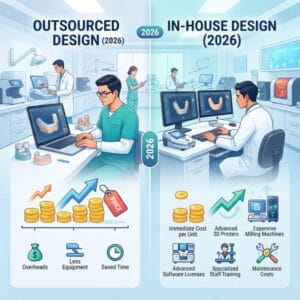
While initial savings come from reduced software licensing and labor costs, labs should also account for potential expenses related to data management, communication overhead, and quality review. A detailed cost-benefit analysis comparing in-house versus outsourced design is recommended before committing.
What Trends Will Shape Outsourcing Clear Aligner and Orthodontic Model Design Beyond 2026?
Looking beyond 2026, we anticipate deeper AI integration for predictive treatment planning, real-time remote design collaboration, and increased use of augmented reality (AR) for virtual case reviews. The rise of fully automated design-to-print workflows will further reduce manual intervention.
Dental labs will increasingly seek outsourcing partners who offer end-to-end digital workflows, from initial scanning to final appliance production, including post-processing and finishing services. Sustainability and eco-friendly materials will also become considerations in outsourcing decisions.
How Do Industry Standards and Guidelines Affect Outsourcing Decisions?
Adhering to industry standards such as those from the American Dental Association ensures that outsourced digital designs meet clinical safety and efficacy benchmarks. Labs should remain informed about evolving guidelines related to digital orthodontic appliances to avoid compliance issues.
Standards around digital data storage, patient privacy, and device traceability are increasingly influencing outsourcing contracts. Transparency and documentation are crucial for audits and liability management.
What Role Does Training and Education Play in Maximizing Outsourcing Benefits?
Continuous education empowers lab technicians and clinicians to effectively collaborate with outsourced design teams. Training on interpreting digital orthodontic models, understanding software updates, and quality assurance protocols improves overall outcomes.
Many outsourcing providers offer training modules and webinars to bridge knowledge gaps. Investing time in these resources enhances integration, reduces errors, and supports innovation adoption.
Conclusion: Why Outsourcing Clear Aligner and Orthodontic Model Design in 2026 Is a Strategic Move
Outsourcing clear aligner and orthodontic model design in 2026: what labs should know is that this approach offers a strategic advantage in an evolving digital dental landscape. By partnering with expert CAD/CAM service providers, labs and DSOs can streamline workflows, improve quality, and adapt to market demands efficiently.
Embracing outsourcing not only optimizes operational costs but also positions your lab to leverage cutting-edge technologies and industry best practices. As the complexity and volume of orthodontic cases grow, outsourcing becomes an indispensable component of a modern dental lab’s success.
Contact Us
Step-by-Step Guide to Implementing Outsourced Orthodontic Model Design
Transitioning to outsourced clear aligner and orthodontic model design requires a structured approach to minimize disruption and maximize benefits. Here is a practical, step-by-step guide for dental labs and practices to successfully integrate outsourcing into their workflows:
Step 1: Assess Your Current Workflow and Needs
- Map Existing Processes: Document your current design and model production workflows, including timelines, software used, and labor inputs.
- Identify Bottlenecks: Pinpoint stages where delays, errors, or resource shortages occur.
- Define Objectives: Set clear goals for outsourcing, such as reducing turnaround time, improving quality, or lowering costs.
- Evaluate Case Volume: Examine the volume and complexity of orthodontic cases that need design support to determine outsourcing scale.
Step 2: Research and Select the Right Outsourcing Partner
- Vendor Capabilities: Confirm the partner’s expertise with your specific case types and CAD/CAM systems.
- Technology Compatibility: Ensure file formats and communication platforms align to simplify integration.
- Quality Assurance: Review the partner’s quality control protocols and certifications.
- References and Case Studies: Request client testimonials and performance examples.
Step 3: Pilot Project and Performance Evaluation
- Start Small: Begin with a limited number of cases to test processes and communication.
- Set KPIs: Define metrics such as turnaround time, error rates, and revision frequency to evaluate success.
- Feedback Loop: Establish clear channels for feedback and rapid adjustments.
Step 4: Full Integration and Workflow Optimization
- Standardize Processes: Develop SOPs incorporating outsourced design steps.
- Train Staff: Ensure in-house teams understand how to collaborate with the external designers efficiently.
- Monitor and Improve: Continuously track performance and refine communications and expectations.
Step 5: Maintain Ongoing Quality and Compliance
- Regular Audits: Schedule periodic reviews of outsourced work and compliance adherence.
- Update Training: Keep internal teams and outsourced designers current on regulatory changes and technological advances.
- Risk Management: Develop contingency plans for potential disruptions in outsourcing partnerships.
Common Mistakes to Avoid When Outsourcing Orthodontic Model Design
While outsourcing can bring substantial benefits, dental labs and practices often encounter pitfalls that undermine success. Awareness and proactive management of these common mistakes can safeguard your investment.
1. Selecting Partners Based Solely on Cost
Choosing the cheapest vendor without considering quality, turnaround time, or expertise often leads to subpar results and costly rework. Balance price with demonstrated capabilities and reliability.
2. Ignoring Compatibility of Software and Data Formats
Failing to verify that the outsourcing partner’s systems seamlessly integrate with your CAD/CAM software can cause delays and errors due to file conversion issues or lost data fidelity.
3. Lack of Clear Communication and Expectations
Vague instructions or insufficient feedback mechanisms result in designs that don’t meet clinical needs or require multiple revisions. Define clear design specifications, approval workflows, and communication protocols upfront.
4. Neglecting Regulatory Compliance Checks
Outsourcing partners must adhere to applicable standards such as FDA, ISO, or regional dental device regulations. Overlooking compliance increases risk of legal penalties and patient safety issues.
5. Underestimating the Importance of Training
Both your in-house team and outsourced designers need ongoing education to stay updated on software updates, clinical protocols, and quality standards. Skipping training leads to inefficiencies and errors.
6. Overlooking Data Security and Privacy
Orthodontic models include sensitive patient information. Not implementing stringent cybersecurity measures with your outsourcing partner can expose data to breaches and violate HIPAA or other privacy laws.
7. Failing to Monitor Performance Continuously
Once outsourcing is established, some labs stop tracking quality and turnaround metrics. Without ongoing evaluation, issues can go unnoticed until they impact patient care or profitability.
Cost vs. Quality Considerations: Finding the Right Balance
In 2026, outsourcing clear aligner and orthodontic model design presents a trade-off between cost savings and maintaining high-quality outcomes. Understanding how to evaluate and balance these factors is critical for sustainable success.
Direct and Indirect Cost Components
- Direct Costs: Charges from the outsourcing partner per case or project, including design labor, software licensing, and communication fees.
- Indirect Costs: Internal expenses such as staff coordination time, training, quality control audits, and potential rework costs.
- Hidden Costs: Delays due to miscommunication, data incompatibility, or regulatory non-compliance can add unexpected expenses.
Quality Factors Impacting Cost
- Expertise Level: Highly skilled designers and partners with orthodontic specialization often charge premium rates but reduce revision frequency.
- Technology Investment: Partners using state-of-the-art CAD/CAM systems deliver more precise and consistent models, potentially lowering downstream costs.
- Turnaround Time: Faster delivery options may come at higher costs; labs must evaluate if expedited service justifies the premium.
Strategies to Balance Cost and Quality
- Tiered Service Models: Use lower-cost outsourcing for routine cases and premium providers for complex or high-value cases.
- Volume Discounts: Negotiate pricing based on case volume to leverage economies of scale.
- Quality Audits: Regularly review sample cases for accuracy to avoid costly downstream issues.
- Continuous Improvement: Collaborate with your partner to identify inefficiencies and optimize design protocols collaboratively.
Real-World Example: Cost-Quality Tradeoff in a Mid-Sized Lab
A mid-sized dental lab in the Midwest initially outsourced orthodontic model design to a low-cost vendor overseas. While upfront costs were reduced by 30%, the lab experienced a 15% increase in model revisions and a 10% delay in turnaround time. After switching to a higher-quality regional partner with advanced CAD/CAM software, costs increased by 20%, but revision rates dropped to under 5%, and delivery times improved by three days. The lab ultimately saw improved client satisfaction and lower overall operational costs due to reduced rework and faster case completion.
Market-Specific Considerations for Outsourcing in Different Regions
The decision to outsource clear aligner and orthodontic model design is influenced by regional market conditions, regulatory frameworks, and technological infrastructure. Labs and DSOs must tailor their approach according to their geographic context.
North America
- Regulatory Environment: Stringent FDA and HIPAA compliance requirements shape vendor selection and data handling practices.
- High Demand for Customization: North American consumers expect personalized orthodontic solutions, driving demand for advanced digital workflows and high-quality designs.
- Technology Adoption: Widespread use of advanced CAD/CAM systems facilitates seamless integration with local outsourcing providers.
- Cost Sensitivity: While quality is paramount, competitive pricing remains critical due to rising operational costs.
Europe
- GDPR Compliance: Data privacy laws require stringent controls over patient information sharing with outsourcing partners, especially cross-border.
- Diverse Regulatory Landscape: Different countries have varying medical device regulations, necessitating careful vendor vetting.
- Focus on Sustainability: European labs increasingly prioritize environmentally sustainable workflows, including digital outsourcing that reduces physical model waste.
- Language and Cultural Considerations: Multilingual communication capabilities are important for smooth collaboration.
Asia-Pacific
- Rapid Market Growth: Emerging markets in Asia are seeing a surge in demand for orthodontic treatments, creating pressures on local labs to scale quickly via outsourcing.
- Variable Technology Penetration: While metropolitan areas have advanced digital infrastructure, rural regions may have limited connectivity impacting remote collaboration.
- Cost-Driven Outsourcing: Cost reduction is often a primary driver, though labs must balance this with maintaining acceptable quality levels.
- Regulatory Evolution: Regulatory frameworks are still developing, requiring vigilance to ensure compliance as standards mature.
Latin America and Middle East
- Infrastructure Challenges: Variable internet reliability and access to cutting-edge CAD/CAM tools can complicate outsourcing arrangements.
- Growing Orthodontic Awareness: Increasing patient awareness and demand for clear aligners fuel the need for scalable design solutions.
- Preference for Regional Partners: Proximity and time zone alignment favor outsourcing to regional providers over distant international vendors.
- Regulatory and Economic Volatility: Labs must be prepared for shifting regulatory requirements and economic fluctuations affecting outsourcing contracts.
Checklist for Regional Outsourcing Readiness
- Understand local regulatory compliance requirements.
- Verify data privacy and cybersecurity safeguards.
- Assess local technology infrastructure and compatibility.
- Consider language and cultural alignment for effective communication.
- Evaluate cost vs. quality based on regional market expectations.
- Plan for contingency strategies addressing potential market volatility.
Real-World Examples of Successful Outsourcing Partnerships
Understanding the theoretical benefits of outsourcing clear aligner and orthodontic model design is essential, but seeing how dental labs and practices have successfully implemented these strategies provides invaluable insight. Below are practical case studies demonstrating how outsourcing has transformed workflows, improved quality, and optimized costs in real-world scenarios.
Case Study 1: Mid-Sized Dental Lab Streamlines Production and Scales Fast
A mid-sized dental lab servicing regional dental practices faced challenges with fluctuating demand and limited in-house design expertise. By outsourcing their clear aligner model design to a specialized service, they were able to:
- Reduce turnaround times: Model design times dropped from an average of 5 days to 2 days, allowing faster delivery to clients.
- Scale capacity without additional hires: During peak periods, the outsourced partner absorbed extra workload seamlessly.
- Improve design quality: The partner’s specialized design team used advanced software, reducing remakes by 30%.
This partnership allowed the lab to win new contracts and expand its service area without investing heavily in new CAD software or training.
Case Study 2: Dental Practice Integrates Outsourcing to Enhance Patient Experience
A multi-location dental practice integrated outsourced orthodontic model design to accelerate patient treatment planning. Key outcomes included:
- Faster treatment starts: Digital models were received within 24 hours, enabling quicker aligner fabrication and patient delivery.
- Reduced chair time: More accurate digital models minimized fitting adjustments, boosting patient satisfaction.
- Cost predictability: Fixed outsourcing fees replaced variable in-house labor costs, aiding budget management.
This approach allowed the practice to offer competitive clear aligner solutions while maintaining high-quality standards.
Step-by-Step Checklist for Managing Outsourced Orthodontic Model Design Projects
Successful outsourcing projects require structured management to ensure quality, timeliness, and alignment with business goals. The following checklist outlines critical steps for managing outsourced orthodontic model design effectively:
- Define project scope clearly: Document case types, volume estimates, turnaround expectations, and quality benchmarks.
- Set communication protocols: Establish points of contact, reporting frequency, and preferred channels (email, platforms, calls).
- Verify software compatibility: Confirm that file formats (STL, PLY, etc.) and CAD/CAM systems between partners match seamlessly.
- Agree on data security measures: Ensure compliance with HIPAA or other relevant patient data protection standards.
- Plan pilot phase: Start with a small batch of cases to evaluate partner capabilities and identify process gaps.
- Implement quality checkpoints: Schedule periodic reviews of design accuracy, fit, and feedback loops for corrections.
- Monitor turnaround times: Track delivery against SLAs and address bottlenecks promptly.
- Document lessons learned: After each cycle, review outcomes, refine workflows, and update project documentation.
- Train internal staff: Ensure your team understands how to collaborate with the outsourced partner and handle digital files.
- Review costs regularly: Compare invoiced fees against budgets and ROI expectations, adjusting volumes or scope as needed.
Common Pitfalls and How to Avoid Them When Outsourcing Orthodontic Design
While outsourcing offers numerous benefits, certain pitfalls can undermine success. Awareness and proactive management of these common mistakes can save time, money, and protect your reputation.
Ignoring Cultural and Time Zone Differences
Outsourcing partners may be located in different regions or countries, leading to challenges in communication and coordination:
- Risk: Delays in responses, misunderstandings, and misaligned expectations.
- Mitigation: Schedule overlapping working hours, maintain clear documentation, and use collaboration platforms that track communication.
Overlooking Intellectual Property and Data Security
Orthodontic models contain sensitive patient data and proprietary design techniques:
- Risk: Data breaches or unauthorized use of designs can lead to legal and reputational damage.
- Mitigation: Insist on signed NDAs, verify compliance with data protection regulations, and use encrypted file transfer methods.
Failing to Define Clear Quality Standards
Without objective quality metrics, it’s difficult to measure partner performance:
- Risk: Subpar models require rework, delaying treatment and increasing costs.
- Mitigation: Develop detailed quality checklists and accept/reject criteria before beginning full production.
Neglecting to Plan for Contingencies
Unexpected issues such as software outages or partner staff turnover can disrupt workflows:
- Risk: Production delays and client dissatisfaction.
- Mitigation: Maintain backup vendors, cross-train internal staff, and include contingency clauses in contracts.
Balancing Cost and Quality: Practical Considerations for Outsourcing Decisions
Dental labs and practices must carefully weigh cost savings against maintaining high standards of quality and service when outsourcing orthodontic model design. Here are key factors to evaluate:
Understanding Pricing Models
Outsourcing partners may offer different pricing structures:
- Per-case pricing: Fixed fee per model or aligner design, useful for predictable volumes.
- Subscription plans: Monthly fees for a defined number of cases, suitable for larger labs.
- Volume discounts: Reduced rates for bulk orders, encouraging higher outsourcing volumes.
Analyze your case mix and volume fluctuations to select the most cost-effective model.
Evaluating Quality vs. Cost Trade-offs
Lower cost does not always equate to value. Consider these factors:
- Accuracy of designs: Higher precision reduces remakes and chairside adjustments, saving time and materials.
- Turnaround time: Faster delivery can improve client satisfaction and throughput but may carry premium fees.
- Customer support: Responsive communication helps resolve issues swiftly, justifying potential higher costs.
Perform cost-benefit analysis factoring in indirect savings from improved quality and efficiency.
Market-Specific Considerations
Different regions and market segments may have unique needs affecting outsourcing choices:
- Regulatory environment: Ensure partners comply with local dental device regulations and certifications.
- Language and cultural fit: Partners familiar with your market’s clinical terminology and practices facilitate smoother collaboration.
- Geographic proximity: Local or regional partners may reduce shipping times for physical models or aligners.
Align outsourcing strategy with your target market dynamics for optimal results.
Ready to elevate your lab’s digital orthodontic capabilities? Contact us today to learn how our outsourcing clear aligner and orthodontic model design services can help you thrive in 2026 and beyond.