Introduction: Why Leveraging CAD CAM Digital Design to Grow Dental Lab Revenues in 2026 Matters
In 2026, the dental industry continues to shift towards digital workflows, making leveraging CAD CAM digital design to grow dental lab revenues in 2026 not just advantageous but essential. Dental labs and DSOs (Dental Service Organizations) face increasing competition and demand for faster turnaround times, higher accuracy, and cost-effective solutions. CAD CAM digital design outsourcing offers an innovative pathway to meet these challenges while significantly increasing profitability.
By outsourcing CAD CAM design services—including crowns and bridges, implants, surgical guides, dentures, orthodontic aligners, and night guards—labs can expand capacity without heavy investment in in-house design talent. This article explores how dental labs can harness these technologies and outsourcing strategies to drive revenue growth, improve operational efficiency, and maintain top-tier case quality in 2026.
What Is CAD CAM Digital Design in Dental Labs?
CAD CAM digital design in dental labs refers to the computer-aided design and computer-aided manufacturing process used to create precise dental restorations and appliances digitally.
This technology enables dental technicians to design crowns, bridges, implants, and other prosthetics using specialized software like 3Shape or exocad, creating highly accurate models that are then manufactured with milling machines or 3D printers. The digital workflow reduces human error, shortens production time, and allows for easy design modifications.
Leveraging CAD CAM digital design to grow dental lab revenues in 2026 means integrating these digital tools efficiently, either in-house or through outsourcing, to meet rising clinical demands and deliver consistent, high-quality results.
How Does Outsourcing CAD CAM Digital Design Benefit Dental Labs and DSOs?
Outsourcing CAD CAM digital design provides dental labs and DSOs with expert design services without the overhead of hiring full-time digital designers.
This approach allows labs to focus on manufacturing and finishing while professional designers handle complex cases. Outsourcing also offers scalability during peak times, access to the latest design software updates, and multi-specialty expertise, including implant surgical guides and orthodontic aligners.
By leveraging CAD CAM digital design to grow dental lab revenues in 2026, labs can reduce labor costs, improve turnaround times, and enhance case accuracy, translating directly into higher client satisfaction and increased repeat business.
What Types of Dental Restorations and Appliances Can Be Digitally Designed and Outsourced?
Almost every dental restoration and appliance can be digitally designed and outsourced. Key categories include:
- Crowns and Bridges: Digital designs ensure perfect fit and occlusion.
- Implant Restorations and Surgical Guides: Precise implant placement planning and guide fabrication.
- Dentures: Digitally designed for improved comfort and esthetics.
- Orthodontic Aligners: Digital setups and aligner design for clear aligner therapy.
- Night Guards: Custom-fitted digitally for durability and patient comfort.
Outsourcing these designs helps labs expand their product portfolio without requiring in-house expertise across every specialty, making leveraging CAD CAM digital design to grow dental lab revenues in 2026 more accessible and profitable.
What Are the Main Criteria When Choosing a CAD CAM Digital Design Outsourcing Partner?
The choice of an outsourcing partner for CAD CAM digital design hinges on quality, turnaround time, technical expertise, and integration compatibility.
Labs should evaluate the following:
- Design Accuracy and Consistency: Proven track record with clinical cases.
- Range of Services: Ability to handle crowns, implants, surgical guides, dentures, orthodontics, and night guards.
- Software Compatibility: Partners using industry-leading software like exocad or 3Shape ensure seamless file exchange.
- Turnaround Time: Fast response times to meet clinical deadlines.
- Cost Structure: Transparent pricing models aligned with lab volume.
Choosing the right partner optimizes your investment in leveraging CAD CAM digital design to grow dental lab revenues in 2026 by enhancing workflow efficiency and case acceptance rates.
How Do Different Lab Sizes Benefit from CAD CAM Digital Design Outsourcing?
Dental labs of all sizes can leverage CAD CAM digital design outsourcing, but benefits vary by scale.
- Small Labs: Avoid costly hiring and software investments while accessing expert design support.
- Medium Labs: Scale operations quickly during peak demand without overextending in-house resources.
- High-Volume Labs: Supplement large design teams with outsourcing to handle workload peaks efficiently.
- DSOs: Standardize design quality across multiple locations with centralized outsourcing services.
By leveraging CAD CAM digital design to grow dental lab revenues in 2026, each lab segment can tailor outsourcing levels to optimize operational costs and patient outcomes.
What Is the Total Cost of Ownership (TCO) When Implementing CAD CAM Digital Design In-House vs. Outsourcing?
Total cost of ownership includes software licensing, hardware (computers, scanners), ongoing training, designer salaries, and maintenance.
In-House Implementation:
- High upfront investment in software licenses (often $10K+ annually) and powerful workstations.
- Recruitment and retention of skilled digital designers with competitive salaries.
- Continuous training to keep pace with evolving technology.
- Ongoing IT support and data security expenses.
Outsourcing Digital Design:
- Predictable per-case or subscription pricing with no capital expenditure.
- No need for internal designer salaries or training budgets.
- Access to up-to-date software and expert personnel without overhead.
- Reduced risk and greater flexibility to scale up or down.
Leveraging CAD CAM digital design to grow dental lab revenues in 2026 through outsourcing often results in a lower TCO, especially for smaller or mid-sized labs.
| Criteria | Small Labs | Medium Labs | High-Volume Labs | DSOs |
|---|---|---|---|---|
| Best For | Cost savings, flexibility | Scaling operations | Handling peak workloads | Standardizing quality across sites |
| Strengths | Low upfront cost, expert access | Balance of in-house and outsourced | Large capacity, quick turnaround | Centralized design control |
| Limitations | Less control over workflows | Requires managing hybrid teams | Higher internal overhead | Dependency on vendor reliability |
| TCO Impact | Lowest with outsourcing | Moderate with hybrid model | Higher with in-house focus | Varies by outsourcing volume |
| Recommended Approach | Full outsourcing | Partial outsourcing | In-house plus outsourcing | Outsourcing for consistency |
What Are the Workflow Impacts of Leveraging CAD CAM Digital Design to Grow Dental Lab Revenues in 2026?
Integrating outsourced digital design streamlines lab workflows by reducing manual steps and accelerating case completion.
Digital files arrive ready for milling or 3D printing, minimizing errors and remakes. This efficiency frees up technicians to focus on finishing and quality control, increasing overall throughput.
Additionally, labs experience improved communication with clinicians through digital case submissions, real-time design approvals, and easier modifications.
Such workflow improvements directly contribute to leveraging CAD CAM digital design to grow dental lab revenues in 2026 by enabling labs to handle more cases with consistent quality.
What Are the Security and Data Management Considerations?
When outsourcing CAD CAM digital design, protecting patient data and proprietary lab information is critical.
Reputable outsourcing partners adhere to HIPAA regulations and use encrypted file transfer protocols and secure cloud platforms. Labs should ensure contracts include confidentiality clauses and data handling policies.
Maintaining data integrity and security supports trust between labs, clinicians, and patients, which is vital when leveraging CAD CAM digital design to grow dental lab revenues in 2026.
Which Software and Technologies Are Leading the CAD CAM Digital Design Market?
Leading dental CAD software providers include exocad, 3Shape, and Medit, offering comprehensive modules for various dental specialties.
These platforms support seamless file export for popular milling and 3D printing equipment, such as those from Formlabs and Roland DG.
Choosing an outsourcing partner familiar with these technologies ensures compatibility and maximizes the benefits of leveraging CAD CAM digital design to grow dental lab revenues in 2026.
How Can Labs Ensure Quality Control When Outsourcing Digital Design?
Quality control starts with selecting an outsourcing partner with stringent quality assurance protocols.
Labs should look for partners who provide design validations, detailed case reports, and open communication channels for design adjustments.
Regular audits and feedback loops help maintain high standards. This vigilance supports leveraging CAD CAM digital design to grow dental lab revenues in 2026 by reducing remakes and increasing clinician satisfaction.
What Are the Future Trends in Leveraging CAD CAM Digital Design to Grow Dental Lab Revenues in 2026?
Future trends include increased integration of AI-powered design automation, cloud-based collaboration platforms, and expanded use of 3D printing materials.
Labs that proactively adopt these innovations through outsourcing will stay competitive and capitalize on new revenue streams.
Moreover, digital design services will increasingly support personalized and complex cases, such as multi-unit implant restorations and custom orthodontic appliances, expanding opportunities for leveraging CAD CAM digital design to grow dental lab revenues in 2026.
Do You Need Design Capacity for Your New Equipment?
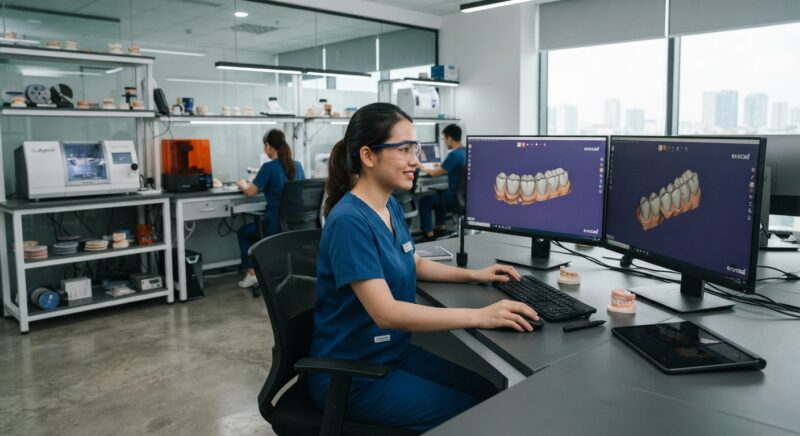
Many labs and DSOs invest in milling machines and 3D printers but lack the skilled designers needed to fully utilize these assets. Outsourcing CAD CAM digital design services lets you maximize equipment use without hiring additional staff.
By leveraging CAD CAM digital design to grow dental lab revenues in 2026, you can expand case acceptance and throughput while controlling costs. Our expert design team ensures your new equipment runs at full capacity with high-quality results.
Conclusion and Call to Action
Leveraging CAD CAM digital design to grow dental lab revenues in 2026 is a strategic move to enhance efficiency, reduce costs, and improve clinical outcomes. Outsourcing digital design services enables labs and DSOs to scale quickly and maintain competitive advantages.
Implementing a Step-by-Step CAD CAM Digital Design Outsourcing Workflow
Transitioning from traditional design methods to an outsourced CAD CAM digital design workflow can seem daunting for dental labs and practices. However, breaking down the process into clear, manageable steps can facilitate a smooth integration that maximizes efficiency and revenue growth. Below is a practical, step-by-step guide for dental labs looking to outsource their CAD CAM design work effectively.
Step 1: Assess Current Capabilities and Define Objectives
- Evaluate internal design capacity: Document current staffing levels, skill sets, and software tools.
- Identify bottlenecks: Analyze turnaround times, error rates, and workload spikes that impact delivery.
- Set clear goals: Define what you want to achieve with outsourcing, such as faster turnaround, cost savings, or access to advanced design expertise.
Step 2: Select the Right Outsourcing Partner
- Request samples and references: Evaluate design quality through case studies and client feedback.
- Assess technology compatibility: Ensure the partner’s CAD software and file formats integrate seamlessly with your systems.
- Review security protocols: Confirm compliance with data protection standards specific to dental patient information.
Step 3: Define Communication and Data Transfer Protocols
- Set up secure file sharing: Use encrypted cloud platforms or secure VPN access to transfer digital impressions and design files.
- Establish regular checkpoints: Schedule progress updates and quality reviews at key stages of the design process.
- Assign liaison personnel: Designate internal team members responsible for managing communication with the outsourcing partner.
Step 4: Conduct Pilot Projects
- Start small: Outsource a limited number of cases to evaluate turnaround, accuracy, and communication effectiveness.
- Document results: Track errors, revisions needed, and time to completion.
- Gather feedback: Obtain input from technicians, clinicians, and patients where applicable.
Step 5: Scale Up and Optimize Workflow
- Refine processes: Adjust data transfer methods, communication frequency, and quality checks based on pilot learnings.
- Integrate software automation: Utilize APIs and workflow management tools to reduce manual steps.
- Monitor KPIs: Continuously track turnaround times, error rates, and cost savings to ensure ongoing improvement.
Step 6: Continual Training and Innovation
- Educate staff: Provide training on digital workflows and emerging CAD CAM technologies.
- Stay updated: Collaborate with outsourcing partners to adopt new materials, design techniques, and software upgrades.
- Encourage innovation: Foster a culture that embraces digital transformation and experimentation.
Common Pitfalls and How to Avoid Them in CAD CAM Digital Design Outsourcing
While outsourcing CAD CAM digital design offers many benefits, dental labs and practices can face challenges if common pitfalls are not proactively managed. Understanding these potential mistakes can save time, reduce costs, and ensure high-quality outcomes.
Pitfall 1: Poor Communication Leading to Design Errors
Misunderstandings between the lab and the design partner can result in incorrect margins, fit issues, or aesthetic mismatches.
- Avoidance strategy: Use detailed design briefs with visual aids and standardized terminology. Regular video calls to clarify complex cases can reduce errors.
Pitfall 2: Underestimating Data Security Needs
Patient data breaches can lead to compliance violations and loss of trust.
- Avoidance strategy: Ensure the outsourcing partner has HIPAA-compliant data handling, encrypted file transfers, and strict access controls.
Pitfall 3: Neglecting Quality Control on Delivered Designs
Assuming the partner’s quality is always perfect can lead to costly remakes and delays.
- Avoidance strategy: Implement a robust internal review process using pre-established quality checklists before manufacturing.
Pitfall 4: Inadequate Integration with In-House CAD CAM Systems
File compatibility issues can cause delays and require rework.
- Avoidance strategy: Confirm compatibility of design file formats (e.g., STL, PLY, OBJ) and software versions upfront and test file transfers thoroughly during onboarding.
Pitfall 5: Overlooking Hidden Costs
Costs such as shipping physical models, additional revisions, or software licensing can erode savings.
- Avoidance strategy: Negotiate transparent pricing with your outsourcing partner and include contingency budgets for revisions or expedited work.
Pitfall 6: Insufficient Training for Staff on Digital Workflows
Team members unfamiliar with digital design processes may slow adoption and reduce efficiency.
- Avoidance strategy: Invest in ongoing training programs tailored to different roles, including technicians, clinicians, and administrative staff.
Cost and Quality Considerations: Balancing Investment and Returns in CAD CAM Outsourcing
When evaluating CAD CAM digital design outsourcing, dental labs must weigh upfront and ongoing expenses against the benefits of improved quality and operational gains. The following breakdown highlights key factors to consider.
Direct Costs
- Design service fees: Typically charged per case or per design file, fees vary based on complexity and turnaround time.
- Software licenses: While outsourcing reduces the need for in-house design software, some investment in compatible viewer or management software may still be required.
- Data transfer and storage: Cloud storage subscriptions and secure transfer solutions add to operational costs.
- Shipping and logistics: Physical models or materials sent to or from the outsourcing partner can incur additional expenses.
Indirect Costs
- Training and onboarding: Initial time and resources spent integrating partner workflows.
- Revision cycles: Extra labor and material costs from redesigns due to miscommunication or quality issues.
- Potential delays: Downtime during transition periods or unexpected hold-ups in partner delivery can affect cash flow.
Quality Factors Impacting ROI
- Precision and fit: High-quality digital designs reduce remakes, saving materials, labor, and time.
- Material compatibility: Accurate digital designs ensure proper fabrication using the chosen materials, minimizing waste.
- Aesthetic outcomes: Superior digital designs enhance patient satisfaction and referrals, boosting business growth.
- Turnaround speed: Faster delivery allows labs to accept more cases and increase throughput.
Real-World Cost Example
A midsize dental lab outsourcing crown and bridge designs to a reputable provider reported the following:
- Outsourcing cost per design: $50
- Previous in-house design cost per case (software, labor, overhead): $70
- Average turnaround reduction: 2 days per case
- Remake rate decreased from 8% to 3%
Resulting in net savings of approximately 20% in design-related costs and increased capacity, enabling the lab to take on 15% more cases monthly.
Market-Specific Insights: Tailoring CAD CAM Outsourcing for Different Dental Lab and Practice Segments
Understanding the unique needs and challenges of various segments within the dental industry is crucial for selecting and leveraging CAD CAM digital design outsourcing effectively. Below are considerations specific to key market niches.
Segment 1: Small Independent Dental Labs
- Challenges: Limited design staff, budget constraints, and slower technology adoption.
- Opportunities: Outsourcing provides access to expert design talent and reduces capital expenditure on software and training.
- Best practices: Start with outsourcing complex cases to reduce workload and gradually expand. Utilize partners offering flexible pricing and scalable services.
Segment 2: Large Multi-Location DSOs
- Challenges: Managing design consistency across multiple labs, high case volumes, and complex logistics.
- Opportunities: Centralizing design outsourcing can standardize quality and reduce redundancy.
- Best practices: Develop a centralized digital workflow with standardized protocols. Employ dedicated internal coordinators to manage partner relationships and data security.
Segment 3: Specialty Practices (Orthodontics, Implantology)
- Challenges: Highly customized designs, frequent need for surgical guides and complex appliances.
- Opportunities: Access to specialized digital design expertise and advanced software tools that may be cost-prohibitive in-house.
- Best practices: Partner with design firms experienced in specialty workflows. Engage in joint case reviews to optimize appliance design and fit.
Segment 4: Academic and Research Institutions
- Challenges: Diverse case types, experimental materials, and evolving design parameters.
- Opportunities: Outsourcing can provide access to cutting-edge design innovations and flexible project-based support.
- Best practices: Choose partners open to collaboration and customization. Establish clear IP and data usage agreements.
Segment 5: Emerging Markets and Developing Regions
- Challenges: Limited access to advanced CAD CAM infrastructure and skilled designers.
- Opportunities: Outsourcing to global design centers can accelerate access to technology and expertise.
- Best practices: Prioritize partners with multilingual support and understanding of local regulatory environments. Build strong communication protocols to overcome time zone differences.
Real-World Examples of Successful CAD CAM Digital Design Outsourcing
Understanding how dental labs and practices have successfully integrated CAD CAM digital design outsourcing can provide valuable insights and inspiration. Here are a few practical examples that highlight key benefits and strategies:
Example 1: Mid-Sized Lab Cuts Turnaround Time by 40%
A mid-sized dental lab in the Midwest partnered with a specialized CAD CAM design outsourcing firm to handle complex implant cases. Prior to outsourcing, the lab’s in-house design team struggled with bottlenecks, leading to delays and lost clients. By outsourcing the design phase, the lab reduced turnaround times by 40%, enabling them to accept more cases and improve client satisfaction. The lab used a cloud-based communication platform to streamline design approvals, ensuring real-time feedback and faster iterations.
Example 2: Small Practice Expands Service Offerings Without Hiring
A small dental practice in a suburban area wanted to offer same-day crowns but lacked the resources to invest in expensive equipment and training. By outsourcing CAD CAM design, they could provide high-quality restorations with minimal upfront investment. The outsourcing partner provided digital files ready for milling in the practice’s in-house milling machine, enabling a seamless workflow that boosted patient retention and referrals.
Example 3: Large DSO Improves Quality Control and Consistency Across Multiple Locations
A large Dental Service Organization (DSO) with clinics across several states centralized its digital design outsourcing to maintain consistency in quality and aesthetics. By standardizing design protocols through the outsourcing partner, the DSO achieved uniformity in restorations and reduced remakes by 25%. This approach also freed up internal resources to focus on chairside patient care and operational efficiency.
Checklist for Integrating CAD CAM Digital Design Outsourcing into Your Lab or Practice
To successfully incorporate outsourcing into your workflow, it’s essential to follow a structured approach. Use this checklist to ensure you cover all critical aspects:
- Assess current design capabilities: Identify gaps in skills, technology, and capacity.
- Define clear objectives: Determine what you want to achieve—cost savings, faster turnaround, expanded services, or quality improvements.
- Research potential outsourcing partners: Evaluate expertise, track record, technology compatibility, and responsiveness.
- Establish data security protocols: Ensure HIPAA compliance and secure data transfer methods.
- Set communication standards: Define points of contact, expected response times, and feedback loops.
- Run pilot projects: Start small to test workflows and quality standards before scaling.
- Train your team: Educate staff on new workflows and software interaction.
- Monitor performance metrics: Track turnaround times, quality rates, client satisfaction, and cost savings.
- Regularly review and optimize: Adjust processes based on feedback and industry developments.
Cost and Quality Considerations When Outsourcing CAD CAM Digital Design
One of the primary factors influencing the decision to outsource CAD CAM digital design is balancing cost versus quality. Here, we break down the main considerations to help labs and practices make informed choices.
Cost Factors to Evaluate
- Direct Design Fees: Outsourcing partners typically charge per design or on a subscription basis. Transparent pricing models prevent unexpected expenses.
- Software and Hardware Savings: Outsourcing removes the need for costly CAD software licenses, hardware upgrades, and maintenance.
- Labor Cost Reduction: By outsourcing, you avoid hiring and training additional design technicians.
- Reduced Remakes and Adjustments: High-quality designs from experienced partners can reduce costly remakes and chairside adjustments.
- Shipping and Logistics: Consider if physical models or materials need to be shipped, which can add to costs.
Quality Considerations
- Experience and Expertise: Choose partners with demonstrated proficiency in the specific restoration types and materials you use.
- Technology Compatibility: The outsourced designs must be fully compatible with your milling or 3D printing equipment to avoid errors.
- Communication and Revision Policies: Clear protocols for revisions and feedback ensure designs meet your expectations.
- Turnaround Time Guarantees: Reliable delivery schedules are critical for maintaining patient satisfaction.
- Certifications and Compliance: Partners should comply with relevant dental and medical device regulations.
Balancing Cost and Quality
While it might be tempting to choose the lowest-cost outsourcing partner, lower fees often come with compromises in quality or service. Conversely, premium services might offer excellent design quality but at rates that reduce profit margins. The optimal choice balances competitive pricing with proven quality assurance measures, transparent communication, and reliable delivery.
Common Mistakes to Avoid in CAD CAM Digital Design Outsourcing
Even with careful planning, labs and practices can encounter pitfalls when outsourcing. Being aware of these common mistakes can save time, money, and reputation.
Mistake 1: Inadequate Due Diligence on Partners
Failing to thoroughly vet outsourcing partners can lead to substandard designs, missed deadlines, and communication breakdowns. Always verify references, check sample work, and clarify service terms before committing.
Mistake 2: Poor Integration with Existing Workflows
Outsourcing should complement, not disrupt, your current processes. Without clear protocols and staff training, integration can cause delays and errors.
Mistake 3: Overlooking Data Security and Patient Privacy
Dental data is sensitive and protected under strict regulations. Neglecting data encryption, secure transfer methods, and compliance audits can expose your practice to legal risks.
Mistake 4: Lack of Contingency Planning
Relying entirely on an external partner without backup plans can halt production if the partner experiences technical issues or delays. Maintain some in-house design capacity or alternative partners as a safeguard.
Mistake 5: Ignoring Feedback Loops
Continuous improvement requires regular review of design quality and turnaround times. Ignoring feedback from your team and patients can prevent necessary adjustments and process optimization.
Contact us today to learn how our dental lab CAD CAM digital design outsourcing services can help your business grow in 2026 and beyond.