Understanding 3D Dental Lab Outsourcing vs In-House Design Cost Comparison 2026
The 3D dental lab outsourcing vs in-house design cost comparison 2026 is a crucial evaluation for dental labs and Dental Service Organizations (DSOs) aiming to optimize their operational costs and efficiency. As digital dentistry advances, CAD/CAM technology has become central to producing high-quality crown & bridge, implants, surgical guides, dentures, orthodontic aligners, and night guards. This article delves into the financial, operational, and strategic factors influencing the choice between outsourcing digital design services and maintaining in-house capabilities.
What is dental lab outsourcing?
Dental lab outsourcing refers to contracting external specialized providers to handle the CAD/CAM digital design and sometimes manufacturing of dental prosthetics rather than performing these tasks internally. Outsourcing allows dental labs and DSOs to leverage expert design teams, advanced software, and scalable resources without the capital investment in hardware and staffing.
Outsourcing is especially popular for complex cases such as implant planning and surgical guides, where precision and expertise are paramount. Many external CAD design providers use industry-leading software from 3Shape or exocad to ensure compatibility and high standards. This approach also enables labs to manage fluctuating workloads flexibly without the burden of fixed overheads.
Key Cost Components in 3D Dental Lab Outsourcing vs In-House Design Cost Comparison 2026
To conduct a comprehensive 3D dental lab outsourcing vs in-house design cost comparison 2026, it is essential to break down the major cost elements involved in both approaches.
Initial Investment and Capital Expenses
- In-House Design: Requires significant upfront investment in CAD/CAM software licenses, powerful computers, scanners, milling machines, and ongoing hardware maintenance. For example, a single CAD software license can cost $10,000 to $30,000 annually, with hardware costs ranging from $20,000 to $70,000 depending on capabilities.
- Outsourcing: No capital investment is needed, as the service provider absorbs the cost of software, equipment, and infrastructure. This translates into immediate savings on large expenditures.
Labor and Staffing Costs
- In-House Design: Employing skilled CAD designers, technicians, and quality control staff involves salaries, benefits, and training expenses. The average salary for a dental CAD designer ranges from $50,000 to $80,000 annually, plus ongoing training to stay current with software updates and design protocols.
- Outsourcing: Labor costs are embedded within per-case fees or subscription models, allowing labs to convert fixed labor costs into variable expenses aligned with case volume.
Software and Maintenance Fees
- In-House Design: Continuous software updates, license renewals, and IT support are recurring expenses that can be costly and time-consuming for dental labs to manage.
- Outsourcing: Providers handle all software updates, ensuring clients benefit from the latest technology without additional fees or administrative overhead.
Turnaround Times and Workflow Efficiency
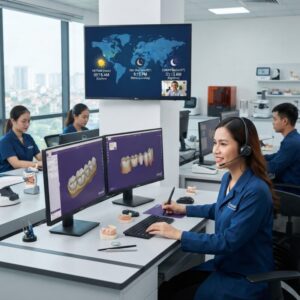
Faster turnaround times reduce case backlog and improve patient satisfaction. Outsourcing partners often operate with large, dedicated design teams capable of handling high volumes efficiently. In contrast, in-house teams may face capacity constraints and workflow bottlenecks, especially during peak demand.
Integrating outsourced services also works well alongside surgical guide design services, enabling labs to focus internal resources on core competencies.
How does digital crown design work in outsourced vs in-house settings?
Digital crown design involves creating precise 3D models of crowns using intraoral scans or physical impressions, processed through CAD software.
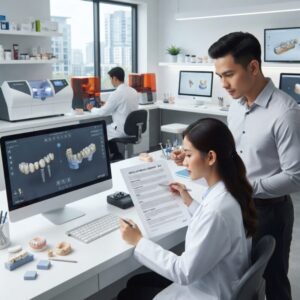
In-house teams typically handle scanning, design, and sometimes milling, which requires extensive expertise and equipment investment. Outsourcing this step transfers the design process to specialists who use sophisticated software and quality control protocols to deliver optimized crown designs ready for fabrication.
This model not only reduces direct labor and training costs but also improves design quality and consistency, as outsourcing firms often specialize in specific prosthetic types like crowns and bridges.
Material and Equipment Costs
- In-House Design: Labs must invest in compatible materials and milling machines to fabricate designs, which entails ongoing supply costs and maintenance.
- Outsourcing: Some services include design-only, while others provide full-service solutions including milling and shipping finished prosthetics, reducing the need for in-house inventory and equipment.
What are the financial benefits of 3D dental lab outsourcing vs in-house design cost comparison 2026?
The financial benefits of outsourcing CAD/CAM dental lab design compared to maintaining in-house capabilities are multifaceted and significant for most dental labs and DSOs.
First, converting capital expenditures into operational expenses improves cash flow and reduces financial risk. Outsourcing eliminates the need for costly software licenses, hardware purchases, and specialist staff salaries, allowing organizations to pay per case or on subscription models that scale with demand.
Second, outsourcing reduces overhead related to software maintenance, IT infrastructure, and quality assurance, which often go underestimated in in-house cost calculations.
Third, the ability to access expert design teams often results in fewer remakes and adjustments, lowering material waste and production delays. This advantage is particularly notable in complex cases such as implants and orthodontic aligners, where precision is critical.
Finally, outsourcing enables labs to rapidly adapt to fluctuating case volumes without the burden of fixed labor and equipment costs, a key factor for DSOs managing multiple locations.
Comparing Quality and Control: Does outsourcing compromise standards?
Quality control is a common concern when considering 3D dental lab outsourcing vs in-house design cost comparison 2026. While in-house teams provide direct oversight, outsourcing providers implement rigorous quality assurance processes and use advanced CAD software platforms recognized industry-wide.
Leading outsourcing companies often adhere to standards set by organizations such as the American Dental Association and employ certified technicians trained in the latest digital dentistry protocols. The use of interoperable design software like Medit scanners and 3Shape or exocad CAD platforms ensures seamless communication and file integrity, minimizing errors.
Many labs find that outsourcing actually enhances quality through specialized expertise and additional layers of design validation, which are sometimes challenging to maintain internally due to resource constraints.

How does the 3D dental lab outsourcing vs in-house design cost comparison 2026 impact workflow integration?
Integrating outsourced design services into existing lab workflows requires careful planning but offers substantial operational benefits. Outsourcing partners typically provide standardized digital file formats compatible with most milling and 3D printing equipment, enabling smooth transition from design to fabrication.
Labs can implement cloud-based collaboration platforms to monitor case progress and communicate with design teams in real time, enhancing transparency and reducing delays. This approach supports the delivery of a diverse range of prosthetics, from night guards to full dentures, without stretching internal resources.
Moreover, outsourcing allows labs to focus on core manufacturing and finishing processes while leaving the complex and time-consuming design phase to expert partners. This can shorten overall turnaround times and improve capacity planning.
What types of prosthetics benefit most from outsourcing CAD/CAM design?
While all dental prosthetics can benefit from digital design outsourcing, certain types stand out:
- Implants and surgical guides: Require precise 3D planning and integration with patient anatomy, making outsourcing to experienced design teams highly valuable.
- Orthodontic aligners: Benefit from specialized software and iterative design processes best handled by dedicated outsourcing firms.
- Dentures and night guards: Often involve complex contours and require efficient turnaround, which outsourced design studios can deliver at scale.
- Crowns and bridges: High-volume prosthetics that need consistent quality; outsourcing can reduce labor bottlenecks and improve case flow.
Cost Analysis: Numerical Examples in 3D Dental Lab Outsourcing vs In-House Design Cost Comparison 2026
To illustrate the financial impact, consider a midsize dental lab processing 1,000 cases per year:
- In-House Design Costs:
- Software licenses: $25,000/year
- Hardware and maintenance: $40,000/year
- Staff salaries (2 designers): $130,000/year
- Training and updates: $10,000/year
Total approximate annual cost: $205,000
- Outsourcing Costs:
- Per-case design fee: $150 (including quality checks)
- Annual outsourcing cost: $150,000
In this example, outsourcing saves roughly $55,000 annually while providing scalability, access to the latest technology, and reduced management burden. These figures vary depending on case complexity and volume but highlight why many labs and DSOs are shifting toward outsourced CAD/CAM design.
What are the risks and challenges associated with 3D dental lab outsourcing?
Although the 3D dental lab outsourcing vs in-house design cost comparison 2026 favors outsourcing in many cases, potential challenges exist.
- Data security and patient privacy: Sharing digital impressions and patient data requires robust cybersecurity and compliance with HIPAA and other regulations.
- Communication delays: Time zone differences or lack of immediate feedback can slow design revisions if not properly managed.
- Loss of direct control: Some labs worry about losing immediate oversight over design processes, which can be mitigated by choosing reputable partners with transparent workflows.
- Integration hurdles: Ensuring compatibility with existing milling or printing equipment and digital workflows requires upfront coordination.
By selecting experienced outsourcing providers and establishing clear communication protocols, these risks can be effectively managed.
Future Trends Influencing 3D Dental Lab Outsourcing vs In-House Design Cost Comparison 2026
The evolution of digital dentistry is rapidly reshaping cost dynamics. Emerging technologies such as AI-driven design automation, cloud-based collaboration platforms, and enhanced 3D printing materials are streamlining workflows and reducing expenses.
Outsourcing partners are increasingly adopting these innovations faster than individual labs can, providing early access to cutting-edge tools without capital expenditure. The ongoing consolidation of DSOs also favors scalable, outsourced design solutions that can be deployed across multiple locations efficiently.
Moreover, environmental sustainability considerations are becoming more prominent, with outsourcing providers often optimizing material usage and energy consumption better than smaller in-house operations.
How to choose the right outsourcing partner for your dental lab?
Selecting an outsourcing partner requires evaluating several factors:
- Technical expertise: Confirm the provider’s proficiency with your prosthetic types and software platforms.
- Turnaround time guarantees: Ensure they can meet your lab’s scheduling demands.
- Quality assurance processes: Look for certifications and documented QA protocols.
- Data security measures: Verify compliance with privacy standards and encryption practices.
- Customer support and communication: Assess responsiveness and collaboration tools offered.
Engaging in pilot projects with potential partners can provide valuable insights before full integration.
Summary: Is 3D dental lab outsourcing more cost-effective than in-house design in 2026?
The 3D dental lab outsourcing vs in-house design cost comparison 2026 strongly supports outsourcing as a cost-effective and operationally advantageous choice for most dental labs and DSOs. Outsourcing reduces upfront capital expenses, lowers labor and maintenance costs, and offers scalable, expert design services that improve quality and turnaround times.
While in-house design may still suit some labs with stable volumes and existing infrastructure, the flexibility and innovation enabled by outsourcing often outweigh these benefits, particularly given the fast pace of advancements in digital dentistry technology.
To maximize ROI and streamline workflows, labs should carefully assess their case mix, volume, and strategic goals while considering reputable outsourcing providers. This approach ensures alignment with industry standards and patient care expectations.
For more information on digital dental technologies and outsourcing benefits, visit the Dentsply Sirona resource center and explore the latest from Straumann.
Outsourcing CAD/CAM design also integrates well with digital crown design solutions, helping labs deliver consistent, high-quality dental prosthetics.
Contact Us
Ready to optimize your dental lab’s design costs and efficiency? Contact us today to learn how our 3D dental lab outsourcing services can help you stay competitive in 2026 and beyond.