Introduction to Modern Lab Operations
In the rapidly evolving landscape of dental technology, understanding how to digitize a dental lab workflow in 2026 is critical for survival. Labs that fail to adapt risk falling behind competitors who leverage advanced automation and remote design capabilities. This comprehensive guide outlines the strategic steps required to transition from analog processes to a fully integrated digital ecosystem. We will explore the hardware, software, and partnership models that define success in the coming year.
Many laboratory owners feel overwhelmed by the sheer volume of new tools available. However, the core objective remains consistent: improving turnaround times while maintaining clinical precision. By focusing on key integration points, you can streamline operations significantly. The journey begins with a clear assessment of your current capabilities and identifying bottlenecks that hinder productivity.
As we move through 2026, the expectation from dental practices is higher than ever. They demand faster delivery and greater accuracy in restorations. To meet these demands, you must adopt a mindset centered on continuous improvement and technological adoption. Knowing how to digitize a dental lab workflow in 2026 is not just about buying new machines; it is about rethinking your entire value chain.
Outsourcing plays a pivotal role in this transformation. It allows labs to focus on core competencies while leveraging external expertise for complex design tasks. This division of labor ensures that high-volume cases are handled efficiently without compromising quality. In the following sections, we will detail specific strategies for implementation and highlight common challenges to avoid.
What is the current state of dental lab digitization?
The current state of dental lab digitization is characterized by widespread adoption of intraoral scanning and CAD CAM systems.
Most established labs have already moved away from traditional physical impressions. Instead, they rely on digital files to communicate directly with manufacturers. This shift has reduced material costs and improved patient comfort during the impression process. However, full integration remains a challenge for many smaller operations.
To understand how to digitize a dental lab workflow in 2026, you must recognize where the industry stands today. Large dental service organizations (DSOs) have largely completed their digital transitions. They utilize centralized design hubs to manage case loads across multiple locations. Independent labs are now catching up by adopting similar centralized models through outsourcing partners.
The technology landscape has matured significantly over the last decade. Scanners are faster and more accurate, while design software offers more intuitive tools. Despite these advancements, fragmentation persists. Different software platforms often struggle to communicate with one another, creating data silos. Resolving these compatibility issues is essential for a seamless workflow.
Furthermore, the skill set required for technicians has changed. Modern staff need to be proficient in digital design software rather than just manual articulation. Training programs have evolved to meet this need, but the learning curve can be steep. Investing in staff development is a key component of any successful digitization strategy.
When considering how to digitize a dental lab workflow in 2026, you should also look at the supply chain. Digital files reduce the need for physical shipping of models and impressions. This reduces logistics costs and speeds up the overall process. The industry is moving towards a paperless environment where communication happens almost entirely through digital channels.
Why is outsourcing critical for scaling?
Outsourcing is critical for scaling because it provides immediate access to specialized design expertise and production capacity.
As case volumes increase, internal teams often become overwhelmed. This leads to burnout and potential errors in design. By partnering with external design centers, you can distribute the workload effectively. This ensures that peak periods do not result in missed deadlines or compromised quality.
One of the primary benefits of outsourcing is cost efficiency. Maintaining an in-house design team requires significant investment in software licenses and hardware. Outsourcing converts these fixed costs into variable costs, allowing for better financial management. You only pay for the design work you actually need, which improves cash flow.
Additionally, outsourcing allows you to offer a wider range of services. You can provide complex implant cases or orthodontic aligners without needing to hire specialists for each modality. This versatility makes your lab more attractive to diverse dental practices. It positions you as a one-stop shop for all their prosthetic needs.
When planning how to digitize a dental lab workflow in 2026, consider the role of remote design teams. They operate in different time zones, which can enable 24-hour production cycles. This means a case sent in the evening can be ready by the next morning. Such speed is a significant competitive advantage in the current market.
Quality control is another area where outsourcing partners excel. Reputable firms have rigorous review processes to ensure every design meets clinical standards. This reduces the risk of remakes and ensures patient satisfaction. By leveraging their expertise, you elevate the overall quality of your lab’s output.
Strategic partnerships also foster innovation. External partners often have early access to new technologies and design trends. They can share insights that help you stay ahead of the curve. This collaborative approach accelerates your own digital transformation journey. It ensures that you are not working in isolation but are part of a larger ecosystem.
Ultimately, the decision to outsource should be based on your long-term goals. If you aim to grow without proportionally increasing overhead, outsourcing is the logical choice. It allows you to scale up or down based on market demand. This flexibility is invaluable in an unpredictable economic environment.
How to digitize a dental lab workflow in 2026
Digitizing your workflow begins with selecting compatible hardware and software that communicate seamlessly.
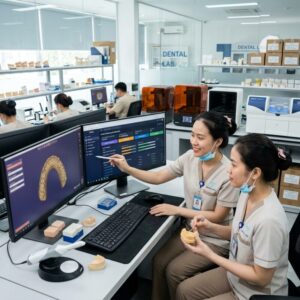
The first step involves auditing your current equipment. Identify any analog tools that can be replaced with digital equivalents. For example, replace physical articulators with virtual ones if possible. This reduces the physical footprint of your lab and increases design precision. Every analog step you remove improves the overall efficiency of the process.
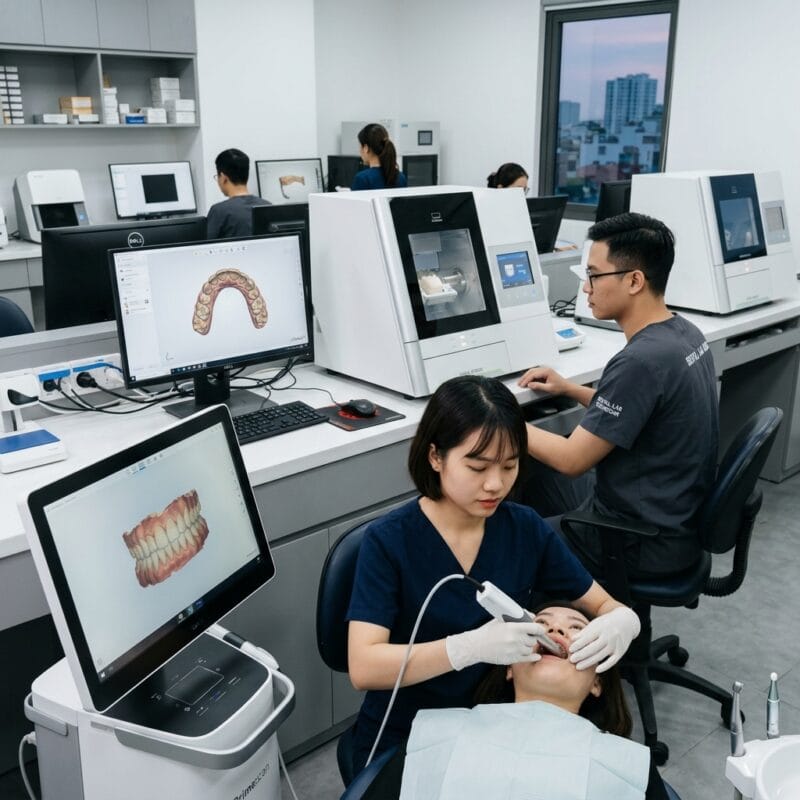
Next, focus on your scanning capabilities. Invest in high-resolution intraoral scanners or benchtop scanners for physical models. Ensure these devices output standard file formats like STL or PLY. Compatibility is key when integrating with design software. You want to avoid proprietary formats that lock you into a single vendor.
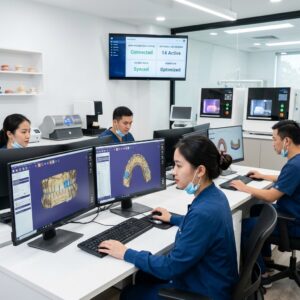
Choosing the right design software is crucial. Look for platforms that offer robust libraries for crowns, bridges, and implants. The interface should be user-friendly to minimize training time. Many labs prefer solutions that integrate well with milling and printing machines. This end-to-end integration simplifies the production process.
When implementing how to digitize a dental lab workflow in 2026, establish clear data protocols. Define how files are named, stored, and transmitted. Consistency prevents errors and ensures that cases can be easily retrieved. Use cloud storage solutions to facilitate remote access for your design team. This supports the outsourcing model discussed earlier.
Training your staff is the next critical phase. Ensure everyone understands how to use the new tools effectively. Provide ongoing education to keep skills sharp. Encourage a culture of innovation where staff are encouraged to suggest improvements. Their feedback can reveal practical issues that management might overlook.
Finally, measure your progress with key performance indicators. Track turnaround times, remakes rates, and customer satisfaction scores. These metrics will show you where improvements are still needed. Regularly review these numbers to ensure you are on track. Continuous monitoring helps you adapt quickly to changing conditions.
[MIDID]
What are the common pitfalls in digital transformation?
Common pitfalls include underestimating training costs and choosing incompatible software systems.
Many labs rush into digitization without a clear plan. They buy expensive hardware but fail to integrate it properly. This leads to frustration and wasted resources. It is essential to plan the transition phase carefully. Allocate time for testing and adjustment before going live with new tools.
Another pitfall is neglecting the human element. Staff may resist change if they feel threatened by automation. Address these concerns openly and involve them in the decision-making process. Show them how digital tools can make their jobs easier rather than harder. Their buy-in is crucial for successful adoption.
When considering how to digitize a dental lab workflow in 2026, beware of hidden costs. Software subscriptions and maintenance fees can add up quickly. Ensure you budget for these recurring expenses. Also, consider the cost of data migration from old systems. These costs are often overlooked in initial projections.
Security is another major concern. Digital files contain sensitive patient data that must be protected. Implement robust cybersecurity measures to prevent data breaches. Use encryption and secure transmission protocols. Compliance with regulations like HIPAA is non-negotiable in the dental industry.
Finally, avoid the trap of perfectionism. You do not need a perfect system to start. Begin with the most impactful changes and iterate over time. Waiting for everything to be perfect can delay progress indefinitely. Aim for continuous improvement rather than an immediate flawless state.
How does outsourcing impact profitability?
Outsourcing impacts profitability by reducing fixed overhead and increasing throughput capacity.
By shifting design work to external partners, you reduce the need for in-house design chairs. This frees up space for production equipment or additional milling units. The saved space can be used to generate more revenue. It also reduces the electricity and maintenance costs associated with running more machines.
Profitability also improves through reduced remake rates. Specialized design teams often produce higher quality work. This means fewer adjustments are needed during fabrication. Fewer remakes save material costs and labor hours. Over time, these savings compound to significantly boost your bottom line.
When analyzing how to digitize a dental lab workflow in 2026, look at the return on investment for outsourcing. Compare the cost per case of in-house design versus outsourcing. Often, the variable cost of outsourcing is lower than the fixed cost of employment. This is especially true for specialized cases like surgical guides.
Outsourcing also allows you to take on more cases during peak seasons without hiring temporary staff. This flexibility maximizes revenue opportunities. You can capture market demand without the risk of overstaffing. The ability to scale production up and down efficiently is a key driver of profitability.
Furthermore, outsourcing partners often provide value-added services. They may offer consultation on complex cases or material selection advice. This expertise helps you win more business from clients. It enhances your reputation as a knowledgeable and reliable partner. These intangible benefits contribute to long-term financial health.
Ultimately, the financial case for outsourcing is strong. It aligns costs with revenue, reducing financial risk. It allows you to invest savings into growth initiatives like marketing or new technology. By leveraging external expertise, you build a more resilient business model. This resilience is essential for navigating economic fluctuations.
Future trends in dental technology
Future trends include AI-driven design automation and fully integrated robotic manufacturing.
Artificial intelligence is beginning to play a larger role in design software. AI can automate routine tasks like margin detection and tooth shaping. This frees up designers to focus on complex cases. Over time, AI will become more sophisticated, handling entire restorations with minimal human intervention.
When thinking about how to digitize a dental lab workflow in 2026, consider the impact of robotics. Automated milling and printing units are becoming more common. They can operate unattended for long periods. This increases production capacity without increasing labor costs. The integration of robotics with digital design creates a highly efficient pipeline.
Material science is also advancing rapidly. New ceramics and polymers offer better aesthetics and durability. Digital workflows make it easier to utilize these new materials. They allow for precise control over material properties during fabrication. This leads to better clinical outcomes and patient satisfaction.
Connectivity will continue to improve. The Internet of Things (IoT) will link lab equipment to central management systems. Real-time data will allow for better scheduling and maintenance. You will know when a machine is due for service before it breaks down. This proactive approach minimizes downtime and keeps production flowing.
Virtual reality (VR) and augmented reality (AR) are also emerging technologies. They can be used for training staff or visualizing cases before fabrication. These tools provide immersive experiences that enhance understanding. As they become more affordable, adoption in labs will increase. They represent the next frontier in digital dental technology.
Staying informed about these trends is vital. Attend industry conferences and read technical journals regularly. Engage with your suppliers to learn about upcoming releases. By keeping a pulse on the industry, you can anticipate changes. This foresight allows you to prepare your lab for future demands.
How to choose the right outsourcing partner?
Choosing the right partner requires evaluating their technical capabilities and communication protocols.
Start by requesting samples of their previous work. Look for consistency in quality across different case types. Ask about their quality control processes and remakes policy. A reliable partner will have clear standards and transparent policies. They should be willing to share data on their performance metrics.
Communication is equally important. Ensure they have a dedicated account manager for your lab. This person should understand your specific needs and preferences. Fast response times are essential for meeting tight deadlines. Test their support team with a few questions before committing.
When evaluating how to digitize a dental lab workflow in 2026, check their software compatibility. Ensure their design files integrate smoothly with your production equipment. Incompatibility can lead to errors and wasted time. A good partner will work with you to resolve any technical issues quickly.
Security and compliance are non-negotiable. Verify that they adhere to relevant data protection regulations. Ask about their backup and disaster recovery plans. You need to be confident that your case data is safe. A breach can damage your reputation and lead to legal issues.
Finally, consider the cultural fit. Your partner should share your commitment to quality and service. A strong relationship is built on trust and mutual respect. Treat them as an extension of your own team. This collaborative approach yields the best results for your clients.
By following these guidelines, you can find a partner that supports your growth. The right partner will help you navigate the complexities of digitization. They will provide the expertise and capacity you need to succeed. In the end, the relationship you build is just as important as the technology you use.
Conclusion
Implementing how to digitize a dental lab workflow in 2026 requires a strategic approach to technology and partnerships. By focusing on integration, training, and quality control, you can build a resilient operation. Outsourcing offers a scalable solution to manage workload and costs effectively. Embrace these changes to stay competitive in a rapidly evolving industry.
Remember that digitization is a journey, not a destination. Continuously seek ways to improve your processes and adopt new tools. The labs that thrive will be those that remain adaptable and forward-thinking. Use this guide as a foundation for your transformation efforts.
Ready to transform your lab? Contact us today for a free workflow consultation.