Introduction: The Changing Landscape of Canadian Dentistry in 2026
Understanding how to start a dental lab in Canada in 2026 requires a clear-eyed assessment of a rapidly evolving market. Canadian restorative dentistry has transitioned almost entirely into a digital-first ecosystem. Intraoral scanners, once considered a luxury for elite practices in Toronto, Vancouver, and Montreal, are now standard clinical tools across suburban and rural practices from coast to coast. For entrepreneurs, Registered Dental Technologists (RDTs), and clinical business groups, analyzing how to start a dental lab in Canada in 2026 reveals unprecedented opportunities alongside distinct structural challenges.
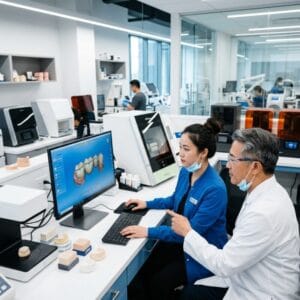
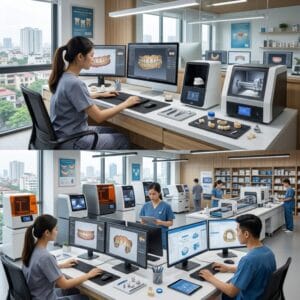
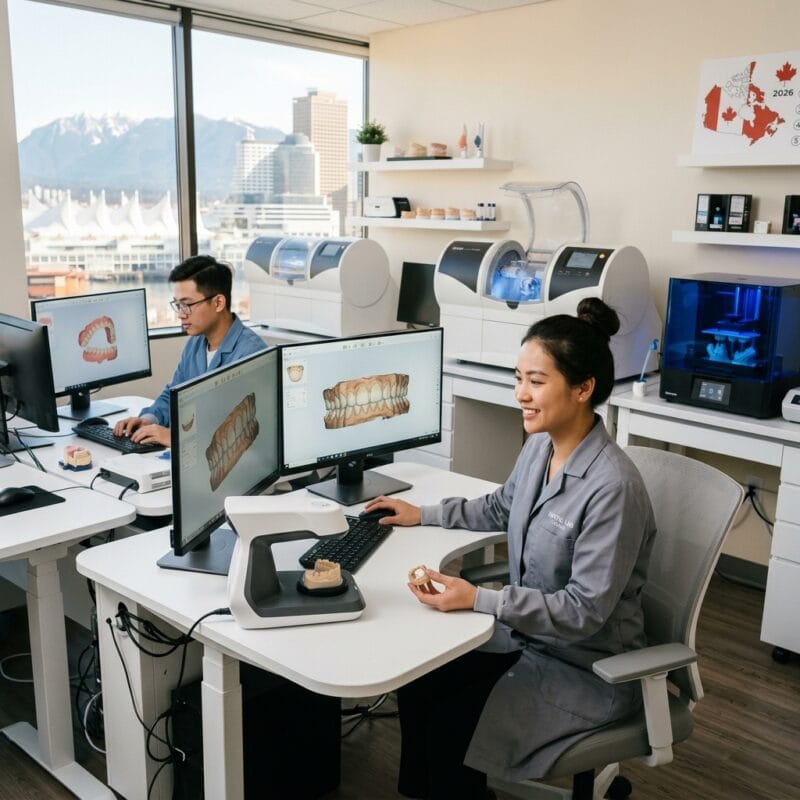
The traditional model of establishing a laboratory—which relied heavily on high-overhead real estate, massive initial capital expenditures for heavy casting equipment, and large teams of local waxers and ceramists—has been fundamentally disrupted. Anyone investigating how to start a dental lab in Canada in 2026 must realize that modern dental labs function as data-driven digital manufacturing centers. Success no longer depends on physical lab footprint, but rather on digital throughput, seamless file transfers, quality control protocols, and strategic partnerships.
In this comprehensive guide, we unpack the strategic roadmap for launching a high-margin, scalable laboratory business in the Canadian marketplace. From Health Canada regulatory requirements and provincial licensing to digital workflow architecture and leveraging specialized external CAD design services, this article covers everything you need to know when evaluating how to start a dental lab in Canada in 2026.
What regulatory steps are required when learning how to start a dental lab in Canada in 2026?
Registering a business entity, obtaining a Health Canada Medical Device Establishment License (MDEL) where applicable, and complying with provincial regulatory bodies governing Registered Dental Technologists (RDTs) constitute the mandatory regulatory framework for Canadian dental labs.
Navigating regulatory compliance is the foundational hurdle for anyone exploring how to start a dental lab in Canada in 2026. In Canada, medical devices—including custom-made prosthetics like crowns, bridges, implant abutments, surgical guides, and dentures—are regulated federally under the Food and Drugs Act by Health Canada. Additionally, the practice of dental technology is regulated at the provincial level. Failing to establish legal and regulatory compliance prior to opening your doors can lead to severe fines, operational shut-downs, or legal liability.
1. Health Canada Regulatory Framework (MDEL and Custom Devices)
Under Health Canada’s Medical Devices Regulations, dental prosthetics fabricated specifically for an individual patient under a clinician’s prescription are broadly classified as custom-made medical devices. If your laboratory imports finished medical devices or manufactures Class II, III, or IV devices for distribution beyond custom prescriptions, you may require a Medical Device Establishment License (MDEL). When planning how to start a dental lab in Canada in 2026, you must consult Health Canada guidelines to ensure your raw materials (such as zirconia blocks, cobalt-chromium discs, and light-cured 3D printing resins) carry active Health Canada Medical Device Licenses (MDLs).
2. Provincial Regulatory Colleges and RDT Supervision
The governance of dental technicians varies significantly across provinces:
- Ontario: Regulated by the College of Dental Technologists of Ontario (CDTO). A registered lab must either be owned by an RDT or employ a designated RDT on-site to supervise fabrication.
- British Columbia: Regulated under the British Columbia College of Oral Health Professionals (BCCOHP). Strict supervision and scope-of-practice standards apply to technical staff.
- Alberta: Supervised by the College of Dental Technologists of Alberta (CDTA). Registration and continuing competency credits are mandatory for practicing technicians.
- Quebec: Governed by the Ordre des technologistes dentaires du Québec (OTDQ).
If you are a business investor or dental entrepreneur who is not an RDT, your blueprint on how to start a dental lab in Canada in 2026 must include partnering with or hiring a fully credentialed RDT to satisfy provincial oversight requirements.
3. Data Privacy and PIPEDA Compliance
Digital dentistry involves transferring digital patient impressions (STL, PLY, or OBJ files) containing Protected Health Information (PHI). Under the Personal Information Protection and Electronic Documents Act (PIPEDA) and equivalent provincial privacy acts (such as PHIPA in Ontario), your lab must implement end-to-end encryption for file transfers, secure cloud storage protocols, and non-disclosure agreements with all external vendors. Factoring privacy compliance into your initial operating plan is essential when determining how to start a dental lab in Canada in 2026.
Developing a High-Margin Business Model for 2026
Historically, launching a lab required spending hundreds of thousands of dollars on physical space, ovens, casting machines, and specialized technician workstations. When evaluating how to start a dental lab in Canada in 2026, smart operators realize that digital workflows allow for a “lean business model” that minimizes fixed overhead and capital risk.
The Hybrid Digital Laboratory Model
The most profitable model for entrepreneurs researching how to start a dental lab in Canada in 2026 is the “Hybrid Digital Lab.” Instead of performing all steps—scanning, CAD design, milling, printing, and hand-finishing—in-house under high Canadian wage structures, the lab divides operations into high-value strategic zones:
- Client Relationship & Intake: Local account management, clinical consulting, and receiving digital scans directly from Canadian practices.
- CAD Design Operations: Partnering with a dedicated, high-volume CAD design provider to execute complex digital design work overnight.
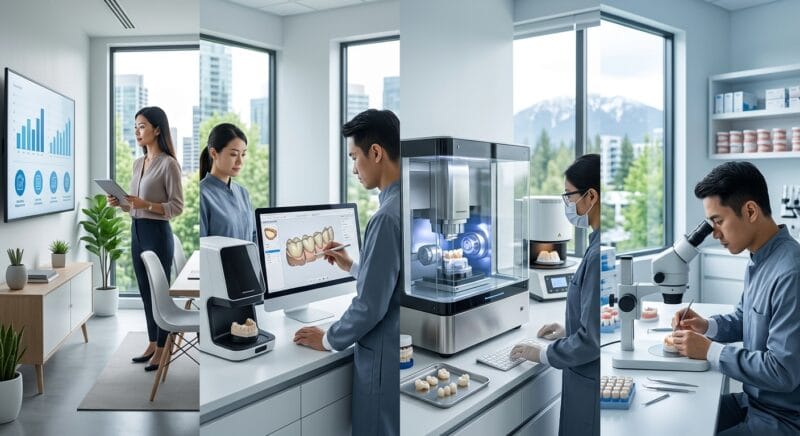
- In-House Production & Finishing: Operating high-speed 3D printers and compact multi-axis milling units locally to nested materials, followed by expert staining, glazing, and quality control by a certified local RDT.
This operational structure dramatically alters the unit economics of how to start a dental lab in Canada in 2026. By outsourcing CAD design, you eliminate the need to hire multiple senior CAD technicians in expensive Canadian metropolitan areas, where annual salaries for experienced exocad or 3Shape designers can exceed $80,000 to $110,000 CAD per year plus benefits.
Why is CAD CAM design outsourcing critical for new Canadian dental labs?
CAD CAM design outsourcing allows new Canadian dental labs to scale production immediately without incurring heavy upfront capital expenditures for specialized design software and full-time senior technicians.
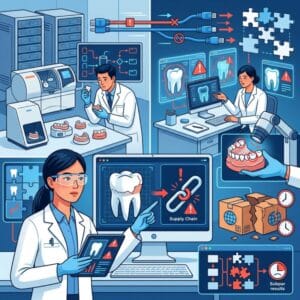
When studying how to start a dental lab in Canada in 2026, understanding the bottlenecks of traditional lab growth is vital. The primary operational bottleneck for any expanding dental laboratory is the digital design queue. If your digital designer falls ill, goes on vacation, or gets overwhelmed by a sudden influx of 50 intraoral scans from a new Dental Support Organization (DSO) client, your turnaround times collapse. By integrating professional external design partners, your lab secures instant access to vast, 24/7 design capacity without adding permanent overhead.
Product Line Versatility Through Strategic Outsourcing
A new lab trying to master every clinical modality on day one will quickly exhaust its resources. Outsourcing digital design empowers a startup lab to offer a comprehensive product catalog immediately upon launching:
1. Crown & Bridge Restorations: Monolithic zirconia, layered zirconia, lithium disilicate, and full-contour PMMA temporaries. Expert digital designers ensure proper margin identification, emergence profile, and precise proximal contact points, allowing you to focus on local milling and characterization.
2. Complex Implant Restorations: Custom titanium abutments, screw-retained crowns, and full-arch implant bridges (All-on-X). Designing complex implant prosthetics requires deep engineering expertise. Utilizing specialized design services for implant crown design reduces remakes and ensures exact passive fit over implants from top manufacturers such as Straumann or Nobel Biocare.
3. Guided Surgery Workflows: Surgical guides are high-growth items in Canada. By combining CBCT DICOM files with surface intraoral STL scans, expert offshore designers create high-precision surgical guides, enabling your lab to deliver turnkey implant planning services to clinicians.
4. Removable Prosthetics: Digital dentures are rapidly replacing traditional manual processing. Partnering with specialists who handle digital denture CAD design allows your lab to print or mill full, partial, and overdentures with perfect occlusion and anatomical aesthetics.
5. Orthodontic & Occlusal Appliances: Clear aligner staging, retainers, and splints represent recurring revenue streams. Outsourcing night guard and clear aligner design ensures consistent gap settings, block-out parameters, and retention forces, ensuring zero bench adjustment time for Canadian clinicians.
Essential Technology Stack and Initial Capital Requirements
A critical step when analyzing how to start a dental lab in Canada in 2026 is calculating the exact startup capital needed for hardware, software, and raw materials. Because of advanced digital ecosystems, starting a lab today costs a fraction of what it did a decade ago.
To give you a practical overview of the investment needed when planning how to start a dental lab in Canada in 2026, consider this modern tech stack comparison table:
| Category | Traditional Full In-House Setup (CAD) | Modern Lean / Outsourced Hybrid Setup (CAD) |
|---|---|---|
| Design Software & Workstations | $35,000 – $60,000 (Multiple licenses + high-end PCs) | $3,000 – $5,000 (Single basic CAD seat for minor adjustments) |
| CAD Staffing Salaries (Year 1) | $160,000 – $220,000 (2 Full-time senior designers) | $0 – $15,000 (Pay-per-design model via partner) |
| Production Equipment | $120,000 – $200,000 (Heavy industrial mill + ceramic furnace) | $45,000 – $75,000 (Compact 5-axis mill + high-temp sintering) |
| 3D Printing Infrastructure | $20,000 – $35,000 (Multiple high-throughput printers) | $8,000 – $15,000 (2 Medical-grade desktop 3D printers) |
| Initial Facility Real Estate | 1,500 – 3,000 sq ft industrial office space | 400 – 800 sq ft efficient commercial/tech suite |
| Estimated Total Startup Capital | $335,000 – $515,000 CAD | $56,000 – $110,000 CAD |
As demonstrated above, understanding how to start a dental lab in Canada in 2026 through a lean, design-outsourcing approach reduces initial capital requirements by up to 75% to 80%. This lower barrier to entry allows new lab owners to preserve cash flow for sales, marketing, and client acquisition.
How can a new Canadian lab compete with established large-scale laboratories?
New Canadian dental labs compete with established operations by specializing in fast turnarounds, superior local client communication, and leveraging expert offshore design partners to offer premium custom restorations at aggressive margins.
Many entrepreneurs researching how to start a dental lab in Canada in 2026 fear being crushed by mega-labs operating nationwide. However, large commercial labs often suffer from impersonal customer service, rigid turnarounds, and inconsistent account managers. Canadian dentists frequently express frustration over lack of communication regarding complex cases.
Here is how a newly established lab can win market share in 2026:
1. Ultra-Fast Local Turnaround Times
By using an overseas design team operating in complementary time zones (e.g., Europe or Asia), a digital file received from a Vancouver dentist at 5:00 PM PST can be fully designed, quality-checked, and sitting in your local milling or printing queue by 7:00 AM PST the next morning. You can fabricate, stain, glaze, and ship the final crown to the dental clinic on the same day. Delivering a high-precision restoration in 24 to 48 hours completely outmatches legacy competitors operating on 7-to-10-day schedules. Highlighting this turnaround advantage is a key strategy when formulating how to start a dental lab in Canada in 2026.
2. Concierge Clinical Support
While your design partner handles the labor-intensive digital drafting behind the scenes, your local team focuses entirely on building strong relationships with dentists. Offer in-person shade matching, jump on video calls to discuss complex full-mouth rehab cases, and assist clinics with troubleshooting their intraoral scanners, such as Medit or 3Shape hardware.
3. Niche Clinical Specialization
Rather than trying to serve every clinician in town, focus on high-margin specialties. Position your business as the premier local lab for surgical guides, implant bridge restorations, or digital removable dentures. Tailoring your marketing message to these profitable niches makes learning how to start a dental lab in Canada in 2026 far more lucrative.
Step-by-Step Implementation Roadmap for 2026
If you are ready to move from concept to execution, follow this chronological 6-month operational checklist designed specifically for those planning how to start a dental lab in Canada in 2026.
Month 1: Legal Formation and Regulatory Preparation
- Incorporate your business federally or within your target province (e.g., Ontario, BC, Alberta).
- Consult with a specialized legal professional regarding provincial health regulations and RDT ownership requirements.
- Apply for necessary business licenses, commercial insurance, and tax accounts (GST/HST, PST).
- Establish compliance protocols for PIPEDA data privacy standards.
Month 2: Facility Selection and Digital Architecture Setup
- Secure a compact, modern commercial facility with reliable high-speed fiber internet, adequate electrical infrastructure, and dust-extraction ventilation.
- Set up secure cloud storage and digital portal infrastructure for receiving intraoral scan files from dentists.
- Evaluate design software options like exocad for internal viewing and final verification.
- Select and onboard your primary CAD/CAM design outsourcing provider. Test communication channels, case upload portals, turnarounds, and design parameter preferences.
Month 3: Equipment Procurement and Calibration
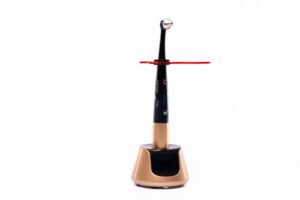
- Purchase equipment: 5-axis mill (dry or wet/dry combo), high-temperature zirconia sintering furnace, medical-grade 3D printers, light-curing units, and porcelain ovens.
- Establish supply agreements for raw materials: Health Canada-approved zirconia discs, titanium bases, lithium disilicate blocks, and 3D printing resins.
- Calibrate equipment using test STL files to ensure perfect marginal integrity, occlusion, and fit accuracy across all materials.
Month 4: Quality Assurance and Pilot Testing
- Conduct live pilot runs with 3 to 5 friendly local dental clinics. Request real intraoral scans for single crowns, night guards, and custom abutments.
- Submit scans to your design partner, run local production, perform staining/glazing, and have friendly clinicians seat the restorations.
- Collect direct clinical feedback on contacts, margins, occlusion, and aesthetic characterization. Tweak your design preferences with your external team accordingly.
Month 5: Sales and Marketing Launch
- Launch a modern, SEO-optimized website showcasing your product portfolio, turnarounds, digital capabilities, and easy file-upload options for clinicians.
- Produce clinician onboarding kits detailing intraoral scanner connection settings (e.g., how to connect to your lab on Medit Link, 3Shape Communicate, or Dentsply Sirona Connect).
- Initiate direct outreach to local practices, group practices, and regional DSOs across your target Canadian territory.
Month 6: Full Operational Scaling
- Begin accepting full production volume. Track core key performance indicators (KPIs): remake percentage, average turnaround time, material cost per unit, and design fee ratio.
- Continuously optimize your production queue, leveraging your design partner to seamlessly absorb spikes in order volume.
Following this structured timeline removes guesswork for anyone analyzing how to start a dental lab in Canada in 2026, ensuring a smooth transition into profit within your first year of operation.
Navigating Technological Trends in 2026
To ensure long-term sustainability, anyone planning how to start a dental lab in Canada in 2026 must keep an eye on upcoming technology shifts transforming the Canadian marketplace.
Artificial Intelligence in CAD/CAM Workflows
AI-driven crown proposals are accelerating design speeds dramatically. However, AI software still lacks human understanding of complex clinical nuances, occlusal history, and artistic aesthetics. Combining automated AI proposals with experienced human CAD designers yields the highest consistency. Partnering with a dedicated design service gives your new Canadian lab access to state-of-the-art AI design tools without requiring you to buy expensive yearly software module upgrades.
3D Printed Restorations and Direct-Print Resins
While milling remains the gold standard for final zirconia and ceramic restorations, 3D printing resins for permanent crowns, bridges, and full dentures are advancing rapidly. When considering how to start a dental lab in Canada in 2026, ensure your production facility includes open-material 3D printers capable of printing biocompatible resins approved by Health Canada. This positioning will keep your lab at the forefront of low-cost, high-volume prosthetic manufacturing.
Growth of Regional Dental Support Organizations (DSOs)
DSOs continue to acquire independent dental practices across Canada. DSOs prioritize three main factors when choosing a laboratory partner: digital consistency, transparent standardized pricing, and high volume capacity. A key advantage of understanding how to start a dental lab in Canada in 2026 using an outsourced CAD infrastructure is that your business can effortlessly handle massive corporate DSO contracts from day one without fear of capacity bottlenecks.
Financial Planning, Remake Mitigation, and Long-Term Success
Maintaining high profitability when learning how to start a dental lab in Canada in 2026 ultimately comes down to controlling your remake rate and managing fixed overhead costs.
In traditional lab environments, clinical remakes destroy profitability. A remake forces your expensive in-house staff to re-design, re-mill, re-stain, and re-ship a crown for free. However, when working with a specialized CAD design team, quality assurance checks are doubled. The external design team performs an initial inspection of the incoming intraoral scan, flagging margin defects, inadequate prep clearance, or distorted scan data before design work even begins. Preventing poor preparations from reaching the production floor saves hundreds of dollars per case in wasted materials and labor hours.
Furthermore, maintaining an agile business structure ensures that your lab remains profitable even during seasonal dips in clinical appointments (such as late summer or holiday periods). Because design services operate on a flexible pay-per-case fee model, your operational expenditures scale down automatically during slow weeks—a financial safeguard impossible to achieve under traditional high-salary staffing models.
Final Checklist: How to Start a Dental Lab in Canada in 2026
As you move forward with your business vision, keep this final summary checklist top of mind when reflecting on how to start a dental lab in Canada in 2026:
- Regulatory Legalities: Secure business registration, satisfy Health Canada material rules, and ensure proper provincial RDT oversight.
- Digital Intake Architecture: Set up secure, encrypted, PIPEDA-compliant cloud portals to receive digital STL/PLY scans from intraoral scanners.
- Strategic CAD Outsourcing: Establish a reliable partnership with a high-capacity dental design provider for crown, bridge, implant, denture, and guide design.
- Lean In-House Production: Invest in high-precision, compact milling and 3D printing equipment to keep fixed real estate and machinery costs minimal.
- Unmatched Local Service: Differentiate your business from large national competitors by providing concierge account management, rapid turnarounds, and exceptional customer service.
By combining local quality control and clinical relationships with world-class digital design services, launching a dental laboratory in Canada in 2026 offers an incredibly profitable pathway for forward-thinking dental entrepreneurs.
Ready to launch or scale your dental laboratory in Canada with expert digital CAD design support? Contact our expert design team today to streamline your workflow and expand your production capacity!