Introduction: The Future of Dental Lab Staffing in the Age of AI and Automation
The landscape of dental lab operations is on the brink of significant transformation, primarily driven by rapid advancements in artificial intelligence (AI) and automation. Understanding how AI and automation will change dental lab staffing needs in 2026 is crucial for dental labs and dental service organizations (DSOs) aiming to stay competitive and efficient. This article explores the multifaceted ways these technologies will impact workforce requirements, skill sets, and operational models specifically in CAD/CAM digital design outsourcing for crowns, bridges, implants, surgical guides, dentures, orthodontic aligners, and night guards.
What Is Dental Lab CAD/CAM Digital Design Outsourcing?
Dental lab CAD/CAM digital design outsourcing involves contracting specialized external providers to deliver computer-aided design and manufacturing services for dental prosthetics and appliances.
Outsourcing digital design allows dental labs and DSOs to leverage cutting-edge technology without the capital investment in hardware and software. Such providers offer expertise in designing crowns, bridges, implants, surgical guides, dentures, orthodontic aligners, and night guards using advanced CAD software, often incorporating AI-driven design optimization and automation in production. This trend is pivotal in understanding how AI and automation will change dental lab staffing needs in 2026, as outsourcing partners typically use highly automated workflows to reduce manual labor and improve turnaround times.
How Will AI and Automation Transform Routine Dental Lab Tasks?
AI and automation will automate many repetitive and labor-intensive tasks traditionally performed by dental technicians, such as scanning, design adjustments, and quality checks.
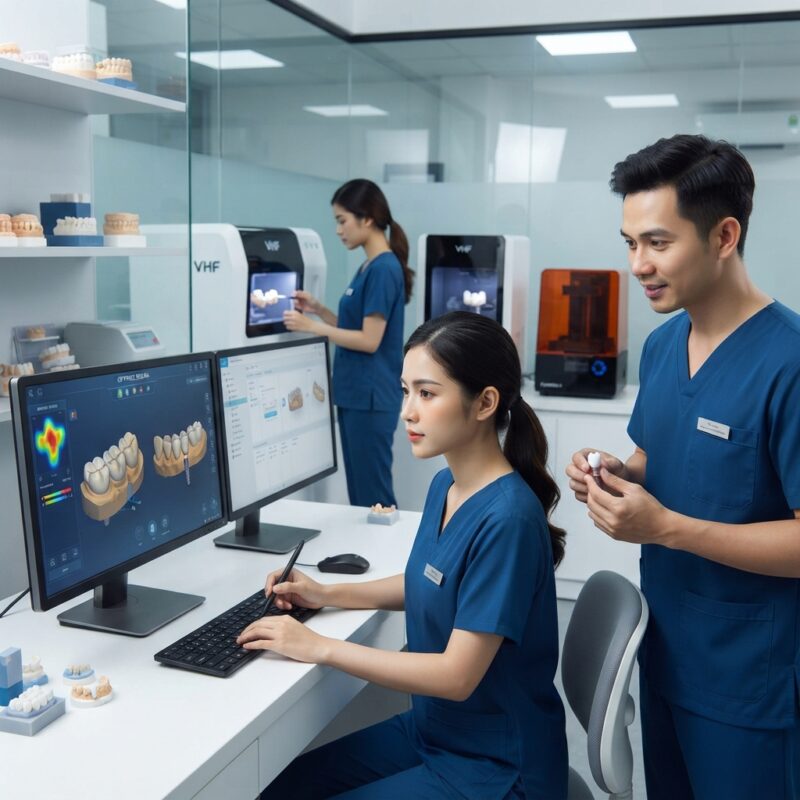
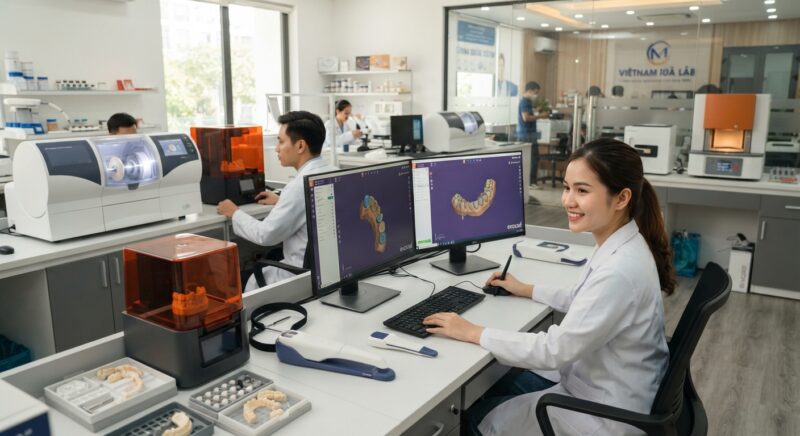
Specifically, AI-powered algorithms can analyze digital impressions and automatically generate preliminary crown and bridge designs, reducing the time technicians spend on initial modeling. Automation tools in milling and 3D printing will handle prosthetic fabrication with minimal human intervention. This shift means fewer technicians will be needed for routine tasks, while the demand for highly skilled personnel capable of managing and maintaining these systems will increase. Additionally, AI can predict potential errors and optimize material usage, streamlining workflows further.
What Skill Sets Will Dental Lab Staff Need in 2026?
Dental lab staff will need to develop advanced technical skills in digital design software, AI system oversight, and automated manufacturing equipment operation.
Since AI and automation will take over repetitive manual jobs, the workforce must evolve with competencies in CAD/CAM software such as those from 3Shape and exocad. Understanding AI algorithms for design optimization and having the ability to troubleshoot automated machines will become essential. Soft skills like critical thinking and adapting to new technologies will also be more valued. Comprehensive training programs and certification in digital workflows will be key for retention and productivity, as labs transition from traditional craftsmanship to tech-driven processes.
How Will Staffing Levels Change Across Different Dental Lab Roles?
Staffing levels for manual fabrication roles will decrease, while those for digital workflow management, quality assurance, and AI system supervision will rise.
Technicians focused on hand-finishing or traditional impression-taking may face reduced demand due to CAD/CAM and AI advancements. Conversely, roles such as digital design specialists, data analysts, and automation engineers will grow. Labs may downsize their manual production teams while expanding their digital departments. This realignment reflects how AI and automation will change dental lab staffing needs in 2026, emphasizing a leaner, more tech-centric staff structure that enhances scalability and precision in producing dental prosthetics like implants and orthodontic devices.
What Are the Cost Implications of AI and Automation on Staffing?
Implementing AI and automation can lead to significant cost savings by reducing labor expenses and minimizing material waste, but it may require upfront investment in technology and training.
Dental labs will benefit from lower ongoing labor costs as automation reduces the need for large technician teams. However, initial costs include purchasing advanced CAD/CAM systems, AI software licenses, and automated milling or 3D printing equipment. Additionally, investing in upskilling existing staff or hiring specialized personnel will incur expenses. Over time, the efficiency gains and improved accuracy in producing crowns, night guards, and surgical guides will offset these costs. Understanding these financial trade-offs is essential for labs planning their workforce strategy in light of how AI and automation will change dental lab staffing needs in 2026.
How Can Dental Labs Prepare for Staffing Changes Due to AI and Automation?
Dental labs can prepare by investing in continuous staff training, adopting flexible staffing models, and partnering with specialized digital design outsourcing providers.
Proactive workforce development ensures staff possess the skills needed for AI-augmented workflows. Cross-training technicians on both traditional and digital processes helps maintain adaptability. Labs should also consider hybrid staffing strategies, combining in-house experts with outsourced CAD/CAM digital design services to optimize efficiency. Collaboration with leading technology providers like Dentsply Sirona can provide access to state-of-the-art tools and training resources. These measures will help labs navigate the shift in how AI and automation will change dental lab staffing needs in 2026 without disruption.
The Role of Dental Service Organizations (DSOs) in Adapting Staffing Strategies
DSOs will play a pivotal role in adopting AI and automation, driving consolidated staffing models that leverage centralized digital design outsourcing and automation hubs.
With multiple dental practices under management, DSOs can standardize workflows and staffing by outsourcing CAD/CAM design and production to specialized labs that utilize AI and automation extensively. This centralization reduces redundancy and enables DSOs to scale services efficiently while maintaining quality. DSOs will need to balance onsite clinical staffing with offsite digital production teams, understanding the nuances of how AI and automation will change dental lab staffing needs in 2026 across all their facilities. Integrating data from digital workflows will also support better resource allocation and predictive staffing models.
What Are the Industry Trends Driving AI and Automation Adoption in Dental Labs?
The dental industry is witnessing a surge in demand for faster turnaround times, higher accuracy, and cost-effective production, which fuels AI and automation adoption.
Emerging trends include the rise of AI-powered design software that improves prosthetic fit and aesthetics, automated additive manufacturing for complex dentures and surgical guides, and integration of data analytics for workflow optimization. Increased competition and patient expectations are pushing labs and DSOs to embrace these technologies. Regulatory bodies like the American Dental Association are also endorsing digital workflows, further legitimizing AI and automation investments. These market forces collectively shape how AI and automation will change dental lab staffing needs in 2026, urging labs to innovate or risk obsolescence.
Conclusion: Embracing Change for a Future-Ready Dental Lab Workforce
Understanding how AI and automation will change dental lab staffing needs in 2026 is essential for any dental lab or DSO aiming to remain competitive. The shift toward automated CAD/CAM digital design outsourcing will reduce the need for manual labor while increasing demand for digital expertise and AI system management. By adapting staffing strategies, investing in training, and leveraging outsourcing partnerships, dental labs can achieve greater efficiency, accuracy, and scalability in prosthetic production.
Practical Steps for Integrating AI and Automation into Dental Lab Staffing
Successfully adopting AI and automation technologies in dental labs requires more than just acquiring new tools—it demands a strategic, step-by-step approach to workforce integration. Below is a practical roadmap that dental labs and dental service organizations (DSOs) can follow to ensure a smooth transition while maintaining high-quality outputs and operational efficiency.
Step 1: Conduct a Comprehensive Skills and Workflow Audit
Before implementing new technologies, evaluate existing staff skills and current workflows. This audit should identify:
- Tasks that are repetitive and time-consuming, ideal for automation.
- Roles that require creative judgment or specialized craftsmanship where human input remains critical.
- Skill gaps, especially in digital design, software proficiency, and data analysis.
- Potential staff members interested in upskilling or cross-training.
A thorough audit not only highlights areas where AI and automation can increase efficiency but also guides targeted training efforts and staffing adjustments.
Step 2: Develop a Phased Implementation Plan
Rolling out AI and automation in phases minimizes disruption. Key phases include:
- Pilot Phase: Introduce AI tools in a limited scope, such as automating digital impressions or design workflows for a select group of cases or clients. This allows for real-world testing and adjustment.
- Training Phase: Concurrently with the pilot, provide hands-on training to staff involved, focusing on both technical skills and change management.
- Expansion Phase: Gradually scale AI integration to cover more tasks and workflows, incorporating staff feedback and optimizing processes.
- Optimization Phase: Analyze operational data to refine AI tool usage, identify new automation opportunities, and continuously improve staff roles.
Step 3: Establish Clear Roles and Responsibilities
Automation changes traditional job descriptions. Define new role boundaries clearly to avoid confusion and overlapping responsibilities. For example:
- Digital Design Specialists may focus more on quality control and customization rather than basic design creation.
- Technicians might shift from manual model fabrication to overseeing automated milling machines and troubleshooting software issues.
- Lab Managers could take on data analytics roles, interpreting AI-generated performance metrics to guide staffing and production decisions.
Step 4: Implement Continuous Monitoring and Feedback Loops
AI and automation tools generate valuable data on productivity, errors, and turnaround times. Use these insights to:
- Measure the impact on staffing efficiency and quality.
- Identify bottlenecks or areas where human intervention remains necessary.
- Collect staff feedback on usability and challenges.
- Adjust staffing models and training programs based on real-world performance.
Common Pitfalls and How to Avoid Them in AI-Driven Dental Labs
While AI and automation offer transformative potential, many dental labs encounter challenges during the transition. Recognizing and proactively addressing these pitfalls is critical.
Pitfall 1: Over-Reliance on Automation at the Expense of Quality
Some labs may assume that AI can fully replace human judgment, leading to errors in complex cases such as implant planning or esthetic restorations. To avoid this:
- Maintain human oversight for quality assurance, especially for cases requiring personalized adjustments.
- Integrate AI as a decision-support tool rather than a decision-maker.
- Develop robust quality checkpoints that combine automated and manual reviews.
Pitfall 2: Insufficient Staff Training and Resistance to Change
New technologies can intimidate staff, leading to resistance or improper use. Prevent this by:
- Providing comprehensive, role-specific training well before full deployment.
- Encouraging a culture of continuous learning and innovation.
- Involving staff early in technology selection and pilot testing to build ownership.
Pitfall 3: Ignoring Cost-Benefit Analysis
Implementing AI can be costly upfront. Labs that fail to analyze return on investment (ROI) may struggle financially. To manage costs:
- Calculate total cost of ownership, including software licenses, hardware, training, and potential downtime.
- Estimate labor savings and productivity gains realistically.
- Explore financing options or phased investments to spread expenses.
- Consider vendor support and upgrades as ongoing costs.
Pitfall 4: Poor Data Management and Integration
AI systems rely on accurate, well-structured data. Common issues include incompatible file formats, data silos, or lack of integration between CAD/CAM systems and lab management software. Avoid this by:
- Selecting compatible platforms and establishing standardized data protocols.
- Investing in IT infrastructure or consulting to streamline data flows.
- Training staff on proper data entry and management practices.
Cost and Quality Considerations in AI-Enabled Dental Labs
Balancing cost efficiency with uncompromised quality is paramount when integrating AI and automation into dental lab staffing and operations. Understanding the financial and qualitative trade-offs helps labs make informed decisions.
Capital and Operational Costs
Key cost components include:
- Technology Acquisition: High-quality AI software, scanning devices, and automated milling machines involve significant upfront investment.
- Maintenance and Upgrades: Regular software updates, hardware servicing, and potential subscription fees add to ongoing expenses.
- Training and Change Management: Allocating time and resources for upskilling staff is an essential but sometimes overlooked cost.
- Integration and IT Support: Ensuring smooth interoperability between tools may necessitate dedicated IT personnel or consultants.
Labor Cost Impact
While AI can reduce the need for certain manual tasks, it may also shift labor costs rather than eliminate them. For example:
- Less need for entry-level technicians may reduce wage expenses.
- Increased demand for digital designers and data specialists could raise salaries in those roles.
- Improved efficiency can allow labs to handle higher volumes without proportional staff increases, improving margins.
Quality Assurance and Client Satisfaction
AI can enhance precision and consistency in prosthetic design and fabrication, leading to fewer remakes and adjustments. However, quality depends on:
- Accurate data inputs and proper calibration of automated equipment.
- Experienced staff overseeing AI outputs and managing exceptions.
- Effective communication between dental labs and practices to clarify case specifics.
Maintaining stringent quality standards while adopting AI helps labs build trust with dental practices and patients, securing long-term business relationships.
Market-Specific Staffing Strategies: Tailoring AI Adoption to Lab Size and Clientele
The impact of AI and automation on staffing will vary widely depending on the size of the dental lab, the complexity of cases handled, and the nature of client relationships. Crafting market-specific strategies is essential.
Small to Mid-Sized Labs
Smaller labs often have limited budgets and fewer specialized roles. For these labs:
- Focus on Modular AI Solutions: Adopt scalable tools that can be incrementally integrated, such as cloud-based CAD software or automated scanning units.
- Cross-Train Staff: Encourage multi-skilled employees who can manage both traditional fabrication and digital design to maximize flexibility.
- Leverage Outsourcing: Consider partnerships with specialized design service providers to access AI benefits without heavy internal investment.
- Prioritize High-Impact Tasks: Automate repetitive, low-margin activities first to realize cost savings quickly.
Large Dental Labs and DSOs
Larger organizations have more resources but also greater complexity in staffing and operations. Recommended approaches include:
- Invest in Dedicated Digital Teams: Create specialized units focused on AI-driven workflows, data analytics, and continuous innovation.
- Implement Advanced Workforce Analytics: Use AI tools not only in production but also for optimizing staffing schedules, workload balancing, and talent management.
- Standardize Processes Across Multiple Locations: Ensure consistent AI integration and staff training to maintain quality at scale.
- Engage in Strategic Vendor Partnerships: Collaborate with AI and automation providers for customized solutions aligned with organizational goals.
Serving Specialty Practices vs. General Dentistry
Labs catering to specialty practices such as implantology or orthodontics may face different staffing and AI adoption challenges compared to those serving general dentists:
- Specialty Labs: Require highly skilled staff who understand complex case workflows and can interpret AI outputs critically. Investments in niche AI tools, such as surgical guide design software, are justified.
- General Dentistry Labs: Benefit from automation of high-volume, standardized cases like crowns and bridges, where AI can drive significant efficiency.
- Client Communication: Tailor staffing roles to include client liaison specialists who can translate AI-driven insights into actionable recommendations for dental practices.
Contact us today to learn how our dental lab CAD/CAM digital design outsourcing services can help your team transition smoothly into this new era of dental technology and staffing. Let’s prepare your workforce for the future together.