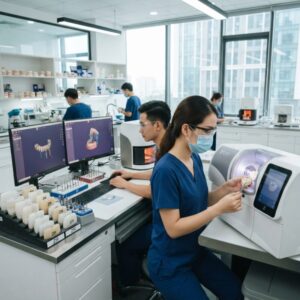
Introduction to Dental CAD Training Programs for Technicians in 2026
The dental industry is rapidly embracing digital workflows, and Dental CAD training programs for technicians in 2026 are evolving to meet these demands. These programs equip technicians with advanced skills in designing crowns, bridges, implants, dentures, orthodontic aligners, and surgical guides using state-of-the-art CAD/CAM technology. As digital design becomes the backbone of efficient dental lab operations, technicians trained in the latest programs will be better positioned to deliver superior quality and faster turnaround times.
Dental labs and DSOs (Dental Service Organizations) increasingly rely on outsourcing their digital design work to specialized providers. Investing in Dental CAD training programs for technicians in 2026 ensures your team stays competitive, benefiting from innovations in software platforms like 3Shape and exocad, which dominate the market.
What Are Dental CAD Training Programs for Technicians in 2026?
Dental CAD training programs for technicians in 2026 are comprehensive educational courses designed to teach digital design and manufacturing workflows specific to dental restorations and appliances.
These programs cover the use of CAD software tailored for crown and bridge design, implant planning, surgical guide fabrication, and the creation of removable prosthetics such as dentures and night guards. Trainees also learn how to integrate CAM processes, ensuring seamless communication between design and milling or 3D printing production stages. The curricula often blend hands-on virtual design labs with theoretical instruction on dental anatomy, materials science, and digital workflow optimization.
Why Are These Programs Critical for Dental Labs and DSOs?
With the dental industry’s shift toward digital, technicians must be proficient in CAD/CAM to maintain quality and efficiency. Dental CAD training programs for technicians in 2026 emphasize not only software skills but also best practices in digital communication with clinics and manufacturers. This reduces errors, speeds up turnaround, and enhances patient outcomes.
What Technologies Are Integrated in Dental CAD Training Programs for Technicians in 2026?
The core technologies integrated in Dental CAD training programs for technicians in 2026 include advanced 3D modeling software, intraoral scanning data management, and additive manufacturing principles.
- 3D CAD Software: Leading platforms such as exocad and 3Shape feature intuitive interfaces for creating precise crown and bridge frameworks, implant abutments, and orthodontic appliances.
- Intraoral Scanning Integration: Training focuses on importing and optimizing STL files from intraoral scanners for accurate design adaptation.
- CAM and Manufacturing: Understanding connections between CAD design and CAM milling, 3D printing, or laser sintering ensures technicians can produce functional, esthetic restorations efficiently.
- Digital Communication Tools: Modern labs use cloud-based platforms to collaborate with dentists and DSOs, a key focus area in training curricula.
How Do Dental CAD Training Programs for Technicians in 2026 Support Implant and Surgical Guide Design?
Dental CAD training programs for technicians in 2026 provide specialized modules on implant planning and surgical guide fabrication, critical for implantology workflows.
Technicians learn to design accurate surgical guides that align precisely with patient anatomy using CBCT data combined with intraoral scans. This training ensures that implants are placed with predictable precision, reducing chairside adjustments and improving patient outcomes. Additionally, the programs cover implant abutment design, offering customization options to fit various clinical scenarios.
What Are the Benefits of Outsourcing Digital Design for These Complex Cases?
Outsourcing to expert CAD/CAM design providers with trained technicians can save time and reduce training costs for labs and DSOs. Outsourcing partners often have access to the latest software versions and specialized knowledge in implant and surgical guide design, ensuring high-quality results at scale. This approach allows internal teams to focus on production and finishing tasks while leveraging expert design services.
Which Dental Restorations Are Covered in Dental CAD Training Programs for Technicians in 2026?
These programs comprehensively cover the digital design of all major dental restorations, including:
- Crowns and Bridges: From monolithic zirconia crowns to multi-unit bridge frameworks, technicians learn margin design, connector optimization, and esthetic layering.
- Implants: Custom abutments, implant bars, and hybrid prosthetics are designed with precision fit and biomechanics in mind.
- Surgical Guides: Step-by-step workflows for integrating CBCT data and designing guides that facilitate guided implant placement.
- Dentures and Partials: Digital denture design, including baseplate creation, tooth setup, and occlusal scheme planning.
- Orthodontic Aligners: Training on staging and modeling tooth movement digitally to fabricate clear aligner series.
- Night Guards and Splints: Designing comfortable, functional devices to protect against bruxism or TMJ disorders.
What Are the Emerging Trends in Dental CAD Training Programs for Technicians in 2026?
As technology evolves, Dental CAD training programs for technicians in 2026 are incorporating the following trends:
- Artificial Intelligence (AI) Assistance: AI tools are increasingly used to automate margin detection, design suggestions, and error checking, accelerating design cycles.
- Virtual Reality (VR) and Augmented Reality (AR): Some programs incorporate VR/AR to simulate real-world design environments and enhance spatial understanding.
- Cloud-Based Collaborative Platforms: Online training modules and cloud sharing enable technicians to work remotely while maintaining high collaboration standards.
- Continuous Education and Certification: Ongoing skill development with certification programs ensures technicians keep pace with software updates and best practices.

How Do Dental CAD Training Programs for Technicians in 2026 Improve Lab Efficiency and Quality?
Dental CAD training programs for technicians in 2026 enhance lab efficiency by streamlining digital workflows from scan to final restoration. Well-trained technicians reduce design errors, minimize remakes, and improve compatibility with milling and printing equipment.
Quality improvements stem from precise digital designs that optimize fit, occlusion, and esthetics. Technicians learn to customize parameters for different materials (zirconia, lithium disilicate, PMMA) and indications, ensuring restorations meet clinical requirements.
How Can Dental Labs Measure the ROI of Investing in These Training Programs?
Return on investment can be gauged by tracking metrics such as reduced design time, fewer remake cases, increased lab throughput, and improved customer satisfaction. Labs that adopt Dental CAD training programs for technicians in 2026 often report faster case turnaround and enhanced collaboration with dental practices, which translates into greater profitability.
What Role Do Industry-Leading Software Providers Play in Dental CAD Training?
Industry leaders like exocad and 3Shape are instrumental in shaping the curriculum of Dental CAD training programs for technicians in 2026. These companies frequently collaborate with training providers to offer certification courses, webinars, and user forums that keep technicians up to date.
Furthermore, software providers continuously update their platforms with new features tailored to dental applications, and training programs reflect these innovations to ensure technicians leverage the latest tools effectively.
How Does Dental CAD Training Align with Outsourcing Services?
Dental CAD training programs for technicians in 2026 align closely with outsourcing strategies. Labs that outsource digital design benefit from partnering with trained technicians who understand the latest CAD workflows and quality standards. This synergy improves communication and reduces revisions.
Outsourcing digital design also allows smaller labs or DSOs to offer advanced restorative options without the capital expenditure or time investment required to train all staff internally. The combination of in-house training and strategic outsourcing forms a hybrid model that maximizes flexibility and quality.
What Are the Challenges in Implementing Dental CAD Training Programs for Technicians in 2026?
Despite their benefits, implementing Dental CAD training programs for technicians in 2026 comes with challenges. These include:
- Cost and Time Investment: Comprehensive training requires dedicated time away from production and sometimes significant fees.
- Rapid Software Changes: Keeping up with frequent updates demands continuous learning and adaptability.
- Varied Skill Levels: Tailoring training to technicians with different experience levels can be complex.
- Integration with Existing Workflows: Aligning new digital design skills with traditional lab processes requires thoughtful change management.
How Can Labs Choose the Best Dental CAD Training Programs for Technicians in 2026?
Labs should evaluate training programs based on curriculum depth, hands-on practice opportunities, instructor expertise, and alignment with their CAD software platforms. Programs offering certification and ongoing support tend to provide greater long-term value.
It is also important to consider programs that address specific needs such as implant or orthodontic design if those are core lab services. Additionally, labs can benefit from hybrid training models combining online and in-person sessions for flexibility.
Where Can Dental Technicians Access Reliable Dental CAD Training Resources?
Technicians can access reputable training through:
- Official software providers like exocad and 3Shape, which offer certified training programs.
- Professional organizations such as the American Dental Association (ADA) providing educational resources and guidelines.
- Specialized dental education institutes offering both foundational and advanced CAD/CAM courses.
Combining these resources with hands-on practice and collaboration with experienced digital design labs enhances skill acquisition.
How Do Dental CAD Training Programs for Technicians in 2026 Complement Other Lab Services?
Dental CAD training programs for technicians in 2026 complement other lab services by enabling seamless integration across the production chain. For example, well-trained CAD technicians improve communication with milling centers and 3D printing providers, ensuring consistency in fit and function.
This training also works well alongside surgical guide design services and implant workflow optimization, creating a cohesive digital ecosystem within the dental lab.
What Future Developments Are Anticipated in Dental CAD Training Programs?
Looking beyond 2026, Dental CAD training programs are expected to incorporate more AI-driven design automation, expanded virtual reality training environments, and increased use of cloud-based collaborative tools for remote training and case sharing.
The trend toward personalized education pathways tailored to individual technician skill levels will likely grow, making training more efficient and targeted. These advancements will further enhance the value of digital design outsourcing for dental labs.
Conclusion
Dental CAD training programs for technicians in 2026 represent a crucial investment for dental labs and DSOs aiming to excel in the digital era. By mastering advanced CAD/CAM software, understanding implant and orthodontic workflows, and integrating new technologies, technicians can significantly enhance lab productivity and restoration quality.
Partnering with expert digital design outsourcing providers further amplifies these benefits, enabling labs to offer state-of-the-art restorations with consistent precision and speed. Staying informed about emerging trends and continuous education ensures that your dental lab remains competitive in an increasingly digital marketplace.
For more information on how to integrate Dental CAD training programs for technicians in 2026 with your lab’s workflow, contact us today. Let our experienced team help you optimize your digital design capabilities for superior results.
Also works well alongside surgical guide design services.