Introduction to Modern Dental Practice Scaling
As we navigate the landscape of 2026, dental professionals face unprecedented opportunities and challenges. The demand for high-quality restorative care continues to rise, driven by an aging population and increased awareness of oral health. However, the traditional model of in-house production and manual design is no longer sustainable for practices aiming to expand. This is where understanding how to delegate in a growing dental practice in 2026 becomes critical for success. Practices that fail to adapt their workflows risk burnout, reduced margins, and an inability to meet patient demand efficiently. The solution lies in strategic delegation, specifically through digital design outsourcing.
When you learn how to delegate in a growing dental practice in 2026, you unlock the potential to focus on clinical excellence while external experts handle the technical design work. This shift allows your team to concentrate on patient care, diagnosis, and treatment planning. The result is a more balanced workflow that enhances both staff satisfaction and patient outcomes. In this article, we will explore the comprehensive steps required to implement this strategy effectively.
Scaling a dental practice requires more than just hiring more staff; it demands a fundamental rethinking of how tasks are allocated. By adopting advanced CAD/CAM technologies and partnering with specialized design labs, you can streamline your operations significantly. This approach is central to knowing how to delegate in a growing dental practice in 2026. It ensures that every member of your team operates at the top of their license, maximizing revenue and reducing operational friction.
The integration of digital workflows has transformed the industry over the last decade. Today, scanners, design software, and milling machines are standard tools. Yet, the expertise required to operate them efficiently is often lacking in smaller or mid-sized practices. This gap creates an opportunity for outsourcing. When you understand how to delegate in a growing dental practice in 2026, you leverage external expertise to fill this gap without the overhead of full-time hires.
Furthermore, the economic landscape of 2026 favors agility. Practices that can pivot quickly to meet market demands are more resilient. Outsourcing design work provides this agility. It allows you to scale up during peak seasons and scale down during slower periods without affecting your core team. This flexibility is a key component of how to delegate in a growing dental practice in 2026. It protects your bottom line while maintaining high service levels.
In the following sections, we will delve deeper into the specific mechanisms of delegation. We will discuss the technologies involved, the benefits for different practice types, and the strategic steps to take. Our goal is to provide a roadmap for sustainable growth. By the end of this guide, you will have a clear understanding of how to delegate in a growing dental practice in 2026. You will be equipped to make informed decisions about your practice’s future.
What is Dental Lab Outsourcing?
Dental lab outsourcing is the practice of sending digital scan data to an external service provider for the design and manufacturing of dental restorations.
This model has become the backbone of modern dental workflows. Instead of maintaining a large in-house milling center or relying on slow traditional labs, practices send files to specialized partners. These partners use advanced software and machinery to create crowns, bridges, implants, and other devices. This process is essential when considering how to delegate in a growing dental practice in 2026. It separates the clinical side from the technical side, allowing each to excel independently.
The benefits of this separation are numerous. First, it reduces the capital expenditure required to stay competitive. You do not need to invest in expensive milling machines or hire multiple technicians. Second, it improves turnaround times. Specialized labs often work around the clock, ensuring that your cases are completed faster. This efficiency is a major factor in how to delegate in a growing dental practice in 2026. Patients appreciate faster service, and practices appreciate the ability to book more appointments.
Additionally, outsourcing provides access to a wider range of materials and expertise. A single in-house lab may be limited in what it can produce. An external partner often specializes in specific areas like implants or orthodontics. This breadth of capability supports the strategy of how to delegate in a growing dental practice in 2026. It allows you to offer comprehensive treatment options without expanding your internal infrastructure. You can take on complex cases with confidence, knowing the design support is robust.
Quality control is another critical aspect. Reputable outsourcing partners adhere to strict standards and certifications. They ensure that every design meets the precise requirements of your clinical plan. This reliability is crucial for understanding how to delegate in a growing dental practice in 2026. You can trust that the restorations will fit well, reducing chair time for adjustments. This trust builds a strong relationship between the practice and the lab, fostering long-term collaboration.
Finally, outsourcing frees up physical space in your clinic. In-house labs require significant square footage for equipment and storage. By moving this function off-site, you can reallocate that space to patient treatment areas or administrative offices. This optimization is a practical application of how to delegate in a growing dental practice in 2026. It maximizes the utility of your real estate, directly contributing to revenue generation. The clinic becomes a place focused on patient care rather than production.
The Role of CAD/CAM in Outsourcing
Computer-Aided Design and Computer-Aided Manufacturing (CAD/CAM) are the technologies that make outsourcing possible and efficient. These systems allow for the digital capture of patient anatomy and the precise fabrication of restorations. In the context of how to delegate in a growing dental practice in 2026, CAD/CAM is the bridge between your clinic and the outsourcing partner. It ensures that the data you send is accurate and actionable. Without these tools, the delegation process would be slow and prone to error.
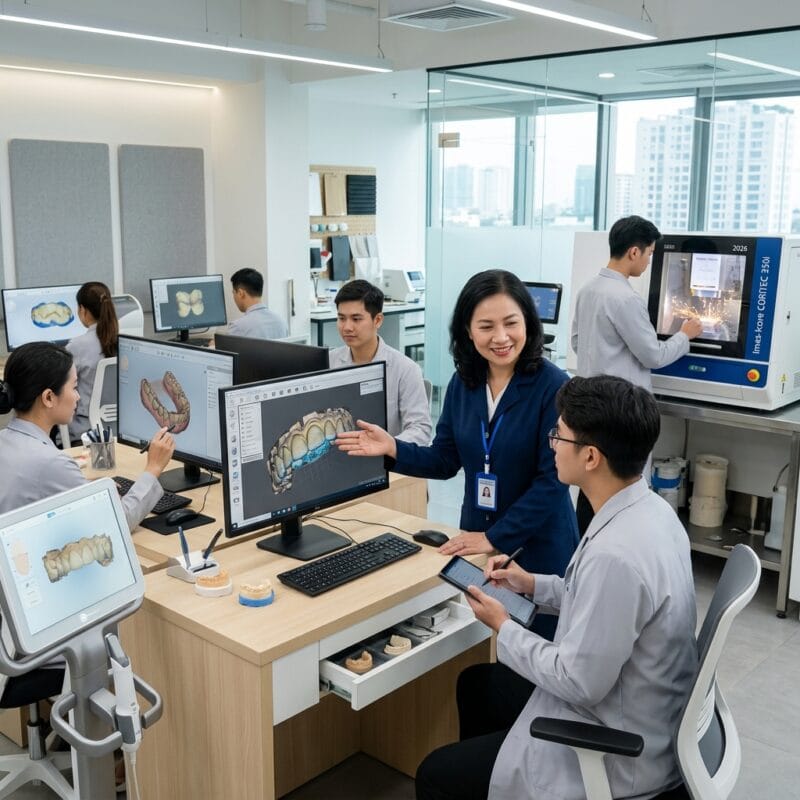
Modern scanners capture high-resolution 3D models of teeth and gums. These models are then transmitted securely to the design lab. The designers use sophisticated software to create virtual restorations that match the patient’s anatomy perfectly. This digital thread is vital for how to delegate in a growing dental practice in 2026. It minimizes the need for physical impressions, which are often uncomfortable for patients and difficult to manage. The digital workflow is cleaner, faster, and more patient-friendly.
Moreover, CAD/CAM technology allows for easy collaboration. If a design needs adjustment, it can be modified digitally and sent back to the clinic for approval. This iterative process is seamless. It supports the concept of how to delegate in a growing dental practice in 2026 by ensuring that communication is clear and efficient. You can review designs in real-time, making decisions quickly. This speed is essential in a busy practice where time is money.
As we move deeper into the year, the capabilities of these systems continue to evolve. Artificial intelligence is beginning to assist in the design process, automating routine tasks and highlighting potential issues. This advancement further enhances the value of delegation. When you know how to delegate in a growing dental practice in 2026, you are leveraging these AI tools to improve accuracy and reduce human error. The technology acts as a force multiplier for your clinical team.
How Does Digital Crown Design Work?
Digital crown design involves using specialized software to create a virtual model of a crown based on intraoral scan data.
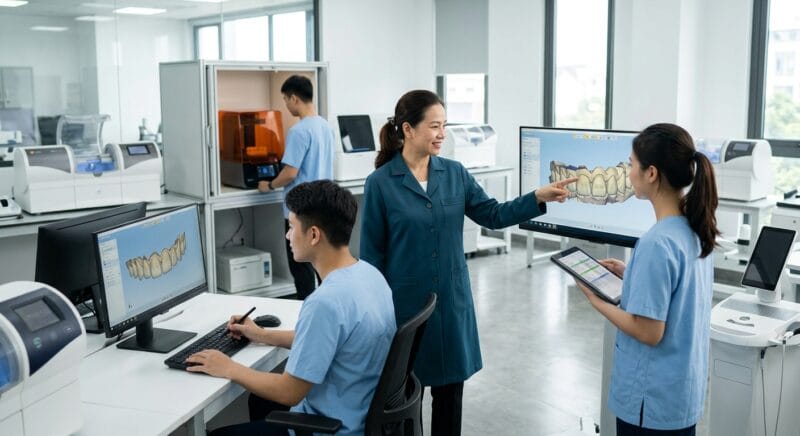
The process begins with the dentist capturing the preparation and opposing teeth. This data is uploaded to a design platform. A skilled technician then uses the software to sculpt the crown, ensuring proper occlusion and aesthetics. This detailed workflow is a prime example of how to delegate in a growing dental practice in 2026. It requires specific expertise that may not be available in-house. By outsourcing this task, you ensure that every crown is designed to the highest standard.
The software allows for precise control over margins, contacts, and occlusion. The technician can view the design from any angle, ensuring that it fits perfectly before it is manufactured. This level of detail is critical for how to delegate in a growing dental practice in 2026. It reduces the risk of remakes, which can be costly and time-consuming. The digital nature of the process also means that files can be stored and reused if needed, adding to the efficiency.
Furthermore, digital design integrates well with other dental technologies. It can be combined with implant planning software or orthodontic tools. This interoperability is a key advantage when learning how to delegate in a growing dental practice in 2026. It allows for a comprehensive treatment approach where different aspects of care are coordinated digitally. The result is a more predictable outcome for the patient and a smoother workflow for the practice.
Security is also a major consideration in digital design. Patient data must be protected during transmission and storage. Reputable design labs use encryption and secure servers to ensure privacy. This compliance is essential for how to delegate in a growing dental practice in 2026. It protects your practice from legal and ethical risks. You can delegate with confidence, knowing that patient information is handled responsibly.
Benefits for DSOs
Dental Support Organizations (DSOs) benefit significantly from outsourcing design work. DSOs manage multiple practices, each with its own volume and needs. Centralizing the design process through outsourcing allows for standardization and cost savings. This strategy is a core element of how to delegate in a growing dental practice in 2026. It ensures that all practices under the DSO umbrella maintain consistent quality and efficiency.
By using a single outsourcing partner, a DSO can negotiate better rates. Volume discounts can be achieved, reducing the cost per unit for all practices. This financial advantage is a strong argument for how to delegate in a growing dental practice in 2026. It improves the overall profitability of the organization. Additionally, it simplifies administration. Instead of managing multiple lab relationships, the DSO manages one. This reduces administrative overhead and streamlines communication.
Training is another area where outsourcing helps. DSOs can provide standardized training on how to use the digital workflow with the outsourcing partner. This ensures that all dentists and staff are on the same page. It supports the goal of how to delegate in a growing dental practice in 2026 by creating a unified approach across the network. Consistency leads to better patient experiences and easier management of the practice group.
Finally, outsourcing allows DSOs to scale rapidly. New practices can be opened without the need to set up in-house labs. They can immediately plug into the existing digital network. This scalability is vital for how to delegate in a growing dental practice in 2026. It removes barriers to expansion and allows for aggressive growth strategies. The infrastructure is already in place, ready to support new locations.
Strategic Steps to Delegate Effectively
To successfully implement delegation, you must follow a structured approach that aligns with your practice goals. Start by evaluating your current workflow to identify bottlenecks. Look for tasks that take up too much time or require specialized skills you lack. This analysis is the first step in learning how to delegate in a growing dental practice in 2026. It helps you prioritize which areas to outsource first. Common candidates include complex restorative designs or orthodontic aligners.
Once you have identified the tasks, research potential partners. Look for labs that specialize in the types of cases you handle. Check their certifications, turnaround times, and customer reviews. This due diligence is crucial for how to delegate in a growing dental practice in 2026. It ensures that you choose a partner who can meet your standards. A good partnership is built on trust and reliability. Take the time to find the right fit for your specific needs.
After selecting a partner, establish clear communication channels. Define how files will be sent, how approvals will be handled, and how issues will be resolved. Clear protocols are essential for how to delegate in a growing dental practice in 2026. They prevent misunderstandings and ensure that the workflow runs smoothly. Regular check-ins can help maintain the relationship and address any concerns early. This proactive approach fosters a collaborative environment.
Training your team is also vital. Ensure that your staff knows how to use the necessary software and hardware to send files correctly. Provide resources and support to help them adapt to the new process. This investment in people is key to how to delegate in a growing dental practice in 2026. It reduces resistance to change and empowers your team to use the new system effectively. A well-trained team is more confident and productive.
Finally, monitor the results. Track metrics like turnaround time, remake rates, and patient satisfaction. Use this data to refine your process over time. Continuous improvement is a hallmark of how to delegate in a growing dental practice in 2026. It ensures that you are always optimizing your workflow for better outcomes. By measuring success, you can justify the investment and make informed decisions about future expansions.
Choosing the Right Partner
Selecting the right outsourcing partner is one of the most important decisions you will make. The partner should align with your values and quality standards. Look for a lab that uses the latest technology and has a strong reputation in the industry. This alignment is critical for how to delegate in a growing dental practice in 2026. It ensures that the designs you receive meet your expectations. A good partner acts as an extension of your team.
Consider the range of services offered. Some labs specialize in specific areas, while others offer a full suite of design services. Choose a partner that can grow with you. This flexibility is important for how to delegate in a growing dental practice in 2026. As your practice expands, your needs may change. Having a partner who can adapt to those changes ensures continuity and stability. You avoid the hassle of switching providers later.
Support is another key factor. The best partners offer dedicated support teams to assist with technical issues or design questions. This availability is a significant advantage for how to delegate in a growing dental practice in 2026. It means you are never left stranded if something goes wrong. Quick resolution of problems keeps your workflow moving and minimizes downtime. Reliable support builds confidence in the partnership.
Cost is always a consideration, but it should not be the only one. Focus on value rather than just price. A slightly higher cost might be worth it for better quality and faster turnaround. This perspective is essential for how to delegate in a growing dental practice in 2026. It helps you avoid the hidden costs of poor quality, such as remakes and patient dissatisfaction. Invest in quality to protect your reputation.
Overcoming Common Barriers
Despite the benefits, some practices hesitate to delegate. Common barriers include concerns about quality, cost, and loss of control. Addressing these concerns requires education and a clear plan. Understanding how to delegate in a growing dental practice in 2026 involves recognizing these fears and mitigating them. Start by addressing quality. Choose a partner with proven track records and high-quality guarantees. This reduces the risk of poor outcomes.
Cost concerns can be alleviated by calculating the total cost of ownership. In-house design involves equipment, software, training, and labor. Outsourcing converts these fixed costs into variable costs. This financial model is often more sustainable for how to delegate in a growing dental practice in 2026. It allows you to pay only for the work you need. This flexibility helps manage cash flow and reduces financial risk.
Loss of control is another fear. You might worry that you won’t be able to oversee the design process. However, modern digital tools allow for full visibility. You can review designs, request changes, and approve final products online. This transparency is key to how to delegate in a growing dental practice in 2026. It ensures that you remain in charge of the clinical outcome. Delegation does not mean abdicating responsibility.
Finally, resistance to change from staff can be a barrier. Some team members may feel threatened by outsourcing. Communication is essential to overcome this. Explain how outsourcing frees them to focus on more rewarding tasks. This narrative is important for how to delegate in a growing dental practice in 2026. It frames delegation as an opportunity for growth rather than a threat. Involve your team in the process to build buy-in.
Quality Control and Communication
Maintaining quality control is paramount when delegating design work. Establish clear specifications for every case. Include details about margin placement, occlusion, and material preferences. These specifications are the foundation of how to delegate in a growing dental practice in 2026. They ensure that the design team understands your requirements exactly. Consistent specifications lead to consistent results.
Communication should be open and frequent. Use the tools provided by your partner to leave comments or annotations on designs. This real-time feedback loop is vital for how to delegate in a growing dental practice in 2026. It allows for immediate corrections before manufacturing begins. It also helps the design team learn your preferences over time. The more you communicate, the better the outcomes will be.
Regular audits of the work can also help maintain quality. Review a sample of cases periodically to ensure they meet your standards. If issues arise, address them immediately with the partner. This proactive management is a component of how to delegate in a growing dental practice in 2026. It demonstrates your commitment to quality and encourages the partner to maintain high standards. A partnership based on quality assurance is more durable.
Documentation is also important. Keep records of all designs, approvals, and communications. This documentation helps if disputes arise and provides a history of your workflow. It supports the long-term success of how to delegate in a growing dental practice in 2026. Having a paper trail ensures accountability and helps in training new staff. It turns the process into a repeatable system.
The Future of Dental Practice Management
The future of dental practice management is digital and decentralized. As technology advances, the ability to delegate will only become more powerful. AI and automation will further reduce the manual effort required in design. This evolution is central to how to delegate in a growing dental practice in 2026. It means that delegation will become even more efficient and cost-effective over time. Practices that adapt now will be well-positioned for the future.
Integration with electronic health records (EHR) will also improve. Seamless data flow between your clinic and the design lab will reduce errors and save time. This connectivity is a key trend in how to delegate in a growing dental practice in 2026. It creates a unified ecosystem where information flows freely. The result is a smoother experience for both the provider and the patient.
Tele-dentistry and remote consultations will also play a role. As the industry becomes more connected, the physical location of the design team matters less. This global accessibility is a feature of how to delegate in a growing dental practice in 2026. It allows you to access the best talent regardless of geography. You can choose partners based on quality rather than proximity.
Ultimately, the goal is to create a practice that is sustainable and patient-centered. Delegation supports this goal by allowing you to focus on what matters most. The future is bright for those who embrace these changes. By understanding how to delegate in a growing dental practice in 2026, you are investing in a better model of care. This model prioritizes efficiency, quality, and patient satisfaction above all else.
As you move forward, remember that delegation is a journey. It requires patience, planning, and partnership. But the rewards are significant. You gain time, flexibility, and the ability to scale. These are the assets that define a successful practice in the modern era. Embrace the change and lead your team into a more productive future.
Contact us today to streamline your design workflow. Let us help you master how to delegate in a growing dental practice in 2026.