Embracing the Future: Dental Technology Trends 2026 and the Power of Digital Design Outsourcing
The dental industry is in a perpetual state of evolution, driven by innovation that promises greater precision, efficiency, and patient satisfaction. As we look towards 2026, the pace of technological advancement shows no signs of slowing. For dental labs and Dental Service Organizations (DSOs), understanding and adapting to the key dental technology trends 2026 will not merely be an advantage, but a necessity for sustained growth and competitiveness. This article delves into these transformative trends and highlights how strategic digital design outsourcing can be the cornerstone of a future-proof business strategy.
What are the primary dental technology trends 2026 shaping the industry?
The primary dental technology trends 2026 shaping the industry revolve around enhanced digitalization, artificial intelligence integration, advanced material science, and personalized patient care.
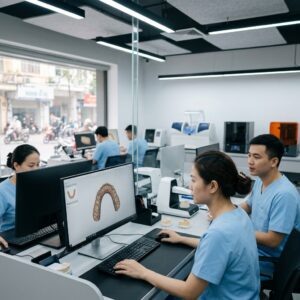
The dental landscape is undergoing a profound digital transformation. Intraoral scanners are becoming ubiquitous, replacing traditional impressions with highly accurate 3D models. CAD/CAM systems are no longer niche tools but central to the production of high-quality restorations, from single crowns to complex full-arch prosthetics. Looking specifically at dental technology trends 2026, we anticipate several key areas will dominate:
- Artificial Intelligence (AI) and Machine Learning (ML): AI is poised to revolutionize diagnostics, treatment planning, and even restorative design. In the lab, AI algorithms can assist in margin line detection, automatic tooth segmentation, and even suggest optimal design parameters based on vast datasets of successful cases. This will significantly streamline workflows and improve consistency, making AI one of the most impactful dental technology trends 2026.
- Advanced Materials and Biocompatibility: Research into new materials continues to expand the possibilities for dental restorations. Zirconia remains popular, but we’re seeing increased interest in PEEK (polyether ether ketone) for its strength and biocompatibility, as well as enhanced ceramics and composites that offer superior esthetics and durability. The development of truly bioactive materials that promote tissue integration will be a significant part of dental technology trends 2026.
- Hyper-Personalization and Patient-Specific Solutions: The move away from “one-size-fits-all” dentistry is accelerating. With advanced imaging and design software, every restoration, surgical guide, and orthodontic appliance can be custom-tailored to an individual’s unique anatomy and functional requirements. This level of precision is a hallmark of the dental technology trends 2026.
- Integrated Digital Workflows: Seamless communication between the dental practice and the lab is crucial. Integrated platforms allow for instant sharing of scan data, treatment plans, and design files, reducing errors and turnaround times. This end-to-end digital integration will define efficient operations among dental technology trends 2026.
- 3D Printing Innovations: While 3D printing is already established, advancements in materials (e.g., biocompatible resins for permanent restorations, higher strength polymers) and printer speed/accuracy will continue to expand its application, from models and surgical guides to provisional and even definitive restorations. Expect significant strides in this area as part of dental technology trends 2026.
- Tele-dentistry and Remote Collaboration: The ability to consult, plan, and even oversee aspects of treatment remotely is growing. For labs, this means enhanced remote collaboration with clinicians on design adjustments and approvals, further emphasizing the digital connectivity aspect of dental technology trends 2026.
Why are dental labs and DSOs finding it challenging to keep up with dental technology trends 2026?
Dental labs and DSOs are finding it challenging to keep up with dental technology trends 2026 due to the significant investments required for new equipment and software, the ongoing need for specialized staff training, and the pressure to maintain efficiency and competitive turnaround times.
While the promise of these dental technology trends 2026 is immense, the reality for many labs and DSOs is a complex set of challenges:
- High Investment Costs: Acquiring the latest CAD/CAM software licenses, high-performance workstations, advanced 3D printers, and milling machines represents a substantial capital outlay. Keeping this equipment updated to leverage the latest dental technology trends 2026 is an ongoing expense.
- Talent Gap and Training: The sophisticated nature of digital design requires highly skilled technicians proficient in specific software (e.g., Exocad, 3Shape Dental System, Dental Wings). Finding and retaining such talent is difficult and expensive. Furthermore, continuous training is essential as software updates and new dental technology trends 2026 emerge.
- Workflow Integration Complexity: Integrating new digital workflows into existing lab operations can be complex and disruptive. Ensuring seamless data transfer, managing different software platforms, and maintaining quality control requires careful planning and execution.
- Scalability Issues: During peak periods, in-house design teams can become bottlenecks, leading to delayed turnaround times and potential loss of business. Conversely, maintaining a large in-house team during slower periods can lead to underutilization of resources.
- Staying Current: The rapid evolution of dental technology trends 2026 means that what is cutting-edge today might be standard practice tomorrow. Labs and DSOs must constantly research, evaluate, and adopt new technologies, which diverts valuable time and resources.
Digital Design Outsourcing: Your Strategic Partner in Embracing Dental Technology Trends 2026
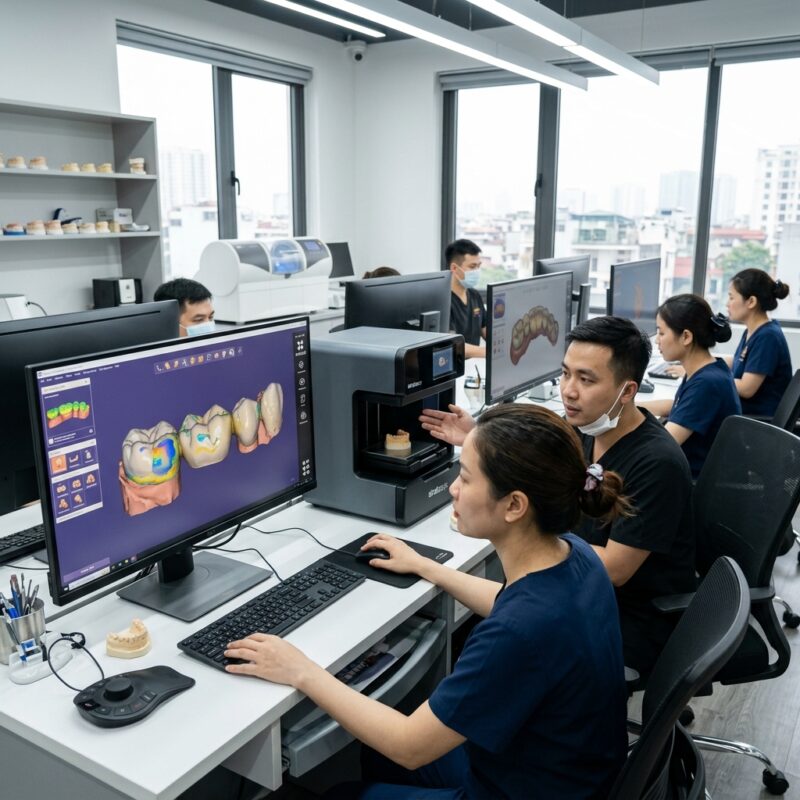
This is where digital design outsourcing emerges as a powerful, practical solution. By partnering with a specialized CAD/CAM design service, dental labs and DSOs can effectively navigate the complexities of dental technology trends 2026 without incurring prohibitive costs or operational disruptions.
How does outsourcing CAD/CAM digital design help labs and DSOs adapt to dental technology trends 2026?
Outsourcing CAD/CAM digital design helps labs and DSOs adapt to dental technology trends 2026 by providing immediate access to specialized expertise, advanced software, and scalable resources without the need for significant capital investment or ongoing staff training.
The benefits are multifaceted:
- Access to Specialized Expertise: An outsourcing partner employs a team of highly trained CAD/CAM designers who are proficient in all major software platforms (e.g., Exocad, 3Shape, Dental Wings) and stay abreast of the latest design techniques and dental technology trends 2026. This means your lab gains instant access to top-tier talent without the recruitment and training burden.
- Cost-Effectiveness: Eliminate the need for expensive software licenses, high-end workstations, and ongoing maintenance. You pay only for the design services you need, transforming a significant capital expense into a predictable operational cost. This allows you to reallocate resources to other areas, like milling or 3D printing, or invest in sales and marketing to grow your business.
- Scalability and Flexibility: Outsourcing provides unmatched scalability. Whether you’re experiencing a sudden surge in demand or need to handle a complex case beyond your in-house capabilities, a design partner can scale up or down to meet your needs. This ensures consistent turnaround times and prevents bottlenecks, allowing your lab to seamlessly integrate new dental technology trends 2026 into your offerings.
- Focus on Core Competencies: By offloading the time-consuming and specialized task of digital design, your in-house team can focus on what they do best: production, quality control, customer service, and business development. This optimization of resources is crucial for thriving amidst the rapid dental technology trends 2026.
- Faster Turnaround Times: Specialized design centers often operate with efficient workflows and extended hours, enabling quicker design completion. This translates to faster delivery of restorations to your dental clients, enhancing your lab’s reputation for efficiency and reliability, especially as patient expectations rise with dental technology trends 2026.
- Risk Mitigation: Reduce the risk associated with investing in rapidly evolving technology. An outsourcing partner bears the responsibility of keeping its software and hardware updated, ensuring your lab always benefits from the latest advancements without the direct financial risk. This is particularly relevant given the pace of dental technology trends 2026.
Comprehensive Digital Design Services Aligned with Dental Technology Trends 2026
Our CAD/CAM digital design outsourcing service is meticulously crafted to support dental labs and DSOs in leveraging the most impactful dental technology trends 2026. We offer a comprehensive suite of design solutions across various specialties, ensuring precision, esthetics, and functionality for every case.
Crown & Bridge Design: Precision for Every Restoration
From single posterior crowns to complex anterior bridges and full-arch restorations, our designers excel in creating anatomically correct and esthetically pleasing designs. We utilize advanced software features to ensure optimal contacts, occlusion, and emergence profiles, adhering to the highest standards of the dental technology trends 2026. We handle a wide range of materials, including zirconia, E.max, PFM, and full-contour wax-ups for casting, integrating material science advancements that are part of dental technology trends 2026.
- Single Crowns: Precise designs for all indications, ensuring perfect fit and natural contours.
- Multi-Unit Bridges: Complex bridge designs with meticulous attention to connector strength and pontic design.
- Full-Arch Restorations: Sophisticated designs for full-arch cases, including screw-retained and cemented options, often leveraging the latest AI-assisted design tools that are part of dental technology trends 2026.
Implant Planning & Abutment Design: The Foundation of Success
Implantology is a rapidly evolving field, heavily influenced by dental technology trends 2026. Our service provides detailed implant planning and custom abutment design, crucial for predictable and successful outcomes. We work with data from CBCT scans and intraoral scans to virtually plan implant placement, considering bone density, nerve proximity, and restorative space. Our custom abutment designs ensure ideal tissue contours and support for the final restoration, aligning perfectly with personalized dentistry dental technology trends 2026.
- Custom Abutments: Designed to optimize emergence profile, support soft tissue, and provide ideal retention for the final crown.
- Implant Bars and Frameworks: Precision design for implant-supported prostheses, ensuring passive fit and structural integrity.
Surgical Guide Design: Enhancing Predictability and Safety
One of the most significant dental technology trends 2026 is the widespread adoption of guided surgery. We design highly accurate surgical guides based on CBCT and intraoral scan data, enabling precise implant placement. These guides are critical for minimizing chair time, reducing complications, and achieving optimal restorative positions. Our designs are compatible with various implant systems and guide fabrication techniques, supporting the integrated digital workflows that define dental technology trends 2026. This also works well alongside implant planning services to offer a complete solution.
- Tooth-Supported Guides: For cases with existing dentition.
- Bone-Supported Guides: For edentulous arches where bone is the primary support.
- Mucosa-Supported Guides: For specific edentulous situations.
Denture Design: Modernizing Removable Prosthetics
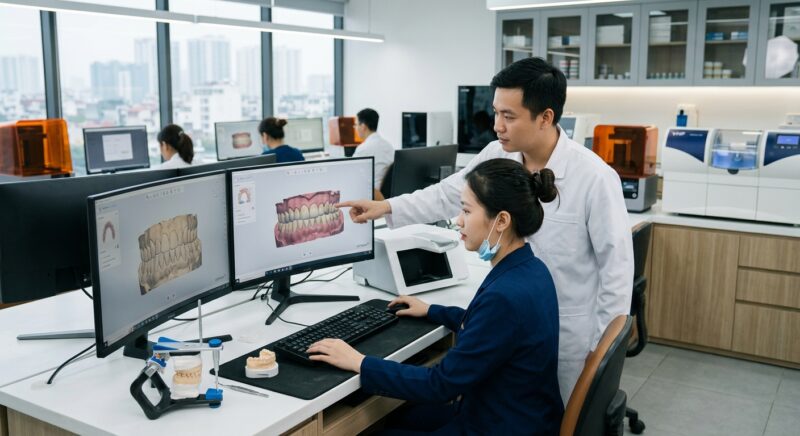
Even traditional removable prosthetics are being transformed by dental technology trends 2026. We offer digital design for full and partial dentures, including implant-retained overdentures. Digital denture design allows for greater precision in fit, improved esthetics, and easier replication or modification compared to traditional methods. This ensures patients receive comfortable, functional, and natural-looking prostheses, benefiting from the latest in material science and digital fabrication.
- Full Dentures: Digital design for complete arches, optimizing fit, esthetics, and function.
- Partial Dentures: Precise framework design for removable partial dentures, ensuring stability and patient comfort.
- Implant-Retained Overdentures: Combining the benefits of implants with the flexibility of removable prosthetics, designed with exacting precision.
Orthodontic Aligner Design: Straightening Smiles Digitally
The demand for clear aligners is booming, and this area is a prime example of how dental technology trends 2026 are influencing patient treatment options. Our service includes the intricate design of orthodontic aligner stages, from initial setup to final tooth movement. We utilize advanced software to simulate tooth movements and generate precise aligner sequences, providing dental practices and DSOs with the tools to offer cutting-edge clear aligner therapy. This also complements digital treatment planning for comprehensive patient care.
- Treatment Planning: Virtual setup of tooth movements and staging.
- Aligner Shell Design: Generation of precise aligner models for 3D printing.
Night Guard / Splint Design: Protective and Therapeutic Solutions
Digital design for night guards and occlusal splints offers superior accuracy and patient comfort compared to traditional methods. We design custom protective appliances for bruxism, TMD, and other occlusal issues. Our designs ensure optimal fit, retention, and occlusal harmony, leveraging the precision inherent in modern CAD/CAM workflows and addressing patient comfort, a key aspect of patient-centric dental technology trends 2026.
- Bruxism Guards: Custom-fitted appliances to protect teeth from grinding and clenching.
- TMD Splints: Therapeutic splints designed to alleviate temporomandibular joint dysfunction symptoms.
The Outsourcing Process: Seamless Integration for Your Lab
Our process is designed for maximum efficiency and ease of use, ensuring a seamless integration into your existing workflow, allowing you to leverage dental technology trends 2026 without disruption.
- Data Submission: You securely upload your digital impression files (e.g., .STL, .PLY, .OBJ) from your intraoral scanner (e.g., Medit i700, 3Shape TRIOS, Dentsply Sirona Primescan) or scanned models, along with your specific design instructions and prescription.
- Expert Design: Our certified CAD/CAM designers, well-versed in the latest dental technology trends 2026, meticulously craft your restoration or appliance using industry-leading software. We adhere strictly to your specifications and clinical requirements.
- Quality Assurance: Every design undergoes a rigorous quality check by a senior designer to ensure accuracy, proper anatomy, and adherence to all parameters.
- Review and Approval: We send the completed design file back to you for review and approval. Any necessary adjustments are made promptly.
- Final Delivery: Once approved, the final design file is delivered to you, ready for milling or 3D printing in your lab.
Choosing the Right Partner to Navigate Dental Technology Trends 2026
When selecting a digital design outsourcing partner, consider these critical factors:
- Expertise and Experience: Ensure the partner has a proven track record and a team of highly skilled designers proficient in diverse cases and software platforms. They should be actively engaged with emerging dental technology trends 2026.
- Software Proficiency: Verify their compatibility with your preferred CAD software and scanning systems to ensure smooth data exchange. A partner that supports 3Shape Dental System and Exocad is highly versatile.
- Communication and Support: A responsive and clear communication channel is vital for successful collaboration.
- Quality Control: Understand their internal quality assurance protocols to guarantee consistent, high-quality designs.
- Data Security: Ensure they have robust measures in place to protect sensitive patient and practice data.
The dental technology trends 2026 present both immense opportunities and significant challenges for dental labs and DSOs. By strategically embracing digital design outsourcing, you can transform these challenges into growth opportunities. Gain access to cutting-edge expertise, enhance efficiency, reduce costs, and ensure your business remains at the forefront of innovation. Future-proof your lab by leveraging the power of specialized digital design services, allowing you to confidently navigate the evolving landscape of dental technology trends 2026 and beyond.
Ready to leverage the latest dental technology trends 2026 without the overhead? Contact us today to learn how our CAD/CAM digital design outsourcing can elevate your lab’s capabilities and efficiency.