What is Dental Lab Outsourcing and Why is it Essential Today?
Dental lab outsourcing refers to the strategic practice of delegating specific tasks or entire processes of dental prosthetic fabrication, particularly digital design, to specialized third-party providers. This approach is essential today because it allows dental laboratories and Dental Service Organizations (DSOs) to leverage external expertise, advanced technology, and scalable resources without significant capital investment, thereby enhancing efficiency, quality, and profitability in a rapidly evolving digital landscape.
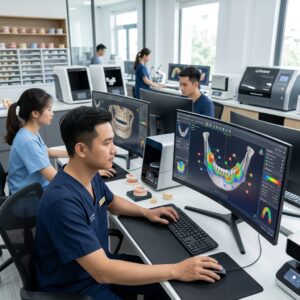
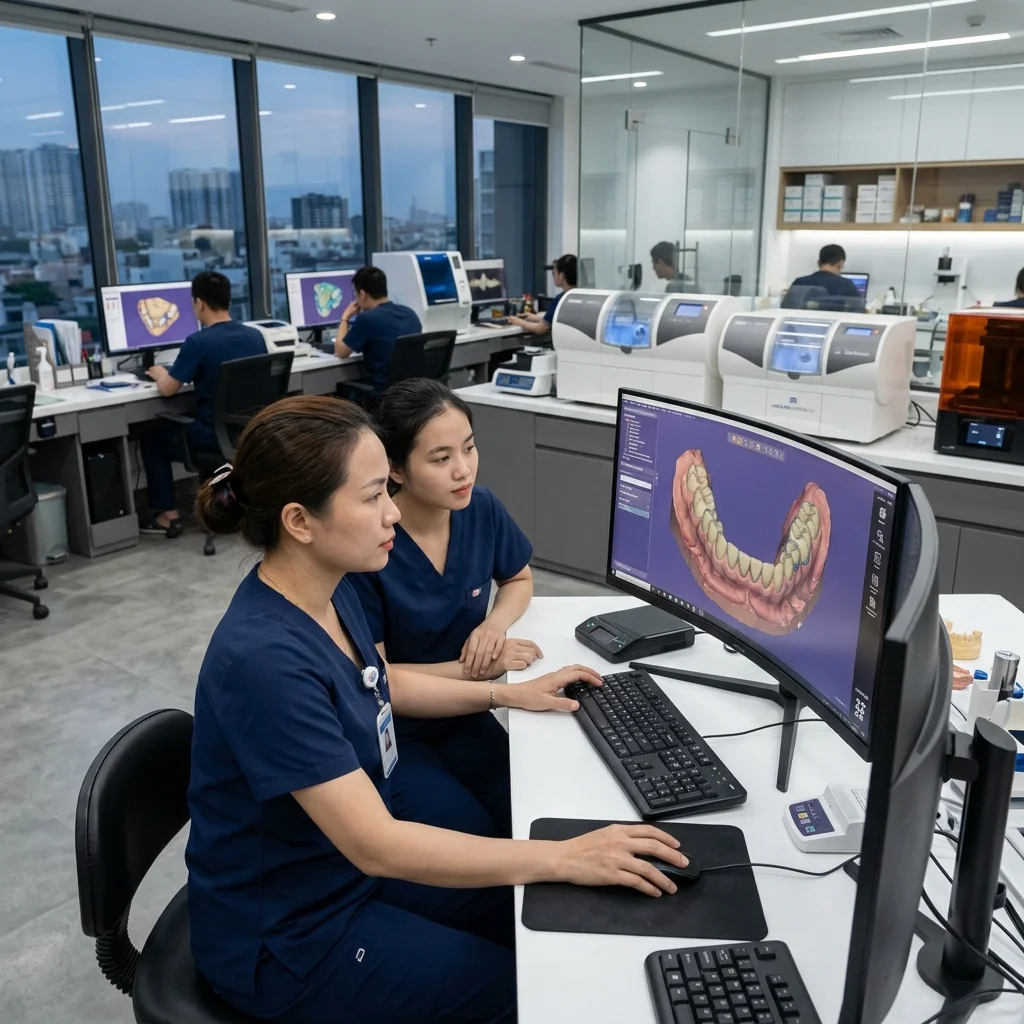
In an era where digital dentistry is no longer a luxury but a necessity, the demands on dental labs are escalating. The transition from traditional analog workflows to sophisticated CAD/CAM processes requires substantial investment in software, hardware, and highly skilled personnel. For many labs and DSOs, meeting these demands internally can be challenging. This is where dental lab outsourcing for digital design services becomes a game-changer. By partnering with a dedicated digital design hub, labs can instantly access a team of specialists proficient in the latest CAD software and design protocols for a comprehensive range of restorations.
The core benefit of dental lab outsourcing lies in its ability to optimize resource allocation. Instead of hiring and training an in-house team, which involves considerable overhead, labs can simply send their intraoral or model scans to an outsourcing partner. This partner then handles the intricate design process, returning ready-to-mill or ready-to-print STL files. This not only significantly reduces operational costs but also allows in-house staff to focus on core competencies, such as final finishing, quality control, and client relations.
Furthermore, the pace of technological advancement in dental CAD/CAM is relentless. Staying abreast of every software update, new material compatibility, and design methodology is a full-time job in itself. A specialized dental lab outsourcing provider is inherently structured to keep up with these changes, continuously investing in the latest software licenses and employee training. This ensures that their clients always receive designs crafted with the most current and efficient techniques available.
How Does Digital Design Outsourcing Benefit My Lab or DSO?
Dental lab CAD/CAM digital design outsourcing is a service where an external team of CAD specialists designs a case’s crowns, implants, dentures, or surgical guides while the lab or DSO keeps milling and finishing in-house. The outsourced team returns a ready-to-mill file, typically within 8 to 24 hours.
Let’s delve deeper into these pivotal benefits:
-
Enhanced Efficiency and Turnaround Times: One of the most immediate impacts of dental lab outsourcing is the dramatic improvement in workflow efficiency. By offloading the time-consuming design phase, your in-house technicians can dedicate more time to production, finishing, and quality control. Outsourcing partners operate with streamlined processes and often around-the-clock shifts, ensuring rapid turnaround of design files. This means you can accept more cases, reduce backlog, and deliver restorations to dentists faster, ultimately improving patient satisfaction and practice reputation.
Consider a scenario where your lab experiences a sudden surge in crown and bridge cases. Without dental lab outsourcing, your design team might become overwhelmed, leading to delays. With an outsourcing partner, you can seamlessly scale up your design capacity without missing a beat, maintaining consistent turnaround times.
-
Significant Cost Reduction: The financial advantages of dental lab outsourcing are compelling.
- Reduced Labor Costs: You eliminate the need to hire, train, and retain highly specialized CAD designers, along with their salaries, benefits, and overheads.
- Lower Software and Hardware Investment: Advanced CAD software licenses (like exocad or 3Shape Dental System) and powerful design workstations are expensive. Outsourcing means you don’t bear these costs directly.
- Minimized Training Expenses: Keeping up with software updates and new design techniques requires continuous training. Outsourcing partners handle this internally, passing on the benefit of expertly trained designers to you.
This cost-effective model allows labs to reallocate capital to other critical areas, such as advanced milling machines, 3D printers, or marketing initiatives.
- Access to Specialized Expertise and Advanced Technology: An outsourcing partner specializing in digital design brings a wealth of collective experience. Their designers often work on a wider variety of complex cases than an individual in-house designer might, leading to a broader skill set and deeper understanding of intricate design challenges. They are also continuously updated on the latest software features, material science, and clinical best practices. This ensures that every design benefits from industry-leading knowledge and state-of-the-art tools, even if your lab doesn’t possess them in-house.
- Improved Quality and Consistency: Professional dental lab outsourcing services employ rigorous quality control protocols. Their designers are highly trained and often specialize in specific types of restorations, leading to consistent, high-quality designs that meet precise anatomical and functional requirements. This consistency reduces remakes, saves material costs, and strengthens the trust between your lab and your dental clients. Standardized workflows and experienced designers ensure predictable outcomes for every case.
- Scalability and Flexibility: Business ebbs and flows are a reality. During peak seasons or rapid growth, dental lab outsourcing provides unparalleled scalability. You can easily increase your design capacity without the risks associated with hiring temporary staff or overworking your existing team. Conversely, during slower periods, you only pay for the services you use, avoiding the fixed costs of underutilized in-house resources. This flexibility is crucial for maintaining profitability and responsiveness in a dynamic market.
- Focus on Core Competencies: By offloading the design phase, your lab can re-focus its energy and resources on what it does best – fabrication, finishing, customer service, and business development. This strategic shift can lead to innovation in other areas of your business and foster stronger relationships with your dental practices.
What Types of Dental Prosthetics Can Be Designed Through Outsourcing?
A comprehensive dental lab outsourcing partner can design virtually any type of dental prosthetic, including crown & bridge, implants (abutments and crowns), surgical guides, full and partial dentures, orthodontic aligners, and night guards, leveraging advanced CAD software for precision and efficiency across the entire spectrum of restorative and orthodontic solutions.
Crown & Bridge Design
Crown and bridge restorations are the bedrock of any dental lab, and digital design outsourcing has revolutionized their production. From single crowns to complex multi-unit bridges, the precision and speed of CAD design are unmatched. Outsourcing partners can design:
- Full Contour Crowns: Zirconia, E.max, PFM substructures, wax-ups for pressing.
- Veneers: Highly esthetic designs, ensuring precise margins and natural contours.
- Inlays and Onlays: Minimally invasive restorations designed for optimal fit and function.
- Multi-Unit Bridges: Spanning multiple teeth, designed with meticulous attention to occlusion, contacts, and pontic design.
- Temporaries: Both long-term and short-term temporaries can be digitally designed for optimal patient comfort and provisional aesthetics.
The process typically involves receiving an intraoral scan (e.g., from Medit i700 or 3Shape TRIOS) or a model scan from your lab. The design team then utilizes advanced software to create a highly accurate and anatomically correct restoration, considering factors like opposing dentition, antagonist contacts, and adjacent teeth. All designs are checked for minimum wall thickness, margin integrity, and proper emergence profiles, ensuring they are ready for milling or 3D printing.
Implant Planning & Design
Implantology demands the highest level of precision, and digital design is indispensable here. Dental lab outsourcing for implants covers a wide range of components:
- Custom Abutments: Designed to provide optimal support and emergence profile for the final crown, tailored to the patient’s specific anatomy and implant system (e.g., Straumann, Nobel Biocare, Dentsply Sirona). These can be titanium, zirconia, or hybrid.
- Screw-Retained Crowns & Bridges: Eliminating the need for cement, designed for easy retrieval and maintenance.
- Implant Bars: For fixed or removable overdentures, providing robust support and stability.
- Hybrid Prosthetics: Combining features of fixed and removable solutions, designed with intricate detail for fit and function.
The design workflow often integrates Cone Beam Computed Tomography (CBCT) data with intraoral scans to create a comprehensive digital patient model. This allows for precise planning of implant position and angulation, followed by the design of restorative components that integrate seamlessly with the surgical plan. This holistic approach ensures predictable and successful implant outcomes.
Surgical Guides
Surgical guides are critical for precise and safe implant placement, transforming complex surgeries into predictable procedures. Dental lab outsourcing for surgical guides ensures maximum accuracy and patient safety.
- Pilot Guides: For initial osteotomy guidance.
- Fully Guided Systems: Guiding the entire drilling sequence and implant placement.
- Bone Reduction Guides: For cases requiring bone leveling prior to implant placement.
Designing surgical guides requires specialized software capable of merging CBCT data with intraoral scans. This allows the designer to virtually plan the implant placement, considering bone density, proximity to vital structures, and the desired prosthetic outcome. The guide is then designed to fit precisely over the patient’s dentition or edentulous ridge, with sleeves positioned to direct drills accurately. This level of precision significantly reduces surgical risks and chair time.
These services also work well alongside digital wax-up design for comprehensive treatment planning.
Dentures (Full and Partial)
The digital revolution has brought unprecedented advancements to denture fabrication, offering improved fit, aesthetics, and patient comfort. Dental lab outsourcing for digital dentures covers:
- Full Digital Dentures: From impression to final prosthetic, leveraging digital design for both the denture base and teeth setup.
- Partial Dentures: Including cast partial frameworks and removable partial dentures (RPDs).
- Try-in Dentures: Digitally designed and 3D printed for patient approval before final fabrication, allowing for easy adjustments.
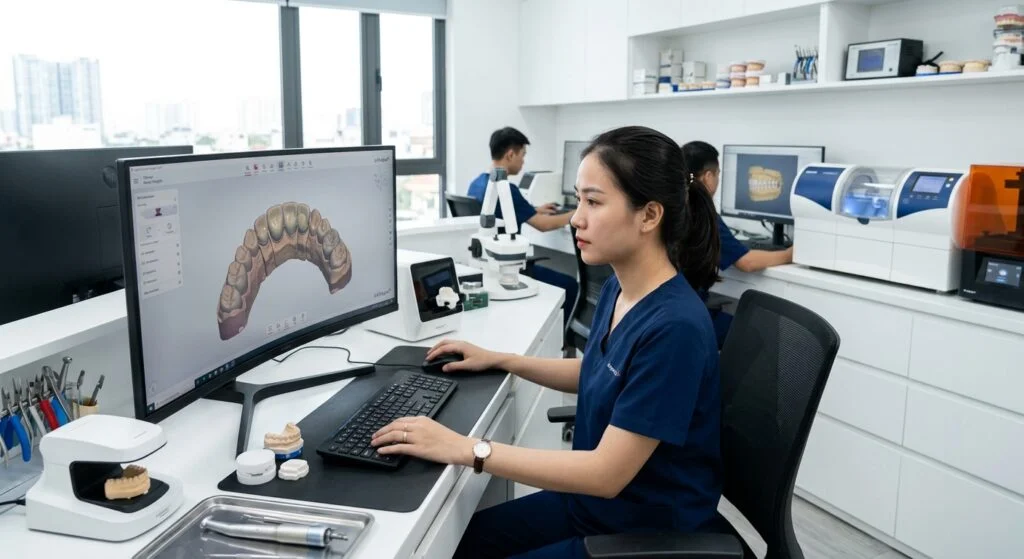
Digital denture design offers significant advantages over traditional methods, including reduced chair time, fewer appointments, and a permanent digital record for easy remakes. Designers utilize specialized software to articulate digital models, set teeth virtually, and design custom denture bases that conform precisely to the patient’s anatomy. This results in dentures with superior fit, retention, and esthetics, enhancing patient satisfaction.
Orthodontic Aligners
The burgeoning clear aligner market presents a significant opportunity for labs and DSOs. Dental lab outsourcing offers a scalable solution for aligner design and production support:
- Virtual Treatment Planning: Detailed staging of tooth movements from initial malocclusion to final desired position.
- Aligner Shell Design: Creating the individual aligner models for 3D printing, each representing a specific stage of tooth movement.
- Retention Devices: Design of retainers post-treatment.
Designing aligners involves complex biomechanical principles. Outsourcing partners employ orthodontically trained designers who use specialized software to create precise virtual setups, plan tooth movements, and generate the sequential models required for aligner fabrication. This allows labs to enter or expand in the lucrative clear aligner market without investing heavily in specialized orthodontic software and training.
Night Guards / Occlusal Splints
Custom-fit night guards and occlusal splints are essential for patients suffering from bruxism, TMD, or for protecting restorations. Digital design offers superior fit and patient comfort:
- Hard Night Guards: Durable and precise, designed to protect teeth from grinding and clenching.
- Soft Night Guards: More flexible, often used for lighter bruxism cases.
- TMD Splints: Custom-designed to alleviate temporomandibular joint dysfunction symptoms.
The digital workflow for night guards involves scanning the patient’s dentition, designing the splint in CAD software to occlude precisely with the opposing arch and provide appropriate relief, and then fabricating it via 3D printing or milling. This ensures a comfortable, accurate fit that patients are more likely to wear consistently, leading to better therapeutic outcomes. The precision offered by dental lab outsourcing for these appliances is a significant advantage.
The CAD/CAM Advantage in Dental Lab Outsourcing
The synergy between CAD/CAM technology and dental lab outsourcing is what makes this model so powerful. CAD (Computer-Aided Design) software allows designers to create highly accurate 3D models of dental restorations, while CAM (Computer-Aided Manufacturing) enables their precise fabrication through milling or 3D printing.
When you outsource your digital design, you are tapping into a concentrated pool of CAD/CAM expertise. These providers typically utilize the industry’s leading software platforms, ensuring compatibility with virtually any intraoral scanner or milling machine your lab operates. They understand the nuances of various materials – from zirconia and E.max to PMMA and chrome cobalt – and design accordingly, optimizing for strength, esthetics, and manufacturability.
The digital files (STL, 3SHAPE, EXOCAD, etc.) are universally transferable, making the outsourcing process seamless. Your lab receives a validated, ready-to-produce file, eliminating the need for in-house design revisions and reducing the potential for errors. This digital handover also creates a permanent record of each design, which is invaluable for future reference or remakes.
Moreover, the continuous innovation in CAD/CAM software, such as advanced algorithms for automatic crown proposals, intricate implant planning modules, and sophisticated orthodontic staging tools, means that specialized outsourcing partners are always at the forefront. They invest in these upgrades and the training required to master them, providing their clients with access to capabilities that might be cost-prohibitive to develop internally. For instance, advanced features for bite registration in digital denture design or complex attachment placement for aligners are routinely handled by expert outsourced teams, further enhancing the appeal of dental lab outsourcing.
Choosing the Right Partner for Dental Lab Outsourcing
Selecting the ideal dental lab outsourcing partner is a critical decision that impacts your lab’s future success. Here are key factors to consider:
- Expertise and Experience: Look for a partner with extensive experience in the specific types of designs you need. Inquire about their designers’ qualifications, training, and collective experience across various CAD software platforms and prosthetic types. A robust portfolio of successfully completed cases is a good indicator.
- Technology and Software: Ensure they use industry-standard CAD software (e.g., exocad, 3Shape, Medit Design) that is compatible with your existing scanners and manufacturing equipment. Ask about their commitment to continuous software upgrades and adoption of new technologies.
- Quality Control Protocols: A reputable outsourcing partner will have stringent quality assurance processes in place. This includes multiple checkpoints during the design process, adherence to your specific preferences, and a system for review and revision.
- Communication and Support: Clear, efficient communication is paramount. The partner should offer responsive support, be available to discuss cases, and provide timely updates. Consider time zone differences if working with international partners.
- Turnaround Times: Evaluate their typical turnaround times for different types of cases and confirm they can meet your lab’s demands, especially during peak periods.
- Data Security and Confidentiality: Protecting patient data and your lab’s intellectual property is non-negotiable. Ensure the partner complies with relevant data protection regulations (e.g., HIPAA) and has robust security measures in place.
- Pricing Structure: Understand their pricing model – whether it’s per case, subscription-based, or volume-tiered. Ensure transparency and no hidden fees. A cost-effective solution doesn’t mean compromising on quality.
- Scalability: Can they handle an increase in your case volume as your lab grows? A good partner offers flexible solutions to scale up or down as needed.
- Integration with Your Workflow: Discuss how seamlessly their services can integrate into your current digital workflow. The goal is to enhance, not disrupt, your operations.
By carefully evaluating these aspects, you can forge a partnership that truly elevates your lab’s capabilities and profitability through smart dental lab outsourcing.
Security and Data Management in Dental Lab Outsourcing
In the digital age, data security and patient confidentiality are paramount, especially in healthcare. When engaging in dental lab outsourcing, it’s crucial to ensure that your chosen partner adheres to the highest standards of data protection. This involves several key considerations:
- HIPAA Compliance (for US-based operations): If your lab or DSO is in the United States, your outsourcing partner must be HIPAA compliant. This means they have implemented administrative, physical, and technical safeguards to protect Protected Health Information (PHI). Ask for their HIPAA compliance documentation and business associate agreements (BAAs).
- GDPR and Other International Regulations: For labs operating in other regions, ensure the partner complies with relevant data protection laws, such as GDPR in Europe.
- Secure Data Transfer Protocols: All digital files (intraoral scans, CBCT data, patient information) should be transferred via secure, encrypted channels. This typically involves secure file transfer protocols (SFTP), virtual private networks (VPNs), or dedicated secure portals. Avoid partners that rely on unsecured email or cloud services.
- Access Control and Employee Training: Inquire about their internal policies regarding data access. Only authorized personnel should have access to sensitive data, and all employees should undergo regular training on data security best practices and confidentiality protocols.
- Data Storage and Retention: Understand where and how your data is stored. Is it on secure servers? What are their data backup and recovery procedures? How long do they retain design files, and what is their policy for data destruction upon request or contract termination?
- Audit Trails: A robust system will have audit trails to track who accessed what data and when, providing an extra layer of accountability and security.
A trustworthy dental lab outsourcing partner will be transparent about their security measures and eager to demonstrate their commitment to protecting your data and your patients’ privacy. This confidence in data security allows you to fully realize the benefits of outsourcing without undue risk.
Integration with Existing Workflows
One of the primary concerns for labs considering dental lab outsourcing is how seamlessly it will integrate with their current operations. A good outsourcing partner understands this and strives to make the transition as smooth as possible.
The integration process typically begins with understanding your lab’s current digital ecosystem. This includes:
- Scanner Compatibility: Ensuring the outsourcing partner can work with files from your specific intraoral or model scanner (e.g., 3Shape TRIOS, Medit i700, Dentsply Sirona Primescan).
- Software Compatibility: Confirming their CAD software can generate files compatible with your milling machines or 3D printers.
- Communication Channels: Establishing clear and efficient ways to send cases, communicate specific instructions, and receive design files. This might involve dedicated online portals, secure cloud storage, or direct email communication.
- Customization and Preferences: The partner should be able to adapt to your lab’s unique preferences, such as specific margin designs, occlusal schemes, or material choices. They should have a system for documenting and applying these preferences consistently across all your cases. This also extends to esthetic anterior crown design.
- Feedback Loop: A strong integration includes a robust feedback mechanism. You should be able to easily review designs, request revisions, and provide feedback that helps the outsourcing team continually refine their service to match your expectations.
Ultimately, the goal of dental lab outsourcing is to augment your lab’s capabilities, not complicate them. A well-integrated partnership should feel like an extension of your own team, allowing you to scale up your digital design capacity effortlessly and efficiently.
The Future of Dental Lab Outsourcing
The trajectory of dental lab outsourcing is upward, driven by continuous advancements in digital dentistry and increasing pressures on dental laboratories. We can anticipate several key trends shaping its future:
- Increased Specialization: As technologies become more complex, outsourcing partners will likely specialize even further, focusing on niches like highly esthetic anterior designs, complex full-mouth implant rehabilitations, or advanced orthodontic mechanics.
- AI and Machine Learning Integration: Artificial intelligence will play an increasingly significant role in CAD design, automating routine tasks, suggesting optimal designs based on vast databases, and even predicting potential issues. Outsourcing partners with early adoption of AI tools will offer a competitive edge.
- Global Collaboration and Time Zone Advantages: The global nature of digital design means labs can leverage partners across different time zones, enabling true 24/7 workflow and significantly reducing turnaround times.
- Comprehensive Digital Solutions: Outsourcing will evolve beyond just design to include more comprehensive digital solutions, such as remote monitoring of milling machines, virtual quality control checks, and integrated patient communication platforms.
- Emphasis on Education and Training: Outsourcing partners will also become educational hubs, offering insights and training to client labs on best practices, new materials, and advanced digital workflows, further solidifying their value proposition.
- Sustainable Practices: As the industry focuses on sustainability, outsourced digital design, by reducing material waste and optimizing production, will align perfectly with eco-friendly initiatives.
For dental labs and DSOs, embracing dental lab outsourcing is not just about adapting to change; it’s about proactively positioning themselves for growth, innovation, and long-term success in an increasingly digital world. It’s a strategic move that empowers labs to focus on their unique strengths while leveraging external expertise for specialized tasks, ultimately delivering superior patient care.
Ready to transform your lab’s efficiency and expand your service offerings? Contact us today to learn how our expert CAD/CAM digital design outsourcing can elevate your business.