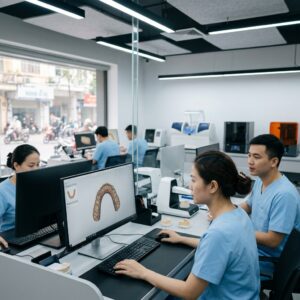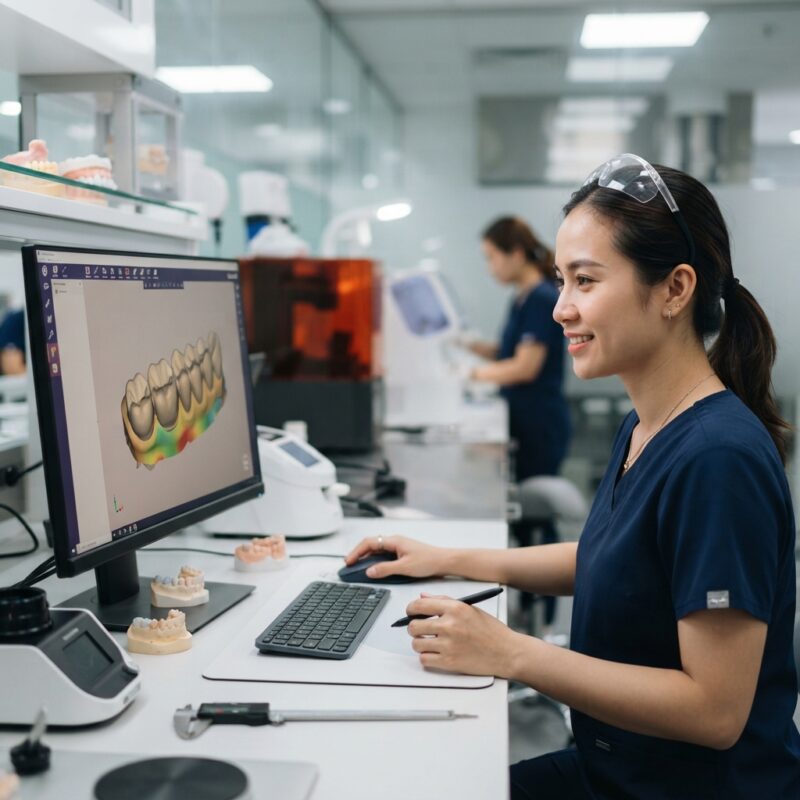
What Is the All in One Dental Clinic App 2026?
The All in one dental clinic app 2026 is a comprehensive business and finance management software designed specifically for dental clinics and DSOs, supporting single or multiple branches under one platform.
This app covers critical administrative needs such as revenue, expenses, cash flow, patient balances, commission tracking, and payroll management while providing a unified dashboard view of all branches. Unlike clinical or imaging software, it focuses solely on the operational side of dental practices. It supports functionalities like installment plans, bad-debt tracking, and warranty monitoring, all accessible through a secure, role-based interface.
Dental 3D Lab offers this app as a gift to clients whose monthly invoices reach $1,000 or more, making it a valuable addition for labs outsourcing crown & bridge, implant, or orthodontic designs. The app is not a hosted service; rather, clinics deploy it on their own hosting under their own domain, ensuring data privacy and control.
Why Should Dental Labs and DSOs Consider This App?
Dental labs and DSOs benefit from the All in one dental clinic app because it bridges the gap between clinical workflows and business operations without overlapping clinical software roles.
For dental labs that outsource CAD/CAM digital design services, having a reliable clinic management app helps synchronize lab orders with clinic finances and patient billing. DSOs, with multiple branches, gain a centralized platform to analyze performance across locations, manage payroll complexities, and automate appointment bookings to improve operational efficiency.
The app’s AI assistant, accessible by text or voice, enhances usability by providing quick data lookups, reminders, and data entry without navigating multiple menus. This reduces administrative overhead and errors, which is critical for busy practices managing crown & bridge, implants, surgical guides, dentures, orthodontic aligners, and night guards production schedules.
What Features Should You Look for in an All in One Dental Clinic App?
When evaluating the All in one dental clinic app or similar systems, focus on core features that address your clinic’s unique needs:
- Multi-branch Support: Ability to manage multiple clinic locations under one interface, with consolidated and individual reports.
- Financial Management: Revenue tracking, expense logging, cash flow analysis, patient balances, deposits, installment plans, and bad-debt monitoring.
- Payroll and HR Functions: Support for commission rules, bonuses, salary advances, QR-code attendance, and payroll processing.
- Security and Compliance: End-to-end encryption, DDoS attack prevention, device approval, emergency lock features, and audit logs.
- Patient Management: Importing patient data, tracking warranties and treatment returns, and an online booking system where patients select branch, date, and time.
- AI Assistance: Text or voice interface to query and input data efficiently, improving workflow speed and accuracy.
Also, verify that the app provides customizable permissions by feature and branch, ensuring that staff access aligns with their roles. The ability to import patient and treatment plan data from Excel can save significant onboarding time.
How Does the Pricing Model for Dental Clinic Apps Typically Work?
Dental practice management software pricing varies widely but generally follows models such as per-provider, per-location, per-user subscriptions, or flat monthly fees.
Common additional costs may include setup and training fees, data export charges, payment processing fees, and optional add-on modules. Contract length and cancellation policies also impact total costs.
It is crucial to distinguish between the “sticker price” and actual total cost of ownership, which includes hidden fees, support expenses, and system upgrades. Always request a clear, itemized quote and ask vendors about potential extra charges upfront.
Unlike typical commercial products, the All in one dental clinic app from Dental 3D Lab is not sold separately and has no public price; it is gifted to qualifying clients who spend at least $1,000 monthly on lab orders. This arrangement can offer cost advantages but requires ongoing lab partnership.
What Are the Security Features of the All in One Dental Clinic App?
Security is paramount when dealing with patient and financial data in dental clinics. The All in one dental clinic app incorporates several robust security measures to protect sensitive information.
These include end-to-end encryption to prevent unauthorized data interception, blocking of DDoS attacks to maintain availability, and a security code sent by email at sign-in to verify user identity. Device approval processes limit access to trusted hardware, and an emergency lock feature allows administrators to quickly disable access in case of a breach or suspicious activity.
An audit log tracks every change, detailing who made it and when, which helps maintain accountability and supports compliance efforts. Clinics host the app on their own servers or cloud infrastructure, retaining full control over data storage and backups, which reduces reliance on third-party hosting providers.
What Limitations Should You Know About the Dental Management App?
It is important to understand what the All in one dental clinic app does not do to set correct expectations and avoid costly integration mistakes.
This app is not designed for clinical charting, digital X-ray or imaging management, insurance claims processing, electronic prescribing, or payment card processing. It records and reconciles payments by method—cash, card, bank transfer, installment—but does not process or authorize payments itself.
It also does not integrate with external clinical or banking software, nor does it function as a hosted SaaS solution; clinics deploy and maintain it on their own hosting environments. Additionally, while open-source dental software options exist, this app is proprietary and not open source.
How Does the App Support Multi-Branch Dental Organizations?
The All in one dental clinic app is built to handle the complexities of DSOs and multi-location practices by offering a unified yet granular management system.
Each branch can be tracked individually for revenue, expenses, patient balances, and staff commissions while providing consolidated reports for the organization’s leadership. Permissions can be set at branch and feature levels, allowing managers to restrict access appropriately.
Features like QR-code attendance and payroll runs simplify HR tasks across multiple sites, while the online booking system directs patients to their preferred branch, reducing scheduling conflicts. The AI assistant can pull data from all branches or focus on one, helping multi-location administrators make informed decisions quickly.
What Questions Should You Ask a Vendor Before Choosing a Dental Clinic App?
Before committing to any All in one dental clinic app vendor, ask these critical questions:
- What exactly is included in the base price and what additional fees might apply?
- How is data security handled, and who controls data storage and backups?
- Is the software hosted by the vendor or deployed on our own servers?
- What features are customizable to fit our clinic’s workflows?
- How does the app handle multi-branch management and user permissions?
- Is there an AI assistant or automation features to improve efficiency?
- What is the process for importing existing patient and treatment data?
- How frequently is the app updated, and what is the policy on support and training?
Asking these will help you avoid surprises and ensure the software aligns with your operational needs and budget.
How Does the Online Booking Feature Benefit Patients and Clinics?
The integrated online booking feature in the All in one dental clinic app empowers patients to schedule appointments conveniently by choosing their preferred clinic location, date, and time.
This reduces administrative burden on reception staff and minimizes scheduling errors or double bookings. It also improves patient satisfaction by offering flexibility and transparency. For clinics, online booking can increase appointment adherence and optimize chair utilization.
Combined with the app’s comprehensive business management tools, online booking supports a seamless patient journey from scheduling through billing, enhancing overall practice efficiency and cash flow.
How Does the AI Assistant Improve Dental Practice Management?
The AI assistant integrated into the All in one dental clinic app provides text and voice-based interaction for quick data retrieval, entry, and reminders, enhancing usability and productivity.
For example, practice managers can ask for current patient balances, upcoming appointments, or revenue reports without navigating complex menus. The AI can also set reminders for follow-up actions, commissions, or warranty expirations.
This reduces reliance on manual record-keeping and minimizes human error, allowing staff to focus on patient care and strategic tasks. The AI assistant adapts to user roles and permissions, ensuring secure and relevant data access.
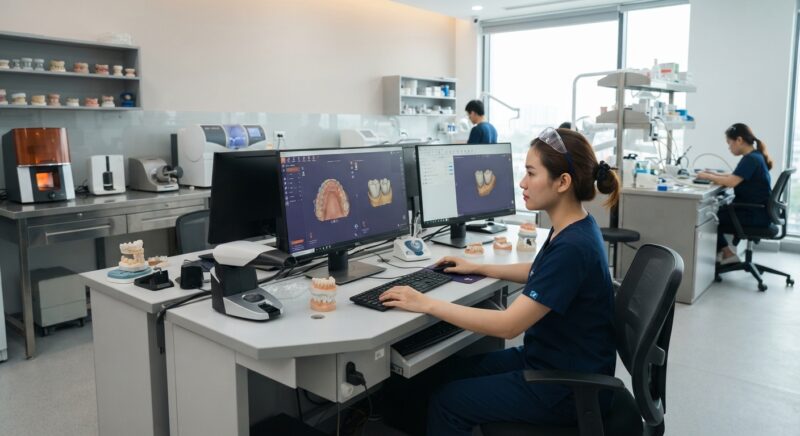
What Are the Deployment and Hosting Considerations?
Unlike cloud-based software services, the All in one dental clinic app requires deployment on your clinic’s own hosting infrastructure, either on-premises or through a third-party hosting provider selected by the clinic.
Dental 3D Lab provides the app’s source code along with assistance in deployment, but the clinic retains full control over hosting, domain name, and data management. This model increases security and data sovereignty but requires the clinic to have or acquire appropriate IT resources for maintenance and backups.
This arrangement is ideal for clinics with existing IT capabilities or those wishing to avoid ongoing subscription fees typical of SaaS models. It also means the clinic is responsible for ensuring uptime, security patches, and compliance with local data privacy regulations.
How Does This App Complement Dental Lab CAD/CAM Digital Design Outsourcing?
The All in one dental clinic app works well alongside CAD/CAM digital design outsourcing services by streamlining the financial and operational workflows between the clinic and the lab.
Dental clinics outsourcing crown & bridge, implant restorations, surgical guides, dentures, orthodontic aligners, or night guards can manage patient billing, treatment plans, and lab commissions within the app. This reduces administrative friction when coordinating orders and payments with external labs.
Integrating operational data with lab production schedules and costs helps clinics control expenses and improve cash flow. Clinics using this app alongside digital design outsourcing benefit from increased transparency and efficiency in managing complex restorative cases.
This synergy contributes to better patient outcomes and profitability. It also works well alongside surgical guide design services.
What Should You Know About Free Dental Clinic Software Options?
While free dental clinic software options exist, they often come with significant limitations such as feature caps, per-user restrictions, advertisements, mandatory paid add-ons, or the sale of user data.
Clinics evaluating free software should carefully review terms of service, data ownership policies, and hidden costs like training or integration expenses. Free solutions may also lack critical security features or multi-branch support necessary for growing DSOs.
The All in one dental clinic app is not a publicly downloadable free program but a gift from Dental 3D Lab to qualifying clients who invest in their dental lab products and services, making it a tailored and secure option rather than an open-source or free-for-all offering.
How to Evaluate the Total Cost of Ownership for Dental Clinic Apps?
Beyond upfront pricing, the total cost of ownership (TCO) includes setup fees, training, IT infrastructure, ongoing support, upgrades, and potential downtime costs.
It is vital to factor in the resources needed for deployment, especially for apps like the All in one dental clinic app that require self-hosting. Clinics should budget for IT personnel or consultancy services to handle installation and maintenance.
Compare TCO scenarios between subscription-based SaaS, on-premises solutions, and hybrid models. Ask vendors for detailed cost breakdowns and documentation on upgrade policies. Ensure you understand contract length and termination clauses to avoid unexpected expenses.
Considering these aspects early helps clinics make informed decisions aligned with their long-term financial and operational goals.
Introducing the Dental Management App by Dental 3D Lab
Dental 3D Lab’s Dental Management App is a practical example of an All in one dental clinic app, designed to meet the diverse needs of modern dental practices and DSOs.
This app supports one or multiple branches with detailed financial tracking, payroll, patient receivables, and a built-in AI assistant. Clinics can explore a free live demo on the Dental Management App page, where users select roles and interact with sample data without signing up.
As a gift to clients with monthly invoices exceeding $1,000, this app provides a cost-effective way to enhance operational efficiency without additional subscription fees. Deployment is handled collaboratively, with Dental 3D Lab supplying source code and deployment support, while clinics maintain control of hosting and data.
How to Choose the Right All in One Dental Clinic App for Your Practice?
Choosing the right All in one dental clinic app involves matching software capabilities to your clinic’s workflow, scale, and budget.
Start by listing your must-have features, such as multi-branch financial reporting, patient balance tracking, payroll management, and online booking. Consider whether you have the IT resources for self-hosted deployment or prefer cloud hosting alternatives.
Evaluate vendor transparency regarding pricing, security, and support. Test demos or trial versions where available to assess user experience and AI assistant capabilities. Ask for references or reviews within your industry and verify integration potential with your existing tools.
Remember that the most expensive or feature-rich app is not always the best fit; prioritize usability, data security, and vendor reliability. The Dental Management App by Dental 3D Lab is one option to explore, especially if you already outsource lab services.
What External Resources Can Help You Learn More?
For comprehensive information on dental practice management and technology trends, consult authoritative sources such as the American Dental Association which provides guidelines and industry news. To understand the latest in CAD/CAM digital design, visit 3Shape, a leading provider of dental digital workflows and software.
These resources can complement your evaluation of the All in one dental clinic app by offering insights into clinical workflows, lab outsourcing trends, and digital technology advancements.
Final Thoughts
The All in one dental clinic app represents a strategic tool for dental clinics and DSOs aiming to streamline business operations alongside clinical workflows. By choosing software that fits your specific needs, budget, and IT capabilities, your practice can improve financial oversight, patient management, and multi-branch coordination.
For those interested in a practical solution, Dental 3D Lab’s Dental Management App offers a unique proposition as a gifted app tied to your lab outsourcing spend, complete with advanced features and a live demo for hands-on exploration. It is a valuable complement to your digital dental lab outsourcing services and internal management systems, working well alongside digital crown design offerings.
Implementing the App: A Step-by-Step Guide for Dental Labs and Practices
Successfully integrating the All in One Dental Clinic App 2026 into your dental lab or practice requires careful planning and execution. Here is a practical, step-by-step approach to help ensure a smooth transition:
- Step 1: Conduct an Internal Needs Assessment. Gather your team to identify current operational pain points, such as billing delays, inventory mismanagement, or communication bottlenecks between the clinic and lab.
- Step 2: Map Out Your Workflow. Document detailed workflows for patient intake, lab order processing, financial reconciliation, and reporting. This will help you understand how the app’s features can be tailored to your existing processes.
- Step 3: Choose a Pilot Location or Department. If you operate multiple branches or departments, start with one to minimize disruption during initial implementation and allow room for troubleshooting.
- Step 4: Train Key Staff Members. Identify superusers from administrative, clinical, and lab teams to receive comprehensive training. These individuals will champion the app’s adoption and assist others.
- Step 5: Migrate Data Carefully. Prepare and clean your existing data before migrating it into the app. Data integrity is crucial to avoid errors in patient records, inventory, and financial reports.
- Step 6: Run Parallel Systems Initially. Maintain your legacy systems alongside the new app for a short period to validate accuracy and build confidence among staff.
- Step 7: Gather Feedback and Optimize. Regularly collect user feedback and monitor KPIs such as billing turnaround time or claim denials. Use this data to fine-tune configurations and workflows.
- Step 8: Fully Transition and Scale. Once the pilot is successful, roll out the app across all branches or departments, repeating training and support as needed.
Quality vs. Cost: Balancing Financial and Operational Priorities
When choosing an all-in-one dental clinic app, labs and practices often face a tradeoff between cost and quality. Here are some considerations to help balance these factors:
- Assess Total Cost of Ownership (TCO). Beyond the initial license or subscription fee, consider implementation costs, training, customizations, integrations, and ongoing support. Cheaper apps may incur higher hidden costs.
- Evaluate Feature Completeness vs. Necessity. Avoid paying for extensive features you won’t use. Focus on core functions like appointment management, billing, inventory, and lab communication that directly impact your workflow.
- Prioritize Scalability and Flexibility. A lower-cost solution may become costly if you outgrow its capabilities quickly. Select apps that can scale with your practice size and complexity.
- Consider Vendor Reputation and Support Quality. Reliable, responsive support reduces downtime and frustration, saving money in the long run.
- Check Integration Capabilities. Seamless integration with your existing lab CAD/CAM systems, accounting software, and imaging tools can improve accuracy and reduce manual work.
For example, a mid-sized dental lab might initially opt for a lower-cost app with basic accounting and order tracking but later invest in premium modules for advanced analytics and AI-powered inventory forecasting as their volume grows.
Common Implementation Mistakes and How to Avoid Them
Many dental labs and practices encounter avoidable pitfalls during app implementation. Recognizing these common mistakes can save time, money, and frustration:
- Skipping Comprehensive Needs Analysis. Without a clear understanding of what your practice requires, you risk selecting an app that doesn’t fully meet your operational demands.
- Underestimating Staff Training Needs. Insufficient training leads to underutilization of features and user resistance. Allocate ample time and resources for hands-on sessions and refresher courses.
- Ignoring Change Management. Introducing new technology alters workflows and roles. Engage staff early, communicate benefits clearly, and solicit feedback to foster buy-in.
- Poor Data Preparation. Migrating inaccurate or outdated data can cause errors in patient records, billing, and inventory management. Cleanse and verify data before migration.
- Failing to Test Thoroughly. Rushing to go live without adequate testing can result in operational disruptions. Run pilot programs and parallel processes to identify and correct issues.
- Neglecting Security Protocols. Overlooking user access controls, data encryption, and backup policies can expose sensitive patient and financial information to breaches.
Market-Specific Considerations for Dental Labs and Practices in 2026
The dental industry landscape is evolving rapidly, and technology adoption varies significantly by region and market segment. Here are some market-specific factors to consider when adopting the All in One Dental Clinic App:
Regulatory Compliance
Different countries and states have varying legal requirements concerning patient data privacy (e.g., HIPAA in the U.S., GDPR in Europe), billing documentation, and reporting. Ensure the app complies with applicable regulations to avoid fines and legal complications.
Insurance and Payment Ecosystems
Insurance processes and reimbursement rates differ widely. The app should support common insurance claim formats, electronic submissions, and payment tracking tailored to your geographic market. Customizable payment plans and bad debt tracking are critical in markets with high patient out-of-pocket costs.
Technology Infrastructure
Internet connectivity and hardware availability may vary, especially in rural or developing regions. Consider whether the app supports offline modes, low-bandwidth operation, and compatibility with existing devices.
Competition and Customer Expectations
In highly competitive urban markets, patient experience features like online booking, appointment reminders, and digital consent forms can differentiate your practice. Conversely, in smaller markets, operational efficiency and cost control may be higher priorities.
Language and Localization
Multi-language support and regional customization of terminology, forms, and workflows will enhance user adoption and patient communication in diverse markets.
Contact Dental 3D Lab today to learn more about integrating this app into your practice and request a live demo through the Dental Management App page.