
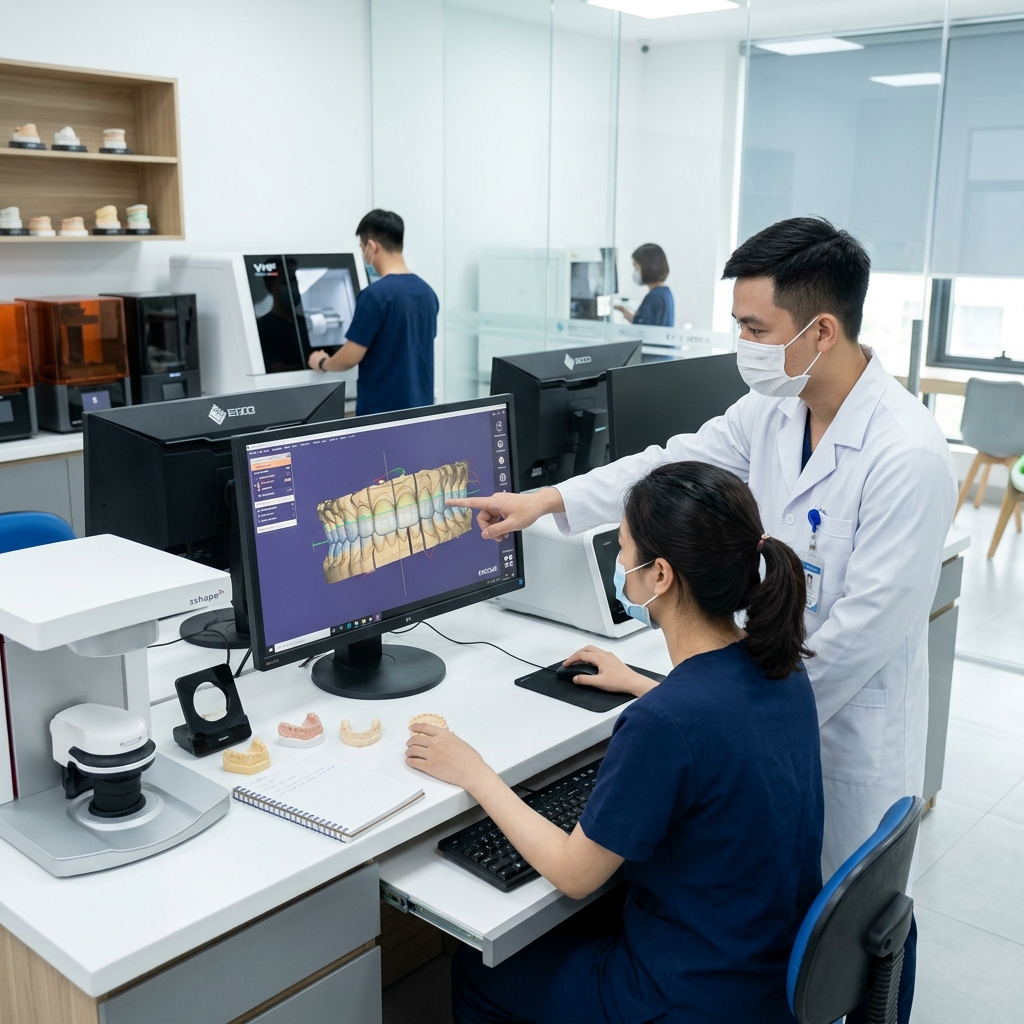
In an era where precision, patient safety, and regulatory compliance are paramount, dental laboratories and DSOs are increasingly seeking robust quality management systems to differentiate themselves and ensure exceptional outcomes. Among the most recognized international standards is ISO 15189, specifically tailored for medical laboratories. While often associated with traditional clinical pathology, its principles are profoundly relevant to the modern dental laboratory, particularly those engaged in advanced digital design and manufacturing. This comprehensive iso 15189 lab accreditation guide aims to demystify the standard and illustrate how strategic partnerships, like digital design outsourcing, can significantly streamline the journey towards accreditation.
The dental industry is undergoing a rapid digital transformation. From intraoral scanning to CAD/CAM design and 3D printing, technology is reshaping how restorations, prosthetics, and orthodontic appliances are created. As these processes become more sophisticated and directly impact patient health, the need for stringent quality control, consistent methodologies, and verifiable competence grows exponentially. This is precisely where an iso 15189 lab accreditation guide becomes an invaluable resource, providing a framework for operational excellence that aligns with the highest international benchmarks for medical testing and reporting.
What is ISO 15189 and Why is it Relevant to Dental Labs?
ISO 15189 specifies requirements for quality and competence in medical laboratories, ensuring that laboratories produce reliable results that ultimately contribute to effective patient care.
While dental labs do not typically perform traditional “medical testing” in the diagnostic sense, the products they create – crowns, bridges, implants, surgical guides, dentures, and orthodontic aligners – are custom medical devices designed to be implanted or used within the human body. The design, manufacturing, and quality control processes for these devices demand a level of precision, consistency, and safety that mirrors the requirements for diagnostic test results. Therefore, adopting the principles outlined in an iso 15189 lab accreditation guide offers a powerful pathway for dental labs to demonstrate their commitment to quality, patient safety, and regulatory compliance, particularly as medical device regulations worldwide become more stringent.
For DSOs managing multiple labs or individual high-volume dental laboratories, pursuing ISO 15189 accreditation is not merely about ticking a regulatory box; it’s about embedding a culture of continuous improvement, reducing errors, enhancing efficiency, and building undeniable trust with clinicians and patients. An effective iso 15189 lab accreditation guide helps navigate this complex but rewarding path.
The Core Pillars of ISO 15189 for Digital Dental Design
The ISO 15189 standard is structured around several key clauses that cover both management requirements and technical requirements. Understanding these pillars is crucial for any dental lab embarking on its accreditation journey. Our iso 15189 lab accreditation guide highlights the most pertinent aspects:
- Management Requirements (Section 4): These cover the organizational structure, quality management system, document control, review of contracts, external services and supplies, complaints, nonconformities, corrective actions, preventive actions, continual improvement, and management reviews. For a dental lab, this means having clearly defined policies, procedures, and responsibilities for every step of the digital design and production process.
- Technical Requirements (Section 5): These address personnel, accommodation and environmental conditions, laboratory equipment, reagent and consumable management, pre-examination processes, examination processes, ensuring quality of examination results, post-examination processes, and reporting results. In the context of digital dental design, this translates to qualified designers, validated software and hardware, controlled design environments, rigorous quality checks, and accurate reporting of design specifications.
Each of these sections, as detailed in an iso 15189 lab accreditation guide, provides a framework for excellence that can be directly applied to the unique operations of a modern dental lab, especially one leveraging CAD/CAM technologies for diverse applications like crown & bridge, implants, surgical guides, dentures, orthodontic aligners, and night guards.
Why Pursue ISO 15189 Accreditation? Benefits for Dental Labs and DSOs
Adopting an iso 15189 lab accreditation guide and achieving accreditation offers a multitude of tangible and intangible benefits:
1. Enhanced Quality and Patient Safety
At its core, ISO 15189 is about ensuring consistently high-quality results. For dental labs, this means producing restorations and appliances that are accurate, precise, biocompatible, and fit perfectly, minimizing chairside adjustments and potential patient discomfort or complications. Adhering to an iso 15189 lab accreditation guide directly translates to better patient outcomes.
2. Increased Efficiency and Reduced Errors
The structured approach required by ISO 15189 forces labs to standardize workflows, document procedures, and implement robust quality control checks. This leads to fewer re-dos, reduced material waste, and optimized turnaround times. For a digital design outsourcing service, this means delivering consistent, error-free designs efficiently, as outlined in a robust iso 15189 lab accreditation guide.
3. Improved Credibility and Competitive Advantage
Accreditation by an internationally recognized standard like ISO 15189 significantly boosts a lab’s reputation. It signals to dentists, DSOs, and regulatory bodies that the lab operates at the highest level of quality and competence. This can be a powerful differentiator in a competitive market, attracting more clients and securing lucrative contracts. Following an iso 15189 lab accreditation guide sets you apart.
4. Regulatory Compliance and Risk Mitigation
As medical device regulations (e.g., MDR in Europe, FDA in the US) become more demanding, demonstrating compliance with a recognized quality standard like ISO 15189 can simplify regulatory audits and market access. It provides a robust framework for risk management, identifying and mitigating potential issues before they impact patient care or lead to costly recalls. Every iso 15189 lab accreditation guide emphasizes risk assessment.
5. Streamlined Operations and Better Management
The management system requirements of ISO 15189 provide a clear roadmap for organizational structure, personnel training, equipment maintenance, and document control. This leads to better internal communication, clearer roles and responsibilities, and more effective decision-making. Utilizing an iso 15189 lab accreditation guide fosters a well-managed operation.
Challenges in Achieving ISO 15189 Accreditation for Dental Labs
While the benefits are clear, the path to ISO 15189 accreditation can be challenging, particularly for dental labs accustomed to less formalized systems. Our iso 15189 lab accreditation guide acknowledges these hurdles:
- Documentation Burden: ISO 15189 requires extensive documentation of all processes, procedures, policies, and records. This can be a significant undertaking for labs without existing robust document control systems.
- Resource Intensive: Achieving and maintaining accreditation demands significant investment in time, personnel training, and potentially new equipment or software.
- Cultural Shift: Implementing a quality management system often requires a fundamental shift in organizational culture, emphasizing continuous improvement, accountability, and adherence to standardized protocols.
- Technical Competence: Demonstrating the technical competence of staff, validating methods, and ensuring equipment calibration can be complex, especially with the rapid evolution of digital dental technologies.
- Interpretation of Standards: Applying a standard primarily designed for diagnostic medical labs to the unique context of dental device manufacturing requires careful interpretation and adaptation.
Overcoming these challenges often requires expert guidance and strategic partnerships. This is where a specialized digital design outsourcing service can play a pivotal role, acting as an extension of your lab and helping you meet many of the stringent requirements outlined in an iso 15189 lab accreditation guide.
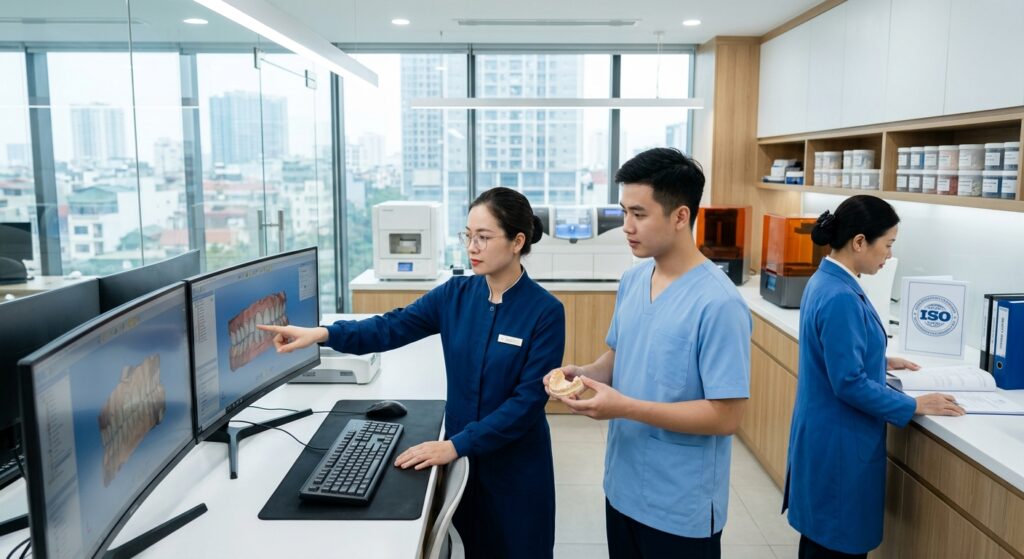
How Digital Design Outsourcing Supports Your ISO 15189 Journey
A reputable digital design outsourcing partner can be an invaluable asset for dental labs and DSOs aiming for ISO 15189 accreditation. By leveraging their specialized expertise and established quality systems, you can address several key requirements more efficiently. Our iso 15189 lab accreditation guide outlines how:
1. Standardized, Validated Workflows and Protocols
One of the cornerstones of ISO 15189 is the use of validated methods and standardized procedures. A professional outsourcing partner will already have meticulously documented and validated workflows for all their design services – from crown & bridge to surgical guides and orthodontic aligners. This means they operate with consistent protocols, ensuring reproducible results and reducing variability, which is a critical aspect of any iso 15189 lab accreditation guide.
- Example: For digital crown design, an outsourced service will have a defined process for margin line detection, anatomical design, occlusion adjustment, and contact point generation, all performed using validated software (e.g., exocad, 3Shape) and checked against specific parameters.
2. Expert Personnel and Competence Management
ISO 15189 places a strong emphasis on the competence of personnel. Outsourcing to a specialist team means you are tapping into a pool of highly trained and experienced CAD designers who are experts in their respective fields (e.g., implant planning, full arch dentures). These designers typically undergo continuous training and competency assessments, fulfilling a significant portion of the personnel requirements of the standard without you needing to manage their individual training records.
- Benefit: You gain access to specialized skills for complex cases like Straumann or Nobel Biocare implant cases, ensuring the design quality meets the highest standards, as emphasized in any good iso 15189 lab accreditation guide.
3. Robust Document Control and Record Keeping
The documentation requirements of ISO 15189 are extensive. A professional outsourcing partner will maintain meticulous records of all design projects, including input data (scans, prescriptions), design parameters, revision histories, and final approved designs. This robust record-keeping system can be integrated into your lab’s overall quality management system, providing the necessary audit trails for accreditation. This simplifies the process for your own iso 15189 lab accreditation guide compliance.
- Practical Application: Every design file is version-controlled, and changes are logged, providing clear evidence of adherence to prescribed specifications and design iterations.
4. Equipment Calibration and Software Validation
While an outsourcing partner handles the design, they are responsible for ensuring their CAD software and hardware (e.g., high-resolution monitors, powerful workstations) are properly maintained, calibrated (where applicable), and validated for their intended use. This ensures the accuracy and reliability of the digital designs produced. Your lab benefits from this indirectly by receiving high-quality, validated design files. The principles align perfectly with an iso 15189 lab accreditation guide.
- Key Consideration: Your outsourcing partner should be transparent about their software versions and validation processes, ensuring compatibility and quality.
5. Quality Control and Risk Management Integration
Reputable outsourcing services implement rigorous internal quality control checks at multiple stages of the design process. They also engage in risk assessment for design-related issues, such as potential fit problems or material compatibility. By partnering with such a service, you are essentially extending your lab’s quality management system to include their robust controls, mitigating risks associated with the design phase. This proactive approach is a core component of any comprehensive iso 15189 lab accreditation guide.
- Example: Before a final design is sent, it undergoes a peer review or a final check against the original prescription and scan data to catch any discrepancies.
6. External Services and Supplies Management
ISO 15189 requires labs to evaluate and select external services and suppliers based on their ability to meet the lab’s requirements. When outsourcing digital design, your lab will need to assess the outsourcing partner. A partner that already adheres to high-quality standards or is itself ISO-certified simplifies this evaluation process, demonstrating their capability to provide services that align with your accreditation goals. This aspect is crucial for any dental lab following an iso 15189 lab accreditation guide.
- Recommendation: Look for outsourcing partners who can provide evidence of their own quality management systems or certifications, which streamlines your due diligence.
7. Handling Nonconformities and Corrective Actions
Even with the best systems, nonconformities can occur. An ISO 15189-compliant outsourcing partner will have established procedures for identifying, documenting, and addressing nonconformities, as well as implementing corrective and preventive actions. This systematic approach ensures that any issues are resolved efficiently and lessons are learned to prevent recurrence, contributing to your lab’s overall compliance with an iso 15189 lab accreditation guide.
- Scenario: If a design needs adjustment based on your feedback, the process for requesting, implementing, and documenting that change should be clear and traceable.
Implementing ISO 15189 Principles with Digital Design Outsourcing
To effectively integrate digital design outsourcing into your ISO 15189 framework, consider the following practical steps:
Step 1: Define Clear Scope and Requirements
Clearly define the types of designs you will outsource (e.g., Dentsply Sirona CEREC cases, complex implant bridges, orthodontic aligners). Establish detailed specifications, turnaround times, and communication protocols with your outsourcing partner. This ensures both parties understand the “contract review” requirements of ISO 15189.
Step 2: Partner Selection and Evaluation
Thoroughly vet potential outsourcing partners. Inquire about their quality management systems, designer qualifications, software validation, and data security protocols. Request references and examples of their work. Their commitment to quality will directly support your own iso 15189 lab accreditation guide journey.
Step 3: Establish Communication and Feedback Loops
Implement robust communication channels. Regular feedback on design quality, turnaround times, and any issues is essential for continuous improvement and demonstrating compliance with ISO 15189’s requirements for external services. This also aids in the “review of contracts” and “customer feedback” clauses.
Step 4: Integrate Documentation and Records
Ensure that the documentation provided by your outsourcing partner (e.g., design files, revision logs, quality checks) can be seamlessly integrated into your lab’s central document control system. This is crucial for audit readiness and demonstrating adherence to your iso 15189 lab accreditation guide.
Step 5: Regular Performance Monitoring
Periodically review the performance of your outsourcing partner against agreed-upon metrics (e.g., accuracy, timeliness, number of revisions). This monitoring forms part of your ongoing quality assurance and management review processes, vital for maintaining ISO 15189 accreditation. This also works well alongside dental lab software integration for tracking.
The Future of Quality: ISO 15189 and Digital Dentistry
As digital dentistry continues its rapid evolution, the lines between traditional lab work and medical diagnostics become increasingly blurred. The precision required for custom-fabricated medical devices, especially those involving intricate digital planning like surgical guides or complex implant cases, demands a robust quality framework. An iso 15189 lab accreditation guide provides exactly that framework, ensuring that every digital design is not just aesthetically pleasing but clinically sound and safe for the patient.
For dental labs and DSOs looking to future-proof their operations, enhance their reputation, and consistently deliver superior patient care, embracing the principles of ISO 15189 is a strategic imperative. Partnering with a specialized digital design outsourcing service that understands and embodies these quality standards can significantly ease the burden of compliance, allowing your lab to focus on its core competencies while benefiting from world-class design expertise. Consider how this approach can also streamline your orthodontic aligner design processes.
Ultimately, an iso 15189 lab accreditation guide is more than just a checklist; it’s a philosophy of excellence that drives every decision, every process, and every outcome in the pursuit of optimal patient health. By integrating this standard with the power of digital outsourcing, dental labs can position themselves at the forefront of innovation and quality in the dental industry.
Ready to elevate your lab’s quality and efficiency with expert digital design outsourcing? Contact us today to learn how our ISO-aligned services can support your accreditation goals and enhance your patient outcomes.


