Introduction to Modern Dental Practice Management
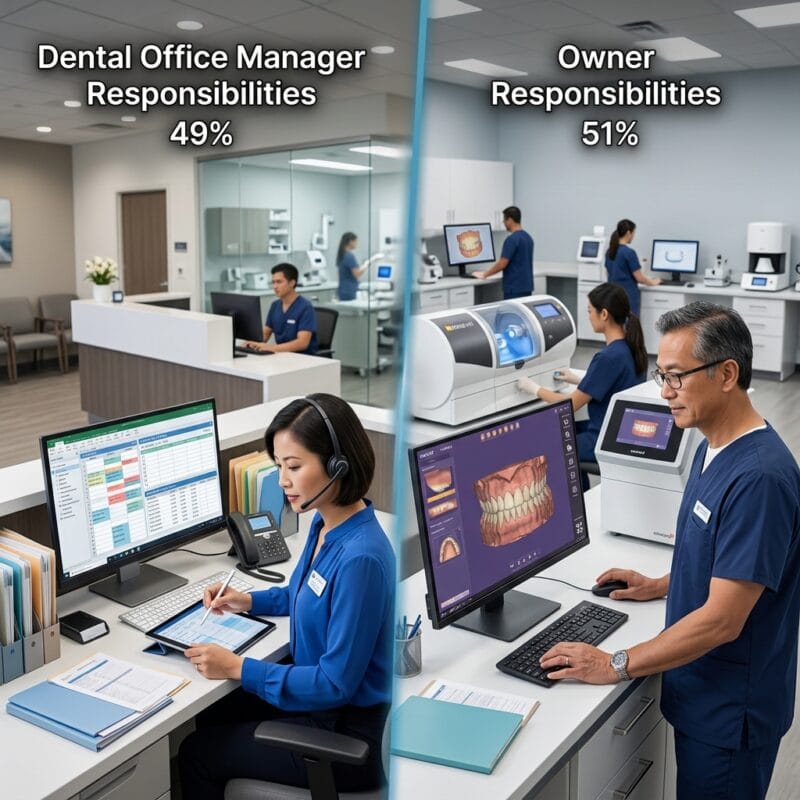
The landscape of dental practice management is shifting rapidly as we approach the mid-2020s. Understanding the distinction between dental office manager vs owner responsibilities 2026 is crucial for any practice aiming for efficiency. As technology advances, the roles within a clinic must adapt to maintain profitability and patient satisfaction. Many practices struggle to define who handles what, leading to operational bottlenecks. This guide clarifies these roles and explains how outsourcing digital design can bridge the gap. By aligning tasks with the correct leadership level, practices can streamline operations significantly.
For owners, the focus often remains on long-term growth and strategic vision. Conversely, the office manager typically handles day-to-day logistics and staff coordination. However, in 2026, these lines are blurring due to automation and digital integration. Knowing where dental office manager vs owner responsibilities 2026 diverge helps in delegating tasks effectively. Without clear boundaries, critical tasks like case management may fall through the cracks. We will examine how digital outsourcing impacts these specific roles in detail.
As practices adopt more CAD/CAM technology, the workload changes for both managers and owners. The dental office manager vs owner responsibilities 2026 framework must account for digital case flows. This article will provide a comprehensive look at how to optimize these roles. We will also discuss how outsourcing CAD design fits into this evolving structure.
What are the key distinctions regarding dental office manager vs owner responsibilities 2026?
The primary difference lies in strategic vision versus operational execution. Owners focus on business expansion, financial health, and major investments, while managers handle daily clinical and administrative workflows. In 2026, the dental office manager vs owner responsibilities 2026 model emphasizes digital literacy for both roles. Owners must understand the ROI of new technologies, whereas managers must implement them efficiently. This separation ensures that high-level decisions do not get bogged down by routine tasks. Clear definitions prevent overlap and reduce friction within the team.
Owners often make decisions about purchasing new equipment or expanding facilities. They need to evaluate the long-term impact of these investments on practice viability. The office manager, however, ensures that daily schedules and staffing align with these decisions. They manage the flow of patients and materials to support the owner’s vision. In the context of dental office manager vs owner responsibilities 2026, technology plays a pivotal role. Both roles require access to real-time data to make informed choices quickly. This data-driven approach is essential for modern practice survival.
Furthermore, the financial responsibilities differ significantly between the two positions. Owners are ultimately accountable for profitability and tax strategies. Managers oversee billing, insurance claims, and payroll accuracy. Understanding dental office manager vs owner responsibilities 2026 helps in setting clear performance metrics. Managers are often evaluated on efficiency and patient satisfaction scores. Owners are evaluated on revenue growth and market share. This distinction allows for targeted training and development for each role.
How does digital design support dental office manager vs owner responsibilities 2026?
Digital design tools streamline the workflow for both managers and owners by reducing manual tasks. Outsourcing CAD/CAM design allows the office manager to focus on patient care coordination rather than file management. Owners benefit from faster turnaround times, which increases case acceptance and revenue. In 2026, the integration of cloud-based design platforms is standard for dental office manager vs owner responsibilities 2026. These platforms provide visibility into case status for both roles instantly. This transparency reduces the need for constant status meetings and phone calls.
When a practice outsources digital design, it shifts a technical burden away from internal staff. The office manager no longer needs to troubleshoot software issues or manage 3D printers. This allows them to dedicate more time to patient communication and scheduling. Owners can rely on consistent quality from external partners, reducing the risk of remakes. The dental office manager vs owner responsibilities 2026 dynamic becomes more collaborative with digital tools. Managers can report on case efficiency to owners using automated dashboards. This data helps owners make better decisions about resource allocation.
Additionally, digital workflows enable better collaboration between the lab and the practice. Files can be sent and reviewed in real-time, speeding up the approval process. This efficiency is a key component of the dental office manager vs owner responsibilities 2026 strategy. It ensures that clinical teams are not waiting on design files to proceed with treatment. For owners, this means faster treatment cycles and improved cash flow. For managers, it means fewer delays and happier patients. The synergy between digital design and management roles is critical for success.
[MIDID]
Why does dental office manager vs owner responsibilities 2026 matter for DSOs?
Dental Support Organizations (DSOs) operate on a scale that requires precise role definition. In a multi-location environment, the dental office manager vs owner responsibilities 2026 framework ensures consistency across clinics. DSOs rely on standardized processes to maintain quality and control costs. Managers at individual locations execute the protocols set by corporate owners. This hierarchy is vital for scaling operations without losing efficiency. Without clear role definitions, DSOs risk operational drift and reduced profitability.
For DSOs, outsourcing design services is often a strategic decision made by corporate owners. Local managers are responsible for implementing these choices at the clinic level. The dental office manager vs owner responsibilities 2026 model supports this top-down approach. Owners negotiate contracts with labs to ensure volume discounts and quality standards. Managers ensure that the local staff adheres to these protocols daily. This alignment is crucial for maintaining the brand reputation of the DSO. It also simplifies training for new employees across different locations.
Moreover, DSOs must navigate complex regulatory environments which vary by state. Owners handle the legal and compliance strategy for the entire organization. Managers ensure that daily operations comply with local regulations. In 2026, the dental office manager vs owner responsibilities 2026 landscape includes data privacy and security. Owners invest in secure infrastructure, while managers enforce usage policies. This shared responsibility protects patient data and reduces liability. It is a key aspect of modern dental group management.
Operational Efficiency
Operational efficiency is the cornerstone of successful practice management in 2026. Managers drive efficiency by optimizing schedules and reducing wait times. Owners support this by investing in tools that automate routine tasks. The dental office manager vs owner responsibilities 2026 framework prioritizes workflow optimization. When managers have the right tools, they can handle more cases without burnout. Owners see the return on investment through increased productivity and revenue. This focus on efficiency is what separates top-performing practices from the rest.
Outsourcing CAD design is a major lever for operational efficiency. It removes the bottleneck of internal design time. Managers can focus on clinical flow rather than technical file handling. Owners benefit from the scalability that outsourcing provides. The dental office manager vs owner responsibilities 2026 model supports this division of labor. By separating technical design from clinical management, practices can achieve higher throughput. This is essential for meeting the growing demand for aesthetic and restorative care.
Strategic Growth
Strategic growth requires a clear vision and the resources to execute it. Owners are responsible for identifying new markets and service lines. Managers ensure that the team is ready to deliver these new services. In 2026, the dental office manager vs owner responsibilities 2026 dynamic is critical for expansion. Owners analyze market trends to decide where to open new clinics. Managers prepare the existing infrastructure to support growth initiatives. This collaboration ensures that expansion is sustainable and profitable.
Digital capabilities are a key driver of strategic growth in modern dentistry. Owners must decide whether to build internal labs or outsource design. The dental office manager vs owner responsibilities 2026 guide suggests outsourcing for flexibility. It allows practices to scale up or down based on demand without heavy capital investment. Managers can adjust staffing levels based on case volume from external partners. This agility is vital for navigating economic fluctuations and market changes.
What challenges arise with dental office manager vs owner responsibilities 2026?
One major challenge is the rapid pace of technological change. Both managers and owners must stay updated on new software and hardware. The dental office manager vs owner responsibilities 2026 framework must account for continuous learning. Owners may struggle to understand the technical details of new tools. Managers may struggle to implement them without disrupting daily workflows. This knowledge gap can lead to poor adoption rates and wasted resources.
Another challenge is the communication gap between management and clinical staff. Owners set the goals, but managers must translate them into daily tasks. In 2026, the dental office manager vs owner responsibilities 2026 model requires better communication channels. Silos can form if owners and managers do not share information effectively. This can lead to misaligned priorities and frustrated staff. Regular meetings and shared dashboards help bridge this gap. Transparency is key to overcoming these organizational hurdles.
How to balance dental office manager vs owner responsibilities 2026 with outsourcing?
Balancing these roles requires a clear understanding of what to keep in-house and what to outsource. Owners should focus on core business strategy and high-level partnerships. Managers should focus on patient experience and daily operational quality. The dental office manager vs owner responsibilities 2026 strategy often involves outsourcing technical design work. This allows both roles to focus on their strengths. It reduces the burden on internal staff and leverages external expertise.
When selecting an outsourcing partner, owners should evaluate quality and reliability. Managers should evaluate the ease of integration with existing workflows. The dental office manager vs owner responsibilities 2026 framework supports a collaborative selection process. Both roles should have a say in the final decision to ensure buy-in. This shared ownership leads to better implementation and fewer conflicts. It also ensures that the chosen partner meets the needs of the entire practice.
Effective communication with the outsourcing partner is also essential. Managers act as the primary point of contact for daily case queries. Owners review the financial impact of outsourcing on the bottom line. The dental office manager vs owner responsibilities 2026 model defines these interaction points clearly. This prevents confusion and ensures that issues are resolved quickly. It also allows for continuous improvement in the partnership over time.
Cost Management
Cost management is a critical responsibility for both owners and managers. Owners look at the long-term financial impact of outsourcing decisions. Managers look at the immediate costs per case and time savings. In 2026, the dental office manager vs owner responsibilities 2026 approach requires detailed financial tracking. Outsourcing design can reduce capital expenditure on hardware and software. It also reduces the need for specialized in-house staff. This shifts costs from fixed to variable, improving financial flexibility.
However, costs must be weighed against quality and speed. Owners must ensure that outsourcing does not compromise patient outcomes. Managers must ensure that turnaround times meet clinical needs. The dental office manager vs owner responsibilities 2026 framework helps in setting cost-quality benchmarks. Regular audits of outsourcing partners ensure that value is maintained. This disciplined approach protects the practice’s financial health while delivering quality care.
Quality Control
Quality control is the responsibility of everyone in the practice. Owners set the standards for clinical and technical outcomes. Managers implement checks and balances to ensure these standards are met. In 2026, the dental office manager vs owner responsibilities 2026 model emphasizes digital quality assurance. Outsourcing partners must adhere to strict quality protocols. Managers review design files before they are sent to the lab. This collaborative approach ensures that every case meets the practice’s expectations.
Feedback loops are essential for maintaining quality over time. Owners use data to identify trends in remakes or adjustments. Managers communicate specific feedback to the outsourcing team. The dental office manager vs owner responsibilities 2026 strategy relies on this continuous feedback. It allows for quick corrections and process improvements. This commitment to quality builds trust with patients and strengthens the practice’s reputation.
What is the future of dental office manager vs owner responsibilities 2026?
The future will see even more integration of AI and automation into practice management. Owners will need to strategize around these technologies to stay competitive. Managers will need to train staff on new tools and workflows. The dental office manager vs owner responsibilities 2026 landscape will continue to evolve rapidly. Roles will become more specialized and data-driven. Those who adapt early will gain a significant advantage in the market.
Outsourcing will likely become the standard for most technical design work. In-house labs will become less common due to high costs and complexity. The dental office manager vs owner responsibilities 2026 model will reflect this shift. Practices will focus on clinical excellence and patient care. Technical execution will be handled by specialized external partners. This allows practices to scale without the burden of heavy infrastructure.
Ultimately, success will depend on clear role definition and effective collaboration. Owners and managers must work together to navigate these changes. The dental office manager vs owner responsibilities 2026 framework provides a roadmap for this journey. By embracing outsourcing and digital tools, practices can thrive in the future. Clarity on roles ensures that the team moves forward together.
For further information on industry standards, visit the American Dental Association at https://www.ada.org. You can also learn about CAD software standards at https://exocad.com.
Understanding dental office manager vs owner responsibilities 2026 is key to modern success. We help you optimize these roles through our expert design services.
dental lab outsourcing
CAD CAM design services
Contact us today to streamline your lab workflows. We offer tailored CAD/CAM solutions for your practice.