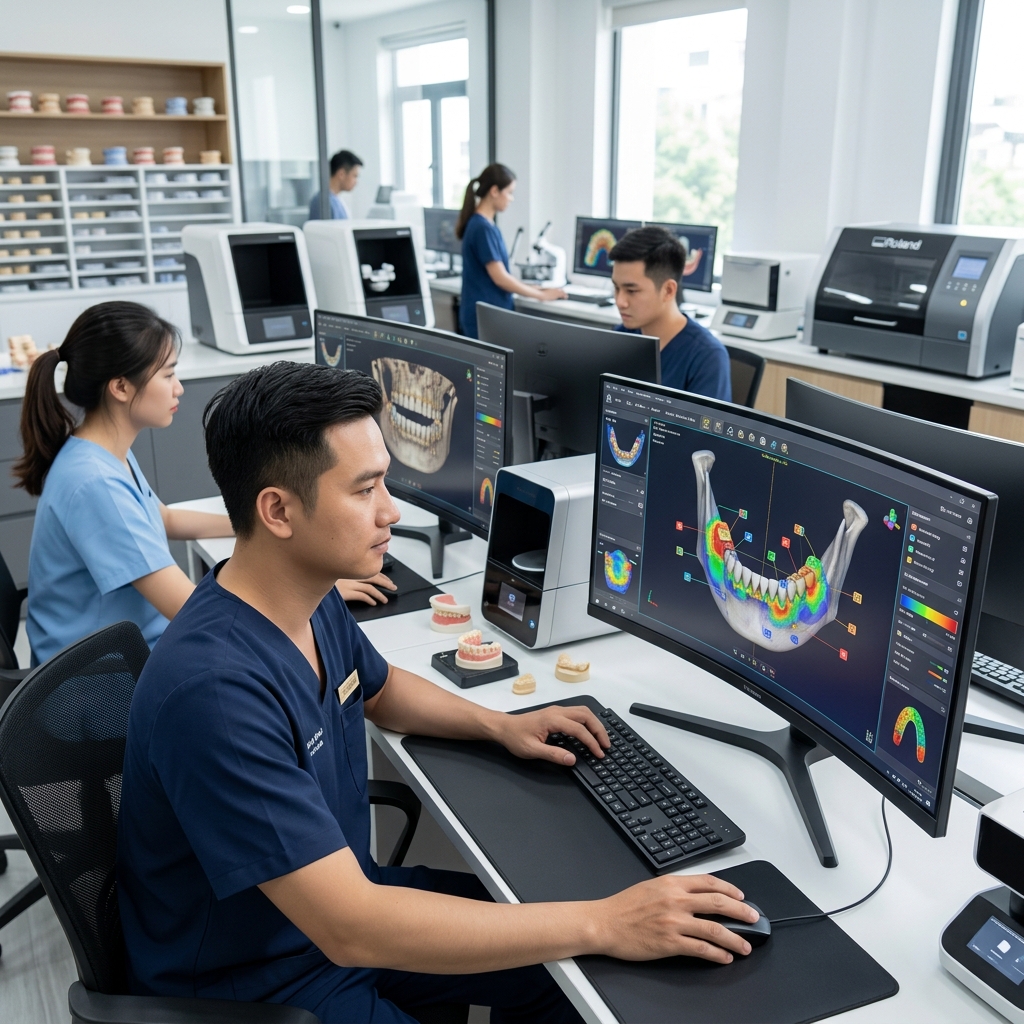
The Transformative Power of AI in Dental Diagnosis for Digital Design
The dental industry is experiencing a profound technological shift, with artificial intelligence (AI) emerging as a cornerstone of modern practice. While much attention has been given to AI’s role in clinical settings, its impact extends far beyond the diagnostic chair, directly influencing the precision and efficiency of dental lab operations. For dental labs and DSOs navigating this digital evolution, understanding the implications of ai in dental diagnosis and how it integrates with advanced CAD/CAM digital design outsourcing is paramount.
At our core, we provide specialized CAD/CAM digital design outsourcing services, catering to the diverse needs of modern dentistry—from intricate crown & bridge work to complex implant planning, surgical guides, orthodontic aligners, dentures, and night guards. Our expertise lies in transforming raw diagnostic data into meticulously crafted digital designs, ready for fabrication. The advent of ai in dental diagnosis has not only streamlined the initial assessment phase for clinicians but has also provided our design team with an unparalleled level of detailed, objective information, leading to more predictable and superior outcomes.
This article delves into how the advancements in ai in dental diagnosis are revolutionizing the entire dental workflow, from patient evaluation to final restoration. We will explore how dental labs and DSOs can harness these AI-driven insights by partnering with a specialized digital design outsourcing service, ensuring they remain at the forefront of innovation and efficiency.
What is AI in Dental Diagnosis?
AI in dental diagnosis refers to the application of artificial intelligence algorithms and machine learning techniques to analyze dental images (such as X-rays, CBCT scans, intraoral scans) and patient data to assist in identifying conditions, predicting outcomes, and informing treatment plans. These sophisticated systems are trained on vast datasets of dental images and clinical records, allowing them to recognize patterns, detect anomalies, and provide objective assessments that might be challenging for the human eye alone.
The capabilities of ai in dental diagnosis are broad and ever-expanding. For instance, AI algorithms can accurately detect early-stage caries, often before they are visible to the naked eye, by analyzing subtle changes in enamel density on radiographs. They can also identify periodontal bone loss, periapical lesions, and even assist in screening for oral cancer by highlighting suspicious areas in images. Furthermore, AI can aid in orthodontic assessments by precisely measuring tooth positions, identifying malocclusions, and predicting treatment trajectories. This level of precision and early detection capability is a game-changer for comprehensive patient care.
The primary goal of ai in dental diagnosis is not to replace the dentist but to augment their diagnostic capabilities, providing a powerful second opinion and enhancing their ability to make informed decisions. This leads to more consistent diagnoses, reduced human error, and ultimately, better treatment planning—a critical foundation for all subsequent lab work.
How Does AI in Dental Diagnosis Impact Treatment Planning?
AI in dental diagnosis profoundly impacts treatment planning by providing clinicians with a more comprehensive, accurate, and objective foundation upon which to build their strategies. When AI algorithms analyze diagnostic images, they can identify subtle pathologies, measure anatomical structures with extreme precision, and even predict potential treatment challenges or outcomes based on historical data.
For example, in implant dentistry, ai in dental diagnosis can meticulously map bone density, identify nerve canals, and delineate sinus boundaries from CBCT scans, allowing for optimal implant placement simulation. This detailed information is crucial for planning the exact size, angulation, and position of implants, minimizing risks and maximizing success rates. Similarly, for orthodontic cases, AI can analyze cephalometric and panoramic radiographs, along with intraoral scans, to identify skeletal discrepancies, predict tooth movement, and propose optimal aligner or bracket prescriptions. This level of data-driven insight translates directly into more predictable and efficient treatment paths for patients.
When our design team receives a case that has been informed by ai in dental diagnosis, the clarity and specificity of the treatment plan are significantly enhanced. This reduces ambiguity, minimizes the need for extensive back-and-forth communication, and allows our designers to create restorations, guides, or appliances that are perfectly aligned with the clinician’s exact specifications and the patient’s unique anatomy. It’s a seamless progression from an AI-enhanced diagnosis to a precisely engineered digital design.
Integrating AI-Driven Diagnostics with Digital Design Outsourcing
The true power of ai in dental diagnosis is unleashed when its insights are seamlessly integrated into the digital design and fabrication workflow. For dental labs and DSOs, this integration is often best achieved through specialized CAD/CAM digital design outsourcing services. Our role is to bridge the gap between advanced diagnostic data and the creation of high-quality, patient-specific prosthetics and appliances.
When a dental practice utilizes AI for diagnostic purposes, the resulting data—whether it’s an AI-annotated radiograph highlighting caries, a precise measurement of bone volume for an implant, or a detailed orthodontic treatment prediction—becomes an invaluable input for our design process. Instead of relying solely on subjective interpretations, our designers can leverage objective, AI-validated data points to inform every aspect of their work. This is particularly beneficial for complex cases where precision is paramount.
Consider a scenario where ai in dental diagnosis has identified the precise extent of a carious lesion and recommended the optimal preparation margins. Our designers can then use this information to create a crown or inlay design with superior marginal integrity and anatomical fit, reducing chairside adjustments and improving longevity. For implant cases, the AI-generated bone maps and nerve proximity warnings directly guide the creation of highly accurate surgical guides, ensuring safe and predictable implant placement. This synergy between AI diagnostics and expert digital design is what sets leading dental practices and labs apart.
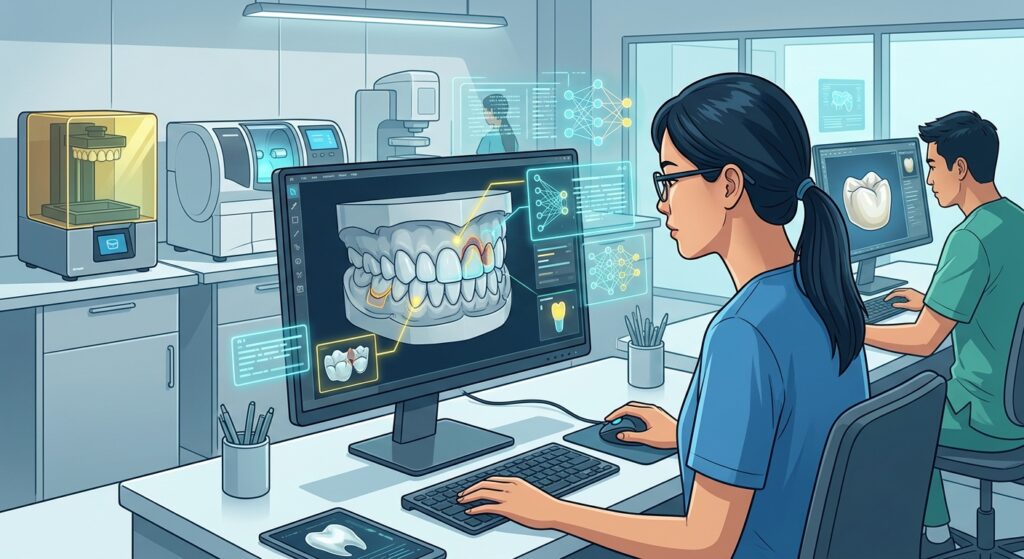
Advanced Applications: How AI in Dental Diagnosis Elevates Specific Services
The impact of ai in dental diagnosis is not uniform; it offers distinct advantages across various aspects of our digital design outsourcing services:
Crown & Bridge Design Enhanced by AI Insights
For crown & bridge cases, ai in dental diagnosis can provide incredibly detailed information regarding the vitality of abutment teeth, the presence of secondary caries, and even the precise occlusal forces. AI-powered software can analyze existing dentition and propose ideal anatomical contours and occlusal schemes that integrate seamlessly with the patient’s bite. This data allows our designers to create restorations that are not only aesthetically pleasing but also functionally superior, minimizing post-insertion adjustments and ensuring long-term success. The ability of AI to detect subtle issues in preparation margins or adjacent teeth means our designs can preemptively address potential problems, leading to higher quality final products.
Precision in Implants and Surgical Guides with AI
Perhaps one of the most transformative areas for ai in dental diagnosis is in implant dentistry and the creation of surgical guides. AI algorithms can analyze CBCT scans with unparalleled accuracy, identifying critical anatomical structures like the mandibular nerve, mental foramen, and maxillary sinuses with greater consistency than manual methods. They can quantify bone density in specific areas, predict primary stability, and suggest optimal implant types and dimensions.
This AI-generated data is then fed directly into our design software. Our skilled designers use these precise measurements and risk assessments to plan the exact 3D position, angulation, and depth of implant placement. This detailed planning forms the basis for designing highly accurate surgical guides. The guides, fabricated based on AI-informed insights, ensure that the implant is placed exactly as planned, significantly reducing surgical chair time, improving safety, and ensuring predictable restorative outcomes. For DSOs managing multiple implant cases, leveraging ai in dental diagnosis via our outsourcing service provides a standardized, high-precision approach.
Orthodontic Aligners Driven by AI-Powered Analysis
In orthodontics, ai in dental diagnosis is revolutionizing treatment planning for clear aligners. AI can analyze intraoral scans, photographs, and radiographs to accurately identify malocclusions, predict tooth movement, and even simulate various treatment outcomes. It can pinpoint root angulations, bone levels, and other factors that influence tooth movement dynamics, leading to more effective and efficient aligner therapy.
Our design team utilizes these AI-generated treatment plans and simulations to create a series of precise, custom orthodontic aligners. The detailed stage-by-stage tooth movements, informed by AI, ensure that each aligner in the series applies the correct forces to achieve the desired outcome. This not only enhances the predictability of orthodontic treatment but also optimizes the patient experience by reducing the need for mid-treatment adjustments. The integration of ai in dental diagnosis in this field allows us to offer superior aligner design services to orthodontic practices and DSOs.
Dentures and Removables: Enhanced Fit and Function
While often associated with fixed prosthetics, ai in dental diagnosis also offers significant advantages for dentures and other removables. AI can analyze intraoral scans and existing denture data to identify areas of inadequate support, uneven occlusal forces, or potential pressure points. By providing a more accurate assessment of the edentulous ridge and surrounding soft tissues, AI assists in optimizing the fit and stability of complete and partial dentures.
Our designers leverage this AI-enhanced diagnostic information to create digital denture designs that are precisely adapted to the patient’s anatomy, improving comfort, function, and aesthetics. This leads to fewer adjustments during try-in appointments and greater patient satisfaction, showcasing the versatile application of ai in dental diagnosis across all prosthetic types.
Night Guards and Occlusal Appliances: Precision for Protection
For night guards and other occlusal appliances, precision in bite registration and occlusal analysis is critical. AI in dental diagnosis can analyze detailed occlusal scans to identify premature contacts, areas of excessive force, and patterns of bruxism or clenching. This information is invaluable for designing appliances that provide optimal protection and therapeutic benefits.
Our design process integrates these AI-derived occlusal insights, ensuring that night guards are fabricated with precise occlusal schemes that distribute forces evenly, prevent wear, and alleviate symptoms of TMD. This precision, informed by advanced diagnostics, underscores the comprehensive benefits of leveraging AI throughout the digital workflow.
Benefits for Dental Labs and DSOs Partnering with AI-Enhanced Design Outsourcing
The integration of ai in dental diagnosis into a comprehensive digital design outsourcing strategy offers a multitude of benefits for dental labs and DSOs:
- Unparalleled Accuracy and Predictability: By leveraging AI-driven insights, our designs are based on the most precise and objective diagnostic data available. This translates into restorations and appliances with superior fit, function, and aesthetics, reducing the likelihood of remakes and improving patient satisfaction.
- Increased Efficiency and Faster Turnaround: AI-enhanced diagnostics streamline the initial planning phase, providing clear and unambiguous instructions to our design team. This reduces design time and accelerates the overall workflow, allowing labs and DSOs to manage more cases and deliver results faster.
- Access to Specialized Expertise: Not every lab or practice has the in-house expertise or software to fully leverage AI diagnostics. By outsourcing design to specialists who are proficient in integrating this data, you gain access to a highly skilled team without the overhead of training or investment in new technologies.
- Cost Savings and Reduced Remakes: The precision afforded by ai in dental diagnosis significantly reduces errors throughout the process, from planning to fabrication. This minimizes costly remakes, saves material, and frees up valuable chairside and lab time.
- Scalability and Flexibility: Outsourcing allows labs and DSOs to scale their operations up or down based on demand, without the need to hire or lay off staff. This flexibility is crucial in today’s dynamic market, especially when dealing with the complexities introduced by advanced AI integration. This also works well alongside advanced digital impression processing services.
- Competitive Advantage: Adopting cutting-edge technologies like ai in dental diagnosis and integrating them into your workflow positions your practice or lab as a leader in digital dentistry. This attracts more discerning clinicians and patients seeking the highest standards of care.
What Are the Future Trends in AI for Dental Diagnosis and Design?
The field of ai in dental diagnosis is still in its nascent stages, with rapid advancements on the horizon. Future trends will likely include:
- Predictive Analytics: AI will move beyond diagnosis to predict disease progression, treatment outcomes, and even patient compliance with greater accuracy. This will allow for more proactive and personalized treatment planning.
- Real-time AI Assistance: Imagine AI providing real-time feedback during clinical procedures or even during the design process, flagging potential issues or suggesting optimal solutions on the fly.
- Enhanced Data Integration: Tighter integration between various AI diagnostic tools, practice management software, and CAD/CAM platforms will create a truly seamless digital ecosystem, further streamlining workflows from diagnosis to delivery.
- Personalized Medicine: AI will play a crucial role in tailoring treatment plans based on a patient’s genetic profile, lifestyle, and unique risk factors, leading to truly individualized dental care. The American Dental Association (ADA) has already recognized the significant potential of AI in transforming dental practice, emphasizing ethical considerations and the importance of clinical validation. For more insights into the broader impact of AI, resources like Wikipedia’s entry on Artificial Intelligence provide a comprehensive overview.
As these technologies evolve, our commitment to staying at the forefront of digital dentistry ensures that our design outsourcing services will continue to incorporate the latest AI-driven insights, providing our partners with state-of-the-art solutions. Our expertise in utilizing advanced software like those from 3Shape ensures that we can effectively translate complex AI diagnostic data into actionable, high-quality designs.
Addressing Challenges and Ensuring Quality with AI-Enhanced Workflows
While the benefits of ai in dental diagnosis are clear, integrating new technologies always presents challenges. Data privacy and security, the need for robust validation of AI algorithms, and the importance of human oversight remain critical considerations. Our design outsourcing service adheres to the highest standards of data security and quality control, ensuring that all AI-derived data is handled responsibly and validated by experienced human designers.
We understand that AI is a tool, not a replacement for clinical judgment or design expertise. Our process combines the efficiency and precision of AI-driven diagnostics with the nuanced understanding and artistic skill of our expert designers. This human-in-the-loop approach ensures that every design is not only scientifically accurate but also aesthetically pleasing and functionally optimized for the individual patient. This commitment to quality and ethical practice is paramount, especially when considering complex cases like full arch implant solutions.
The future of dentistry is undeniably digital, and ai in dental diagnosis is a driving force behind this transformation. For dental labs and DSOs, embracing these advancements through strategic partnerships with specialized digital design outsourcing services is key to unlocking new levels of precision, efficiency, and patient satisfaction. By leveraging AI-informed diagnostics, you can elevate your services, streamline your operations, and solidify your position as a leader in modern dental care.
Ready to integrate the power of AI-driven diagnostics into your digital design workflow? Contact us today to learn how our expert CAD/CAM outsourcing services can elevate your lab or DSO’s capabilities.