The Digital Revolution in Dentistry: Preparing for the Intraoral Scanner Price 2026
The dental industry is in the midst of a profound digital transformation, with intraoral scanners leading the charge. These devices have fundamentally reshaped workflows, enabling greater precision, efficiency, and patient comfort. For dental labs and Dental Support Organizations (DSOs), understanding the trajectory of technology, particularly the intraoral scanner price 2026, is not merely about budgeting; it’s about strategic positioning for future growth and profitability. As technology evolves, so too do its costs and the opportunities it creates for specialized services like CAD/CAM digital design outsourcing.
The journey from traditional impressions to digital scans has been rapid, driven by advancements in imaging technology and software. This shift has unlocked unprecedented possibilities for designing and fabricating dental prosthetics, from routine crowns to complex full-arch restorations. However, the adoption of these technologies, especially intraoral scanners, comes with a significant capital outlay. This is where the discussion around the intraoral scanner price 2026 becomes critical. It influences investment decisions, dictates the pace of digital integration for many labs, and highlights the compelling value proposition of outsourcing specialized digital design tasks.
Our CAD/CAM digital design outsourcing service is specifically tailored to empower dental labs and DSOs to fully embrace the digital workflow without the burden of extensive in-house investment or the complexities of managing every digital step themselves. We understand the challenges posed by evolving technology costs, including the anticipated intraoral scanner price 2026, and offer a flexible, expert-driven solution that ensures your practice or lab remains at the forefront of dental innovation.
The Evolving Landscape of Digital Dentistry and Intraoral Scanners
Digital dentistry is no longer a niche concept; it’s the standard. Intraoral scanners capture highly accurate 3D images of a patient’s oral cavity, eliminating the need for traditional, often uncomfortable, impression materials. These digital impressions are then seamlessly integrated into CAD/CAM software for design and fabrication. The benefits are numerous: improved accuracy, reduced chair time, enhanced patient experience, and a streamlined workflow that minimizes errors and remakes.
Looking ahead, the market for intraoral scanners is expected to continue its robust growth. Factors influencing the intraoral scanner price 2026 will likely include technological advancements (e.g., faster scan speeds, improved color accuracy, AI-powered features), increased competition among manufacturers, and evolving demand from both general practitioners and specialists. While early adoption often comes with a premium, maturation of the market typically leads to more competitive pricing and a broader range of options at different price points. However, the initial investment remains a significant barrier for many, making the intraoral scanner price 2026 a key consideration for strategic planning.
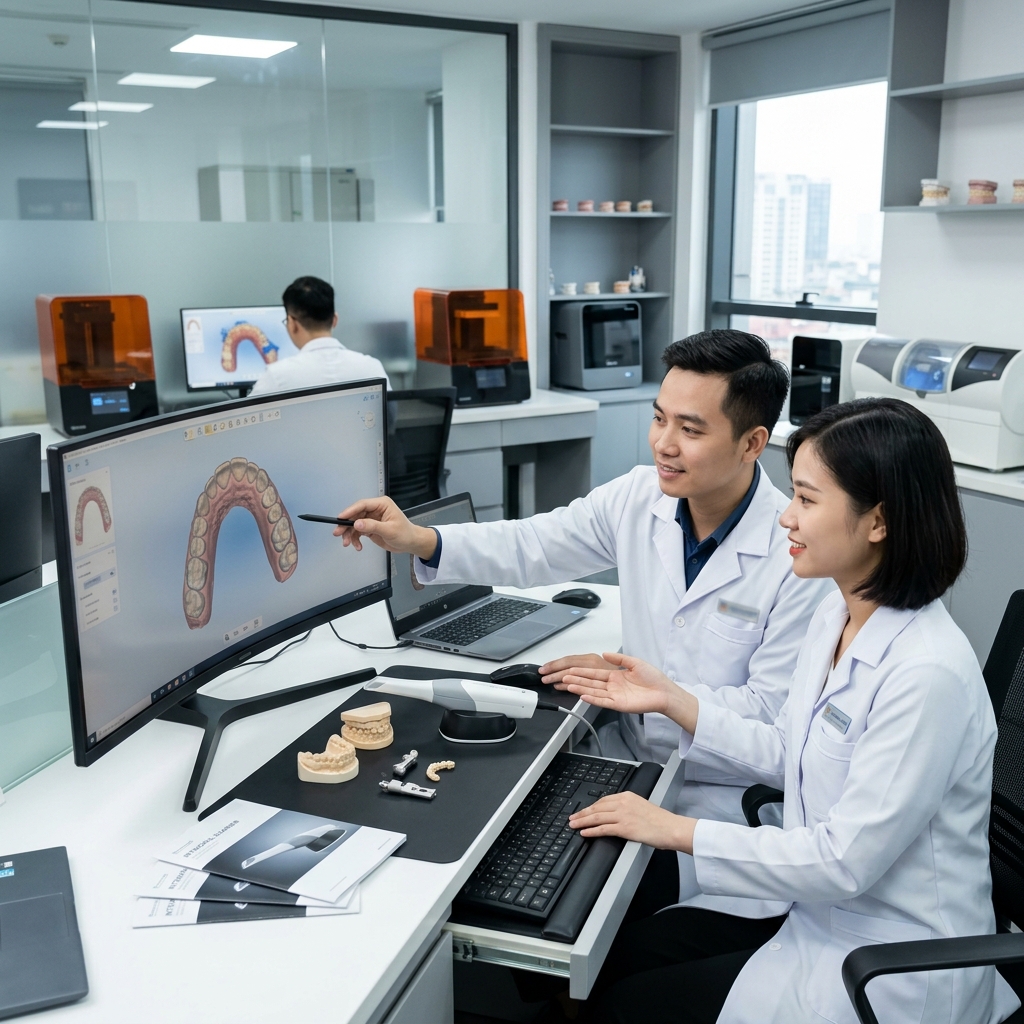
For dental labs, the proliferation of intraoral scanners among their client practices means a steady increase in digital impression files. Labs must be equipped not only to receive these files but also to process them efficiently using sophisticated CAD software. This necessitates investment in high-end computers, specialized software licenses (like Exocad or 3Shape), and highly trained technicians. Outsourcing provides a direct pathway to leverage this digital influx without the full weight of these internal investments, offering a smart way to navigate the implications of the intraoral scanner price 2026.
How will the intraoral scanner price 2026 impact dental lab profitability?
The intraoral scanner price 2026 will significantly impact dental lab profitability by influencing the capital expenditure required for digital impression acceptance, dictating the volume of digital cases, and shaping the competitive landscape for labs that either invest heavily or strategically outsource. While the direct purchase price of an intraoral scanner primarily affects dental practices and DSOs, its widespread adoption directly impacts dental labs by increasing the volume of digital cases they receive. If more practices acquire scanners, labs must be ready to process those digital files. This readiness involves investing in CAD software, powerful workstations, and skilled CAD designers. Without this readiness, labs risk losing business to competitors who are fully integrated into the digital workflow.
For labs considering investing in their own intraoral scanners for internal quality control or specific applications, the intraoral scanner price 2026 becomes a direct line item in their budget. This investment must be weighed against the potential return on investment (ROI) from increased efficiency, reduced material costs (no physical impressions), and enhanced precision. However, the cost extends beyond the initial purchase; it includes ongoing maintenance, software updates, and staff training. These hidden costs can quickly erode profit margins if not properly managed.
Outsourcing CAD/CAM design acts as a powerful buffer against these direct and indirect costs. By partnering with a specialized design service, labs can immediately access state-of-the-art software and expert designers without the upfront capital expenditure of hardware or software licenses, or the ongoing costs of training and retention. This strategy allows labs to scale their digital capabilities on demand, accommodating fluctuations in case volume without over-investing in internal resources that might become underutilized. This approach allows labs to focus on their core competencies, such as milling, printing, and finishing, while ensuring they can handle any digital case that comes their way, regardless of the fluctuating intraoral scanner price 2026.
What are the benefits of outsourcing CAD/CAM design for dental labs?
Outsourcing CAD/CAM design allows dental labs to access specialized expertise, advanced technology, and scalable resources without the substantial upfront investment in equipment, software, and highly trained personnel, thereby enhancing efficiency and profitability. This strategic partnership offers a multitude of advantages, especially in an environment where technology costs, such as the intraoral scanner price 2026, are a constant consideration.
- Access to Advanced Technology Without Upfront Investment: One of the most significant benefits is gaining access to the latest CAD software and high-performance workstations without having to purchase them. This bypasses the considerable capital expenditure for licenses, hardware upgrades, and maintenance contracts, which can be particularly impactful when considering the investment associated with the intraoral scanner price 2026 and its downstream implications for design infrastructure.
- Scalability and Efficiency: Digital design outsourcing provides unparalleled flexibility. Labs can scale their design capacity up or down based on demand, avoiding the overhead of maintaining a full in-house design team during slow periods or being overwhelmed during peak times. This ensures consistent turnaround times and prevents bottlenecks, improving overall lab efficiency.
- Specialized Expertise: Our team comprises highly trained and experienced CAD/CAM designers who specialize in various prosthetic types, from complex implant cases to intricate orthodontic aligners. This expertise ensures precision, quality, and adherence to specific design protocols, often exceeding what a general in-house technician might offer.
- Focus on Core Competencies: By offloading the design phase, dental labs can dedicate more resources and attention to their core strengths, such as manufacturing, finishing, and quality control. This allows for optimization of in-house workflows and a greater focus on craftsmanship where it matters most.
- Mitigating Staffing Challenges: Recruiting, training, and retaining skilled CAD/CAM designers can be challenging and expensive. Outsourcing eliminates these HR complexities, providing a stable and reliable design workforce without the associated costs of salaries, benefits, and continuous training. This is a crucial consideration when the intraoral scanner price 2026 influences the overall digital investment strategy.
- Reduced Rework and Improved Quality: Expert designers, coupled with rigorous quality control processes, lead to fewer design errors and remakes, ultimately saving time, materials, and improving patient satisfaction. The consistent quality derived from specialized outsourcing can elevate a lab’s reputation.
Navigating the Intraoral Scanner Price 2026: A Strategic Approach for DSOs
For Dental Support Organizations, the impact of the intraoral scanner price 2026 extends across multiple practices and centralized lab operations. DSOs are uniquely positioned to leverage their scale to optimize technology adoption and workflow integration. However, the sheer volume of potential investments means that every purchasing decision, especially regarding high-ticket items like intraoral scanners, must be meticulously planned.
DSOs often benefit from centralized purchasing power, which can lead to better deals on intraoral scanners, potentially mitigating the impact of the intraoral scanner price 2026. However, even with bulk discounts, the cumulative investment across numerous locations can be substantial. Furthermore, standardizing workflows across a large network of practices requires careful planning and training, ensuring that all clinicians are proficient in using the chosen scanning technology.
This is where outsourcing CAD/CAM digital design becomes an invaluable strategy for DSOs. While individual practices within the DSO network adopt intraoral scanners, the output – digital impression files – can be seamlessly routed to a centralized outsourcing partner. This approach offers several distinct advantages:
- Consistent Quality Across Locations: An outsourcing partner ensures that all designs, regardless of which practice submitted the scan, adhere to the same high standards and design protocols. This consistency is vital for maintaining brand reputation and clinical outcomes across a diverse network.
- Optimized Technology Adoption: DSOs can encourage scanner adoption among their practices without immediately needing to scale their internal lab’s design capabilities proportionally. The outsourcing partner absorbs the increased design workload, allowing the DSO to focus on scanner rollout and clinical training. This helps manage the financial implications of the intraoral scanner price 2026 more effectively across the organization.
- Reduced Operational Overhead: Instead of investing in multiple CAD workstations and hiring numerous designers for a central lab, a DSO can leverage an outsourcing model. This significantly reduces capital expenditure and ongoing operational costs associated with staffing, software licenses, and infrastructure.
- Faster Turnaround Times: An outsourcing partner often operates with a larger team and robust infrastructure, capable of delivering designs quickly and reliably, even for high volumes. This translates to faster delivery of prosthetics to patients, enhancing patient satisfaction and practice efficiency.
- Access to Specialized Expertise: For complex cases like full-arch implants or intricate orthodontic aligners, an outsourcing partner brings specialized design expertise that might be difficult or expensive to maintain in-house across all DSO labs. This ensures that even the most challenging cases are handled with precision and care, regardless of the individual practice’s internal capabilities or the specific intraoral scanner price 2026 they faced.
Specialized CAD/CAM Design Services: Beyond the Scanner’s Acquisition Cost
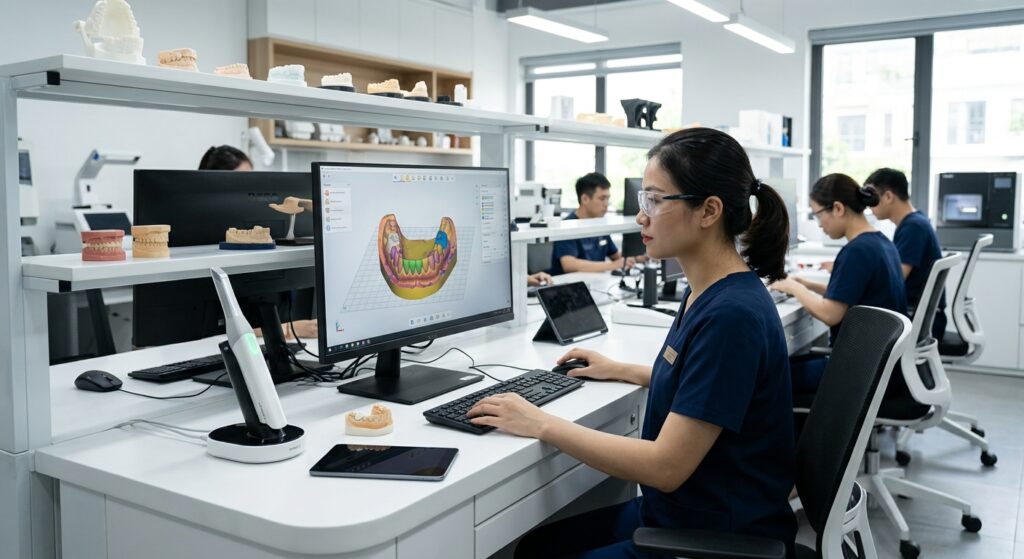
While the intraoral scanner price 2026 is a significant investment consideration for dental practices and DSOs, the true value of digital dentistry is realized in the subsequent CAD/CAM design and manufacturing phases. Our outsourcing service extends far beyond merely receiving digital scans; we provide comprehensive design solutions for a wide array of dental prosthetics, ensuring that every digital impression translates into a precise, high-quality restoration. This allows labs and practices to maximize the utility of their intraoral scanner investment, regardless of the initial intraoral scanner price 2026.
Crown & Bridge Design
Precision and aesthetics are paramount in crown and bridge restorations. Our expert designers utilize advanced CAD software to create custom designs that perfectly match patient anatomy, occlusion, and aesthetic requirements. We handle various materials, including zirconia, E.max, PFM, and full-contour ceramics. By outsourcing, labs gain access to designers proficient in complex anatomical considerations, ensuring optimal fit, function, and natural appearance. This is crucial for maintaining a high standard of quality for every case scanned by an intraoral scanner, regardless of the intraoral scanner price 2026 paid by the practice.
Implant Planning & Abutment Design
Implantology demands meticulous planning and execution. Our service integrates seamlessly with CBCT data and intraoral scans to create precise implant plans, including virtual implant placement and custom abutment designs. We design custom abutments for all major implant systems, ensuring optimal support for the final restoration. This specialized design capability allows labs to offer comprehensive implant solutions without needing an in-house expert for every implant system, maximizing the ROI of their digital workflow and mitigating the impact of the intraoral scanner price 2026 on their overall digital investment.
Surgical Guide Design
Predictability in implant surgery is greatly enhanced by surgical guides. We design highly accurate surgical guides based on integrated CBCT and intraoral scan data, ensuring precise implant positioning, depth, and angulation. These guides are crucial for reducing surgical time, improving patient safety, and achieving predictable outcomes. Our expertise in designing these guides means dental practices can confidently embark on implant procedures, knowing their planning is backed by precise digital design, complementing their investment in an intraoral scanner, irrespective of the intraoral scanner price 2026. This also works well alongside digital impression integration for seamless case submission.
Dentures (Removable Prosthetics)
Digital denture design offers significant advantages over traditional methods, including improved fit, reduced patient appointments, and easy duplication. Our designers create full and partial denture designs that are anatomically correct and aesthetically pleasing, ready for 3D printing or milling. This modern approach to removable prosthetics provides a superior patient experience and a more efficient lab workflow, making the most of digital impressions captured by an intraoral scanner, regardless of the intraoral scanner price 2026 at the time of purchase.
Orthodontic Aligners
The demand for clear aligners continues to grow. We provide precise orthodontic aligner design services, mapping out tooth movements from the initial scan to the final desired position. Our designs enable the efficient production of a series of custom aligners, offering a streamlined solution for orthodontic practices and labs looking to enter or expand their aligner offerings. This highly specialized service leverages the accuracy of intraoral scans, ensuring that the initial investment in a scanner, whatever the intraoral scanner price 2026, translates into effective treatment plans.
Night Guards & Splints
Custom night guards and occlusal splints are essential for protecting teeth from bruxism and TMD. Our CAD/CAM design service creates perfectly fitting night guards and splints that offer superior patient comfort and protection compared to generic alternatives. By utilizing digital impressions, we ensure a precise fit and optimal occlusal relationship, further demonstrating the versatile applications of intraoral scanning technology, irrespective of the specific intraoral scanner price 2026 a practice might encounter.
Why is understanding the intraoral scanner price 2026 crucial for dental labs?
Understanding the intraoral scanner price 2026 is crucial for dental labs because it directly influences their strategic planning for digital integration, competitive positioning, and ability to meet evolving client expectations in a rapidly digitizing industry. The cost of these foundational digital tools dictates how many dental practices will adopt them, which in turn determines the volume of digital impressions that labs will receive. Labs that fail to anticipate this shift and prepare their infrastructure risk being left behind.
Firstly, it enables strategic planning for digital integration. Labs need to decide whether to invest heavily in their own internal CAD/CAM design capabilities, including software, hardware, and personnel, or to leverage outsourcing partners. The intraoral scanner price 2026 plays a role here because it gives an indication of the overall market’s digital penetration. If prices become more accessible, more practices will scan, and labs must be ready. Planning for this necessitates an understanding of the entire digital ecosystem’s cost structure.
Secondly, it impacts competitive advantage. Labs that can seamlessly process digital impressions and deliver high-quality digital designs will attract more business from digitally-forward practices. Conversely, labs that rely solely on traditional methods may find themselves losing market share. Understanding the intraoral scanner price 2026 helps labs gauge the urgency and necessity of their digital transition and the potential competitive landscape for digital crown design and other prosthetics.
Thirdly, client expectations are rapidly evolving. Dental practices investing in intraoral scanners expect their lab partners to be fully compatible with digital workflows. They seek efficiency, speed, and accuracy that only a digital process can provide. Labs that can meet these expectations, often by partnering with specialized design services, will build stronger client relationships. The intraoral scanner price 2026 is an indicator of this evolving expectation; as scanners become more common, so too will the expectation for digital lab services.
Finally, outsourcing plays a pivotal role in bridging the technology gap without the full financial burden of the intraoral scanner price 2026 and subsequent CAD/CAM infrastructure. It allows labs to offer a full suite of digital design services immediately, without the multi-year investment cycle. This agility is invaluable in a fast-paced technological environment, ensuring labs remain relevant and profitable.
ROI and Future-Proofing Your Lab in a Digital Era
Calculating the true Return on Investment (ROI) in digital dentistry goes beyond just the purchase price of equipment like an intraoral scanner. It encompasses improved efficiency, reduced material waste, fewer remakes, enhanced patient satisfaction, and the ability to accept more complex cases. While the intraoral scanner price 2026 is a significant factor for practices, for labs, the ROI of digital integration is realized through their capacity to handle digital impressions effectively.
Outsourcing CAD/CAM design dramatically alters the ROI equation for dental labs. Instead of a large upfront capital expenditure for software, hardware, and staffing, labs can convert these costs into a predictable operational expense. This model allows for immediate access to high-level digital design capabilities, eliminating the learning curve and the risk of technology obsolescence. As new scanner models emerge and the intraoral scanner price 2026 fluctuates, an outsourcing partner remains agile, continually updating their software and expertise, ensuring your lab always has access to the latest design capabilities.
Future-proofing your lab means being adaptable to technological shifts and market demands. The dental industry will continue its rapid evolution, and staying ahead requires strategic partnerships. By entrusting your CAD/CAM design to experts, your lab can focus on what it does best – manufacturing high-quality restorations – while confidently navigating the complexities of digital design. This ensures that your lab remains competitive, profitable, and ready for whatever technological advancements, including future iterations of the intraoral scanner price 2026, may come.
Partnering with a specialized CAD/CAM design outsourcing service allows your lab or DSO to maximize the value of digital impressions, irrespective of the initial intraoral scanner price 2026. We empower you to deliver superior patient outcomes, enhance efficiency, and secure a prominent position in the future of digital dentistry.
Ready to elevate your digital workflow and maximize your lab’s potential? Contact us today to explore how our CAD/CAM design outsourcing services can transform your operations.